While packaging is rarely the top priority for a manufacturer before dispatching a product, it can play a large role in causing product damage during transit. Excessive stacking pressure on a corrugated box can cause the box to become distorted or damaged, paper packaging can become damaged during handling & if the package is a sealed pouch, it may develop a leak.
That’s why packaging belongs in quality assurance, not just in the dispatch department. Corrugated boxes need compression strength. Paperboard has to resist bursting. Pouches need seals that hold. You can’t tell any of this by looking, so it has to be measured.
Top 5 Packaging Testing Instruments
Packaging materials do not all fail in the same category for the same products. A corrugated box needs sufficient strength to withstand stacking loads while flexible packaging must maintain its seal integrity. The following instruments measure these different properties and give quality control teams a better understanding of packaging performance.
1. Box Compression Tester (BCT)
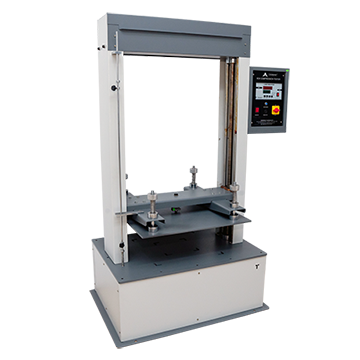
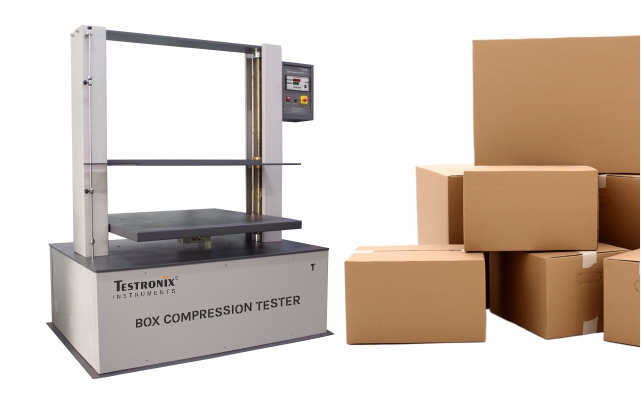
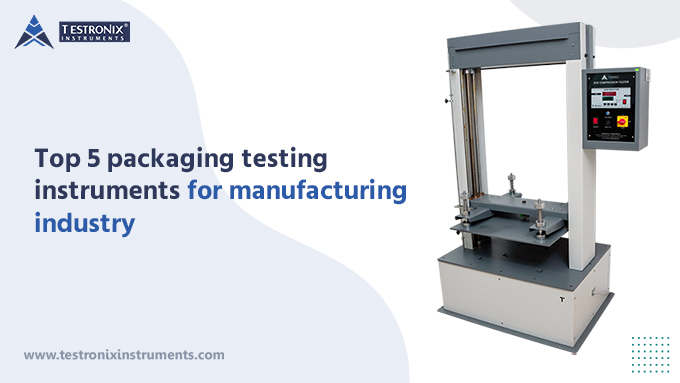
A Box Compression Tester is a packaging testing instrument used to measure the maximum compressive load a corrugated box can withstand before deformation or failure. It determines how well a finished box can handle pressure from other packages during stacking and storage.
As part of the test, the box is placed between compression platens (the lower platen and the upper platen) and a gradually increased load is applied. The device measures the load response and determines the compressive strength of the box. This data is valuable for those producing cartons and supplying them for warehousing, shipping, and long-distance transport.
Applications: Corrugated box and carton plants, shipping and transport packaging, warehouses and distribution centers, and packaging for consumer goods, electronics and industrial products.
Check Instrument: Box Compression Tester by Testronix
2. Bursting Strength Tester (BST)
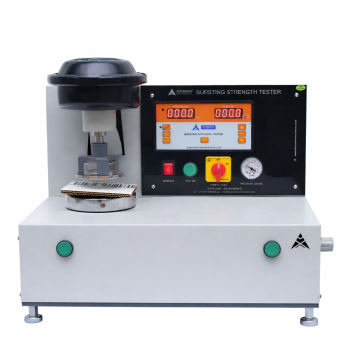
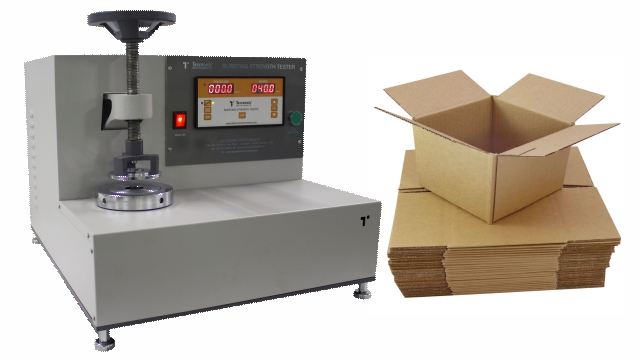
A Bursting Strength Tester measures the pressure a sheet of paper, paperboard or corrugated board can withstand before it ruptures. The specimen is clamped over a rubber diaphragm, pressure builds up beneath it, and the reading at the moment of rupture is recorded.
It’s one of the quickest ways to check incoming raw material. If a supplier’s paper starts to drift from spec, bursting values usually show it before anyone sees a problem on the line. Running the test regularly also keeps batches consistent.
-
Measures rupture pressure of paper-based materials
-
Supports incoming material inspection
-
Keeps production batches within specification
Applications: Paper and paperboard mills, corrugated sheet, carton production & any business using paper-based protective packaging.
Check Instrument: Bursting Strength Tester by Testronix
3. Edge Crush Tester (ECT)
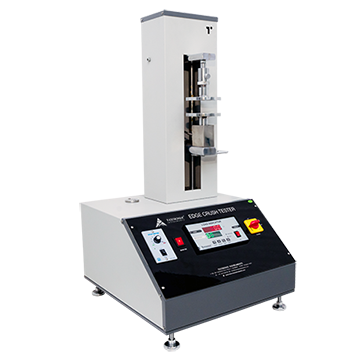
An Edge Crush Tester measures the compressive force a small strip of corrugated board can resist when it’s stood on its edge. The strip is held upright between two plates, and the maximum load before it crushes is the result.
The reason this matters is simple. When boxes are stacked, it’s the box walls that carry the weight, and ECT is a direct measure of how well the board does that. Manufacturers use it to compare board grades, check quality during production and decide whether a sheet fits a given job. It also pairs well with BCT: one tests the materia, and the other tests the finished box.
Applications: corrugated board manufacturing, carton production, and quality checks on corrugated materials.
Check Instrument: Edge Crush Tester by Testronix
4. Drop Tester
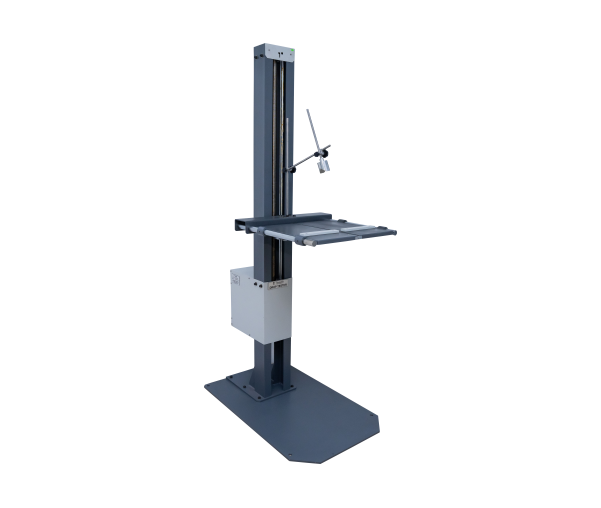
A Drop Tester lifts a packaged product to a specified height and drops it onto a hard surface to demonstrate its resistance to impact. The drop height and orientation (flat, edge or corner) and the number of drops depend on the standard being followed.
Those conditions are constant and can be repeated and results are compared against designs. Weak corners, thin cushioning and the wrong material choice tend to show up quickly. It’s much cheaper to learn that in a lab than from a customer’s photo of a broken product.
-
Evaluates how packaging handles impact
-
Highlights weak points in design and cushioning
-
Supports new package development
Applications: e-commerce and shipping packaging, electronics and electrical goods, consumer products, and packaged industrial equipment.
Check Instrument: Drop Tester by Testronix
5. Vacuum Leak Tester
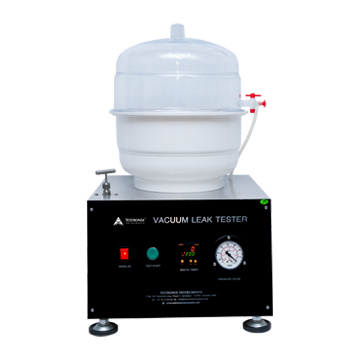
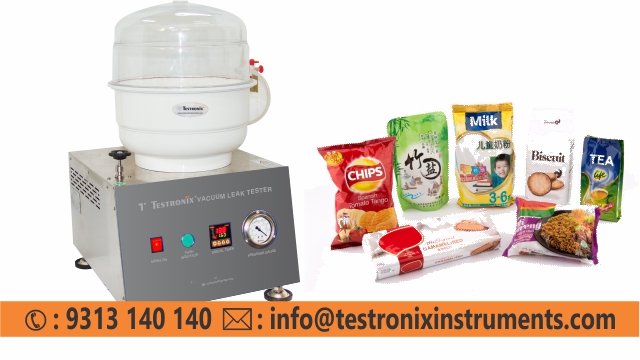
A Vacuum Leak Tester checks whether a sealed package leaks. The pack goes into a chamber, a vacuum is drawn, and you watch for escaping air or contents. It’s mainly used on pouches, bags and other flexible formats.
Even a pinhole matters in food and pharmaceutical packaging, because the seal is what protects the product and its shelf life. Testing before dispatch lets you find bad seals while they’re still your problem.
Applications: food and beverage packaging, pharmaceutical packaging, laminated film and plastic pouch manufacturing, and bag production.
Check Instrument: Vacuum Leak Tester by Testronix
Why Choose Testronix for Packaging Testing Instruments?
Testronix offers packaging testing instruments for evaluating several important material and package properties. Its product range includes solutions for compression, bursting strength, edge crush, drop and vacuum leakage testing. This makes it relevant to manufacturers working with different packaging formats.
One more factor to consider is the testing within the regular production process. Testing is not conducted only when a new product is ready. The quality team may also have to check incoming materials, analyze rejected production batches or prove that changes in the finishing specifications do not have an impact on the product’s performance.
When exploring Testronix instruments, manufacturers can consider the following:
-
Range of Testing Equipment: The portfolio features various parameters of the packaging such as compression strength, bursting force and leakage detection.
-
Various Material Requirements: The instruments are suitable for various corrugated board, paper based packaging and flexible packaging applications.
-
Support for Quality Inspection: Test results give measurable data which can be examined to assess consistency of materials & identify packaging problems.
-
Industry Applications: Equipment is applicable to paper, packaging, food, pharmaceuticals and consumer goods industries.
Conclusion
Packaging quality is a vital component of product safety, transportation safety, and customer satisfaction. Inadequate packaging under compression, force or pressure can lead to difficulties even after the product already leaves the manufacturer’s location, therefore, testing is part of packing quality assurance process and not just an occasional inspection when something goes wrong.
The box compression tester, bursting strength tester, edge crush tester, drop tester & vacuum leak tester each address a different aspect of packaging performance. Together, they cover several important testing requirements for corrugated, paper-based & flexible packaging materials.
Looking to improve packaging inspection at your manufacturing facility? Explore the range of Testronix Packaging Testing Instruments and identify the equipment that matches your material, testing method & quality control requirements. Make packaging performance a measurable part of your manufacturing process.