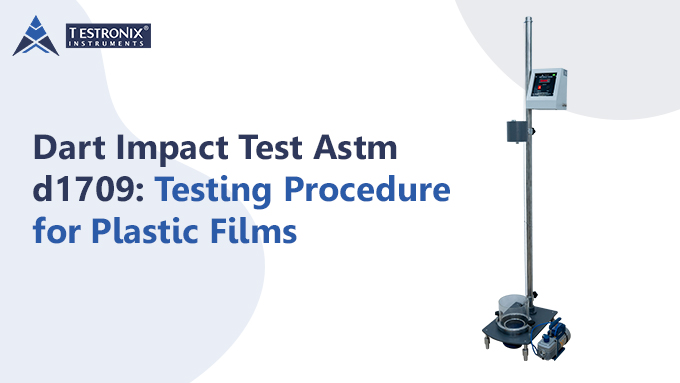
When packing, plastic foil can tear and become punctured in the event of a sudden impact. Thus, the packed product could get damaged during its transit processes due to the product’s handling. This way, tensile strength itself does not demonstrate how a film performs when a falling object hits the film.
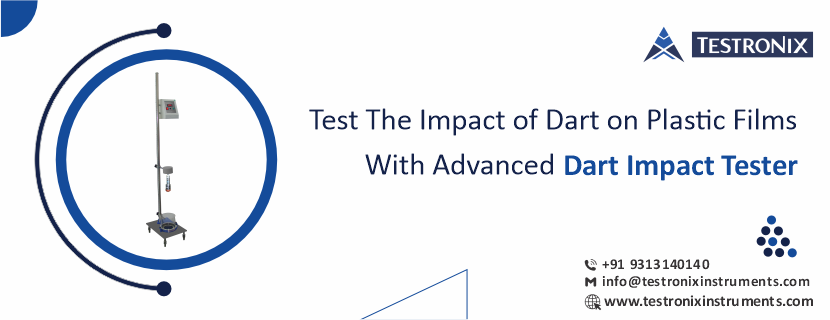
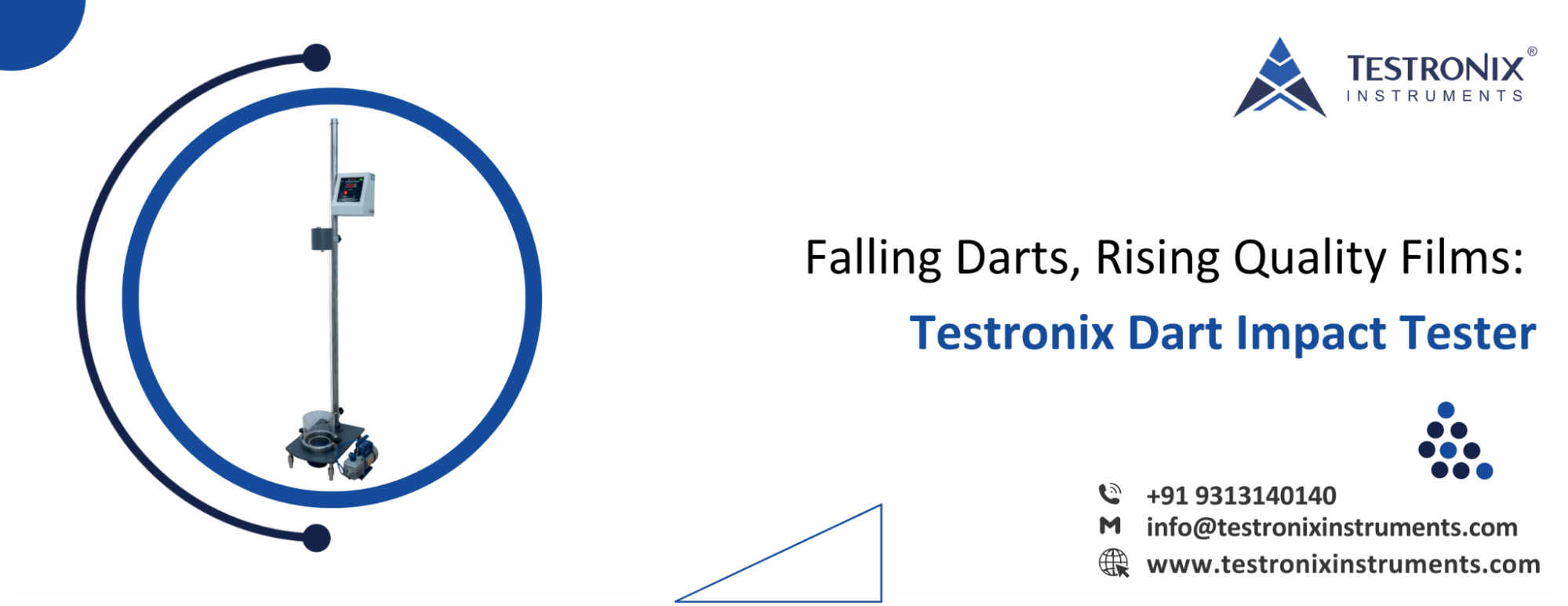
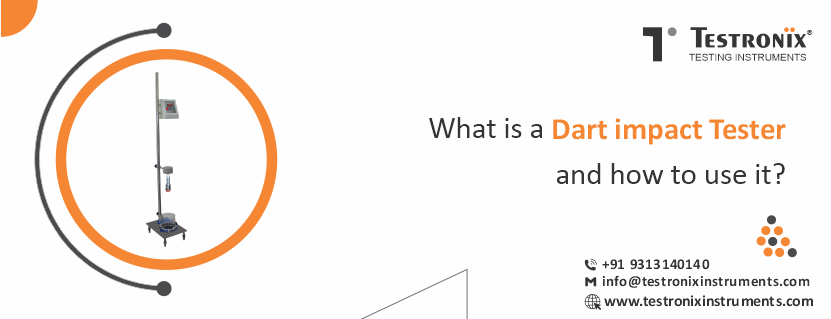
The ASTM D1709 method for testing plastic film impact resistance is based on the action of a falling dart. This method is widely used in industry to compare the grades of films and to test the quality of materials used in packaging. The test procedure, scope, principle and laboratory SOP are explained below.
What Is ASTM D1709?
ASTM D1709 is a standard test method for determining the impact resistance of plastic films using a free-falling dart. It is commonly used by plastic film manufacturers, packaging companies and testing laboratories to evaluate the ability of a film to withstand sudden impact.
The method entails dropping a heavy dart onto a film specimen that is securely placed in a holding device. The laboratory observes whether or not the film specimen fails during the impact, and then information from several individual specimen results is applied in order to calculate the dart weight that leads to the 50% failure rate result. The results are commonly given in grams.
ASTM D1709 involves two standard test methods - Method A and Method B. Both methods are based on the same overall principle but differ in terms of dart configurations and heights from which darts are dropped.
Method A: This method uses a dart with a 38.1 mm diameter hemispherical head and a drop height of 0.66 m. It is generally used for films with lower impact resistance.
Method B: This method uses a dart with a 50.8 mm diameter hemispherical head and a drop height of 1.52 m. It is generally suitable for films with higher impact resistance.
The selection of the test method depends on the expected impact resistance of the material and the requirements of the applicable test procedure. Results obtained using Method A should not be directly compared with Method B results without considering the different testing conditions.
Importance of the Dart Impact Test
The dart impact test is used to check the strength of plastic films against sudden impact. It is commonly performed on flexible packaging films used for food products, consumer goods and industrial packaging.
During the transportation or handling of a film with low impact resistance, the film may form holes. The information obtained from the test results may help producers to have a better understanding of the raw materials manufacturing, production batches as well as film thickness and changes in its composition. The results also help during the development of new packaging films.
ASTM D1709 PDF Download
You can download ASTM D1709 PDF that contains the detailed requirements for conducting the dart impact test. The document covers the test apparatus, specimen preparation, testing methods and calculations.
ASTM D1709 Scope and Principle
ASTM D1709 is used to measure the impact resistance of plastic films by determining the dart mass associated with a 50% specimen failure rate. The test uses a falling dart and a defined specimen clamping arrangement.
Scope of ASTM D1709
The scope of ASTM D1709 includes Method A and Method B for testing plastic films. The two methods use different dart head diameters and drop heights. The choice depends on the expected impact resistance of the material.
Producers of plastic film continue to use this test both in product development and in routine quality control. This test can also be applied when comparing films from different batches of production. Film thickness and type of polymer used in production affect the results of the test.
The test measures impact resistance under the conditions used in the laboratory. It does not replace other tests for tensile strength, tear resistance or puncture resistance.
Principle of the Dart Impact Test
The dart impact test principle is based on a weighted dart that is released from a fixed height and strikes a film specimen held in a clamping fixture. The laboratory checks whether the film fails after impact and records the result.
The dart mass changes during testing according to the selected procedure. In the staircase method, the mass is increased after a nonfailure and reduced after a failure. Results from the test series are used to calculate the mass at which approximately 50% of the specimens fail.
ASTM D1709 Testing Procedure for Plastic Films
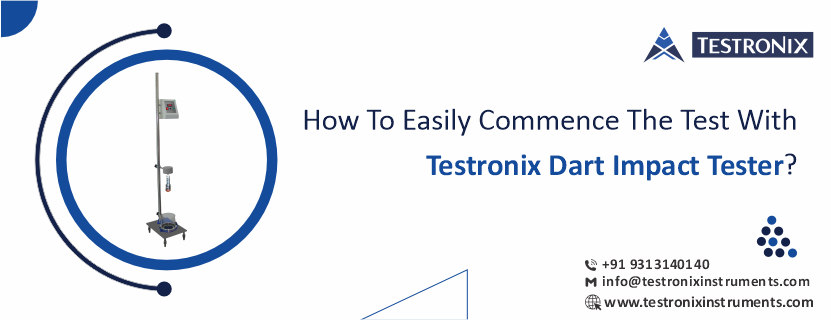
The test requires a dart impact tester, suitable film specimens and the correct dart assembly. The procedure starts with sample preparation and ends with calculation of the impact failure mass.
Step 1: Prepare the film samples
Cut the specimens from representative areas of the film. Avoid folds, cuts and other damage caused during handling. Record the material grade and thickness.
Step 2: Condition the specimens
Sample conditioning should be performed according to the needs of the applicable test. Record the temperature, humidity and time of conditioning used by the laboratory.
Step 3: Select the test method
Choose Method A or Method B according to the expected impact resistance. Fit the required dart head and set the specified drop height.
Step 4: Check the equipment
Inspect the dart release mechanism and clamping fixture. Confirm that the dart can fall freely and that the equipment is in proper working condition.
Step 5: Clamp the film
Place the specimen in the fixture and secure it evenly. Check that the film is held firmly across the test opening without folds or loose areas.
Step 6: Set the starting mass
Choose the initial dart mass using preliminary test results or information from previous tests. The starting mass should be suitable for the material being tested.
Step 7: Drop the dart
Let the dart go from the specified height to allow the dart to hit the specimen naturally without any disturbance from the operator or equipment.
Step 8: Check for failure
Make sure to check your tape and follow ASTM D1709 to see whether there is a failure or not. Make sure to record dart mass for each test sample monitored.
Step 9: Continue testing
If you are going to apply staircase method, make sure you change the dart mass after every new test. After a non-failure, increase the dart mass by the required amount to proceed with the next test.
Step 10: Result calculation
Take the necessary test series and determine the estimated 50% failure mass by the appropriate method as specified in ASTM D1709. Report the results in grams, with the test method and any necessary specimen information.
ASTM D1709: SOP for Dart Impact Test
The SOP describes the checks and records required for routine dart impact testing. It helps laboratory staff follow the same procedure for different film samples.
1. Equipment Check
Check the dart impact tester, dart heads, weights and clamping fixture before use. Confirm that the equipment's calibration or verification status meets laboratory requirements.
2. Sample Identification
Record the film type, thickness, batch number and sample identification. Keep the specimens free from accidental damage during cutting and handling.
3. Test Setup
Set the drop height and dart configuration according to the selected method. Check that the fixture holds the film securely and that the dart release mechanism operates correctly.
4. Testing and Recording
Test each specimen according to the approved procedure. Record the dart mass and failure or non-failure result after every drop. Follow the prescribed mass adjustment technique throughout the test series.
5. Reporting
Calculate the impact failure mass and record the final result. The report should include the test method, film details, test conditions and any deviation from the procedure.
6. Safety and Maintenance
Make sure that you keep your hands away from the dart release system and if any weights are being used, handle them with care. Take care to clean the device after testing is complete and let relevant personnel know if you have discovered any faults with it before it can be used again.
Any modifications to laboratory or testing equipment or the new release of ASTM D1709 means that this SOP will need to be updated. The approved procedure has to comply with the thrust standard and follow its requirements.
Conclusion
ASTM D1709 provides a standard method for testing the impact resistance of plastic films. The test is useful for comparing packaging materials and checking changes in impact performance between batches of production. Reliable results require correct equipment settings, specimen preparation and result calculation.
Testronix Instruments is a provider of test instruments for industrial and laboratory purposes. If manufacturers need to measure the impact strength of plastic films, they can reach out to Testronix Instruments to learn about their options.