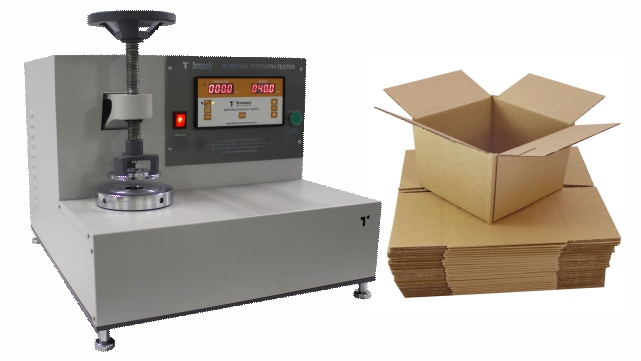
Every day, thousands of filled corrugated boxes go through supply chains, are stacked on pallets, are hauled in long-haul trucks, and are moved around warehouse floors. Contents are crushed when outer packaging fails under heavy loading or sudden impact, leading to damaged inventory, rejected shipments and immediate financial loss. These failures are all about the raw quality of the board and its structural integrity.
A comprehensive review of the bursting strength test will describe the performance of the board, practical methods of testing, industry norms, and the specialized equipment needed to maintain high quality standards throughout the production run.
What is Bursting Strength Test?
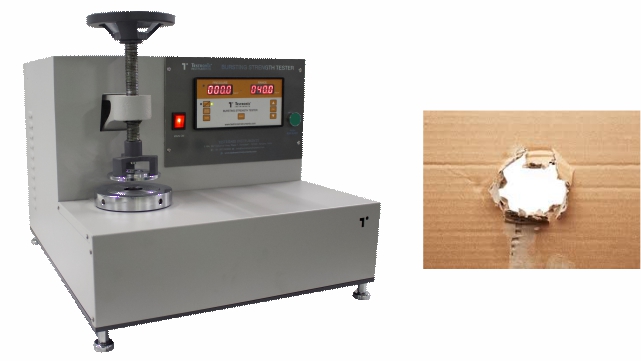
The bursting strength test measures the maximum hydrostatic pressure a corrugated sheet can withstand before puncturing. In simple terms, burst strength testing tells you how much outward force a box wall can take before breaking open.
Think of loading heavy appliances into a cardboard box, then loading that into a moving truck. The lower boxes are subjected to massive forces of crushing and pushing from all sides. If the paper liners do not have sufficient tear resistance, the package will break. This physical test applies a controlled hydraulic pressure through a rubber diaphragm against a clamped sample. The machine records the exact instant the material breaks. That peak pressure is the official bursting strength rating. Manufacturers use this metric to grade paper combinations and ensure appropriate quality control of packaging.
Bursting Strength Test for Corrugated Boxes: Why It Is Needed
Corrugated boxes protect vulnerable products from factory floors to final customer doorsteps. This part matters because weak packaging directly leads to product returns damaged inventory and unhappy clients.
Supply chains are harsh environments. Boxes face rough handling, drops, moisture, and heavy vertical stacking loads. Without rigorous strength checks packaging engineers would just guess box capacities. The bursting strength test removes guesswork. It gives quality teams trusted data to prove their boxes meet industry norms. Retailers also set a minimum bursting strength that must be achieved before shipments are allowed into their distribution centers. These are guidelines established by governments to ensure that transportation meets international safety standards and conventions.
Bursting strength test is a useful test to assess the integrity and performance of packaging. This will ensure that box side walls can take the internal weight of boxes during rough handling to avoid transit damage. At the same time, it optimizes material costs by preventing the over-specification of paper grades. The test replaces the guesswork with precise hydraulic force data to tell the engineers the exact limits of the load capacity. It also meets critical vendor requirements by meeting strict retail intake criteria for confirmed burst ratings and ensures full regulatory compliance with global transport safety and trade packaging regulations.
Bursting Strength Test Method for Corrugated Boxes
The bursting strength test method is based on the application of uniform hydraulic pressure to a clamped circular paper until failure. Strict preparation steps by operators are necessary to achieve accurate results.
Proper preparation is the key to accurate testing. Test specimens are to be cut cleanly from flat corrugated sheets, avoiding areas of deep scores, heavy prints or surface-crushed flutes. The cut samples must be conditioned under controlled temperature and humidity conditions as paper fibers readily absorb moisture from the atmosphere, which can affect the structural strength readings.
-
First, fix the conditioned board sample flat between two circular steel clamps. The clamping mechanism should apply uniform pressure so that the board doesn’t slide around and prematurely crush the internal flutes.
-
Next, a hydraulic fluid drive forces a flexible rubber diaphragm upwards against the exposed circular area of the clamped specimen. The testing unit increases fluid pressure at a smooth, constant rate.
-
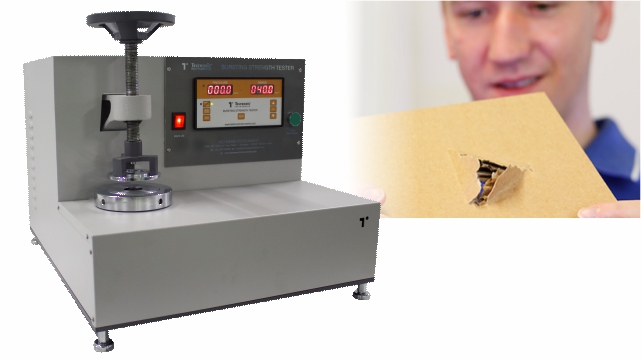
The pressure that is being applied underneath the paper board is causing it to protrude outwards. The operator watches the digital readout closely until the top liner fails. At that time, there is a sudden drop in pressure and a loud bursting sound.
-
Finally, the machine registers the exact peak pressure reached at the moment of failure. This peak value, expressed in kilograms per square centimeter or in kilopascals, is known as the burst strength. Quality records are good if they are taken from different locations of a production batch, averaged and the average is taken.
Standards to Follow for Bursting Strength Test
Standardized testing procedures ensure consistency and fairness across global manufacturing markets. In order to maintain quality control metrics, the facilities make use of quality control guidelines that are recognized internationally.
For the purpose of conducting burst testing, organizations such as ASTM and TAPPI publish comprehensive protocols. These documents specify exact machine calibration methods, testing speeds, ambient conditioning parameters and sample sizing rules.
Following established standards means a box rated in one country meets the exact same structural expectations anywhere else in the world. Compliance is beneficial in preventing trade disputes and ensuring the safety of consumers. Quality managers will carry out regular audits of the testing labs according to ISO standards. This will help testing labs maintain their ISO certifications and their customers’ trust.
-
Follow TAPPI T 810 for standard bursting strength measurements of corrugated board
-
Use ISO 2759 to align with global testing specs for hydraulic pump rates and diaphragms
-
Apply ASTM D3786 protocols to maintain accurate hydraulic testing procedures
-
Calibrate testing machinery routinely to match international lab requirements
-
Maintain ISO certifications and client trust through standardized quality audits
Testronix Burst Strength Tester for Corrugated Boxes
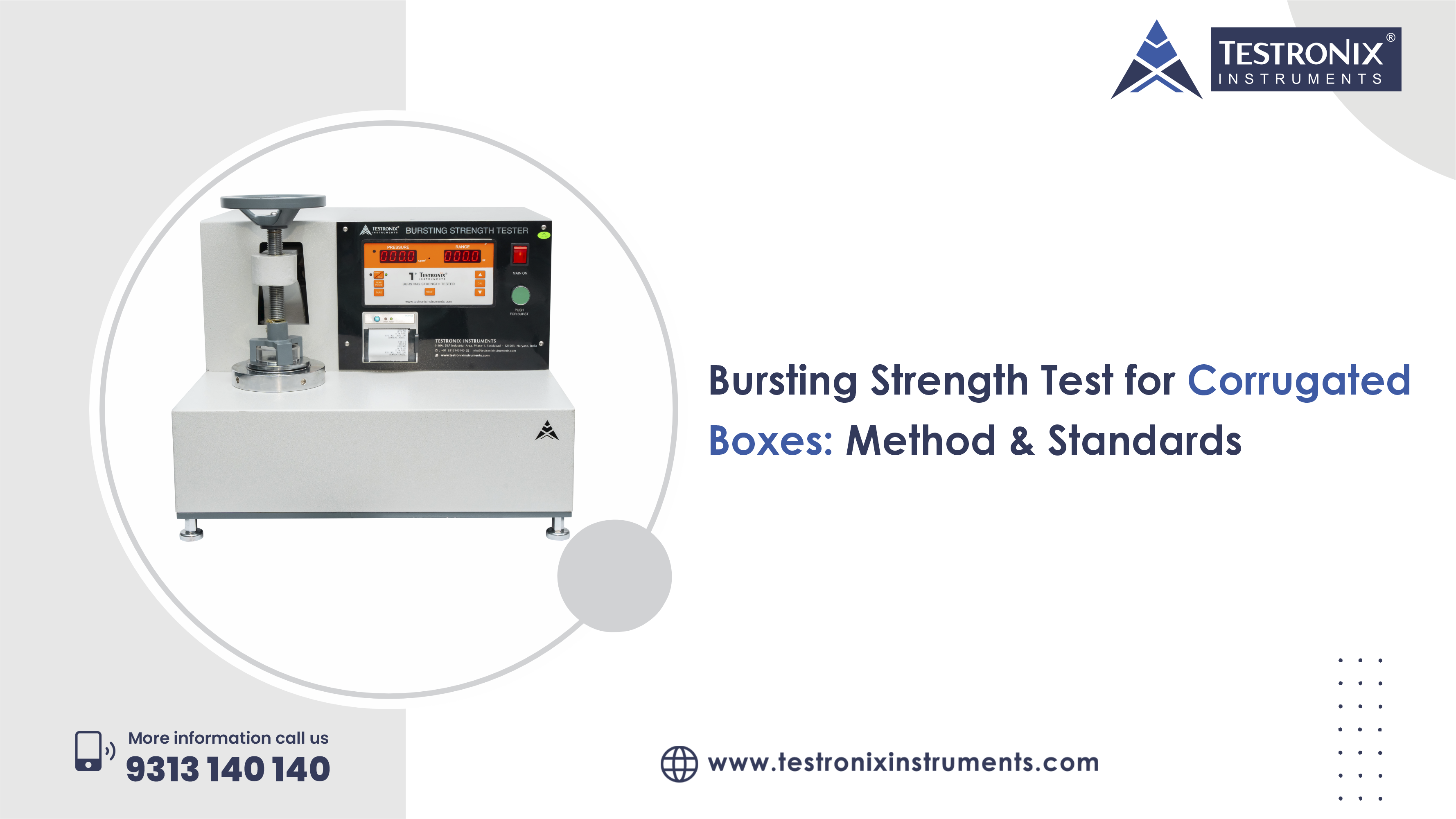
Reliable testing demands precision instruments built for continuous industrial use. The Testronix burst strength tester for corrugated boxes delivers accurate pressure readings through advanced digital sensors.
Machinery on factory floors must remain calibrated in day-to-day operation. This equipment is furnished with a pneumatic clamping system to grip the test samples tightly without any slip. The intuitive digital interface immediately displays the real peak pressure values without the manual calculation errors for the operators. Solid steel construction handles high pressure testing cycles safely. Built in safety guards protect users during active test bursts. Laboratories trust this specific machine because it simplifies daily quality checks while maintaining strict compliance with international testing standards.
Conclusion
Good packaging is the cornerstone for safe logistics. Materials durability testing helps to keep expensive failures from happening during the shipping process and maintains a company's reputation. Bursting strength test is a good test for the performance of the container when pressure is applied to it. Manufacturing high-quality standards is possible with durable testing equipment, like manufacturer solutions from Testronix burst strength tester. Good testing maintains products in reliable boxes on their way around the world. If you want to elevate your packaging experience, contact us to get a quote for a customized bursting strength tester.