Cold-rolled steel sheets that perform consistently during manufacturing can cause serious problems when materials fail under stress. This article looks at the Indian standard that fixes this issue by setting clear quality rules for manufacturers. We will discuss what the guidelines mean and how you can check if your raw materials actually measure up.
Anyone working in a press shop knows the frustration of unexpected metal cracking. A sheet looks fine on the pallet but splits open the moment the hydraulic press comes down. It ruins the component and halts production. This happens because the mechanical properties of the steel vary too much between batches.
You will learn chemical limits, testing methods, and factory floor challenges while forming cold-rolled steel sheets and how to overcome them. By the end you will understand how to avoid material failures and keep your quality control tight.
What is IS 513:2016?
IS 513:2016 is the official Indian standard that specifies the technical requirements for cold-rolled low-carbon steel sheets and strips. It covers everything from how the steel is processed to its mechanical performance limits. It essentially acts as a quality benchmark for suppliers and buyers across the industry.
The 2016 version of IS guidelines replaced the older one of 2008 with major changes including splitting cold-forming and high tensile materials to meet the global quality levels. The 2016 revision changed how grades are classified, adding specific criteria for deep drawing applications. If you deal with automotive stamping, this standard dictates your raw material inputs. It tells the steel mills exactly how much carbon or manganese they can leave in the melt.
In simple terms, it stops suppliers from sending sub-par metal that fails during production. There are categories for each type of sheet used at the end of the manufacturing process. Some need to be bent shortly, while others require a lot of stretching to create very complicated shapes. Clearly defining these categories establishes protection for companies that buy incorrect metals to meet requirements for completing their more complicated jobs. They provide your quality team with a very clear set of numbers to use when checking whether to accept what has been delivered.
Purpose and Scope of IS 513: 2016 for Cold-Rolled Steel Sheets
The purpose of IS 513:2016 standard is to ensure that cold-rolled steel sheets meet the exact ductility and strength required for forming processes. Its scope applies to thin steel strips and sheets used for structural, automotive, and general engineering purposes. It outlines both the chemical recipe and the physical performance limits for these materials.
The crystal structure of steel is altered by cold rolling, making it much harder and less malleable. The product needs to be annealed and the skin rolled as part of making the material workable. This standard covers the actions that should follow these processes to ensure that the final product is reliable. The standard defines the acceptable thickness and width tolerances that should be adhered to by manufacturing facilities; therefore, the dimensions specified by the standard set boundaries on what constitutes an acceptable factory or finished part. If a sheet is even slightly out of specification, it can damage expensive press dies or create uneven wall thickness in finished parts.
This is another primary purpose of the standard: to have a consistent set of criteria throughout the supply chain. If a sample is sent to a test lab in city A, the same parameters are used as in a factory lab in city B. This uniformity averts the quality-based conflict among steel suppliers and component manufacturers. It also specifies requirements for surface finish. This is crucial for parts that need a smooth coat of paint like washing machines. The scope ensures you get a predictable surface that bonds well with industrial coatings.
IS 513: 2016 PDF Download
You can access the full technical document directly to view every single table and tolerance limit defined by the Bureau of Indian Standards. Click the direct link below to download the official PDF for your quality manual. With this, you can instantly verify technical specifications right on your workshop floor.
IS 513: 2016 Cold Forming Steel Sheet Procedure
The cold forming procedure under this standard involves evaluating how well a steel sheet stretches, bends, and deforms without developing cracks. It uses specific mechanical tests like tensile strength evaluation and cupping tests to grade the steel. These procedures simulate real-world press shop operations under controlled laboratory conditions.
To run these procedures correctly, technicians cut samples from a steel coil at specific angles relative to the rolling direction. This detail is highly important because steel behaves differently depending on whether you bend it along the grain or across it. The standard sets out the exact speed at which the testing machine should pull the sample. If you pull the metal too fast, you get artificial results that do not reflect true material behavior. Technicians measure the yield point, ultimate tensile strength, and total elongation percentages during this process.
Another important part of the procedure is checking the plastic strain ratio and the strain hardening exponent. These values tell you if the sheet can distribute stress evenly when a tool stretches it into a deep mold. If the metal cannot distribute the stress, it thins out quickly in one spot and tears. The standard specifies cupping tests where a ball pushes into the sheet until a crack appears. Measuring the depth of that cup gives a direct indication of formability. It is a practical way to verify if a batch can handle deep drawing work without failing on the production floor.
Testronix Cupping Testing Machine: IS 513 Compatible Testing Equipment
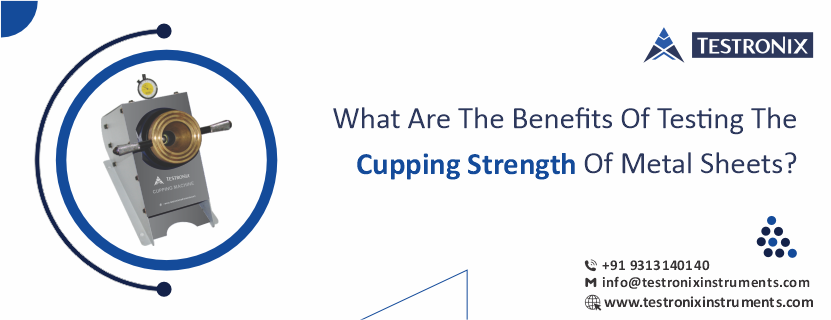
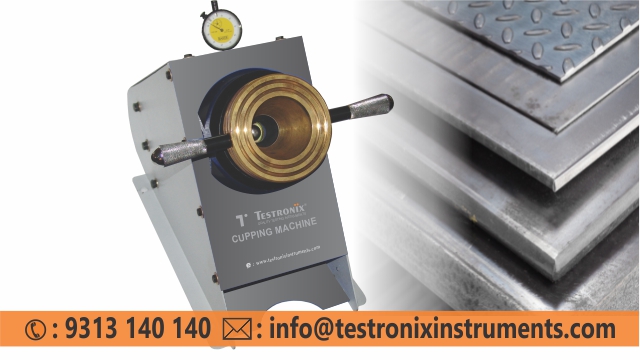
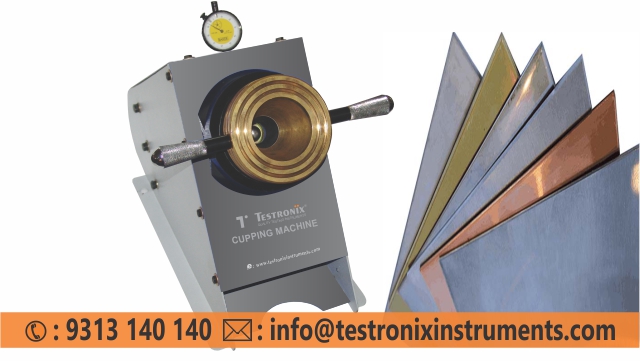
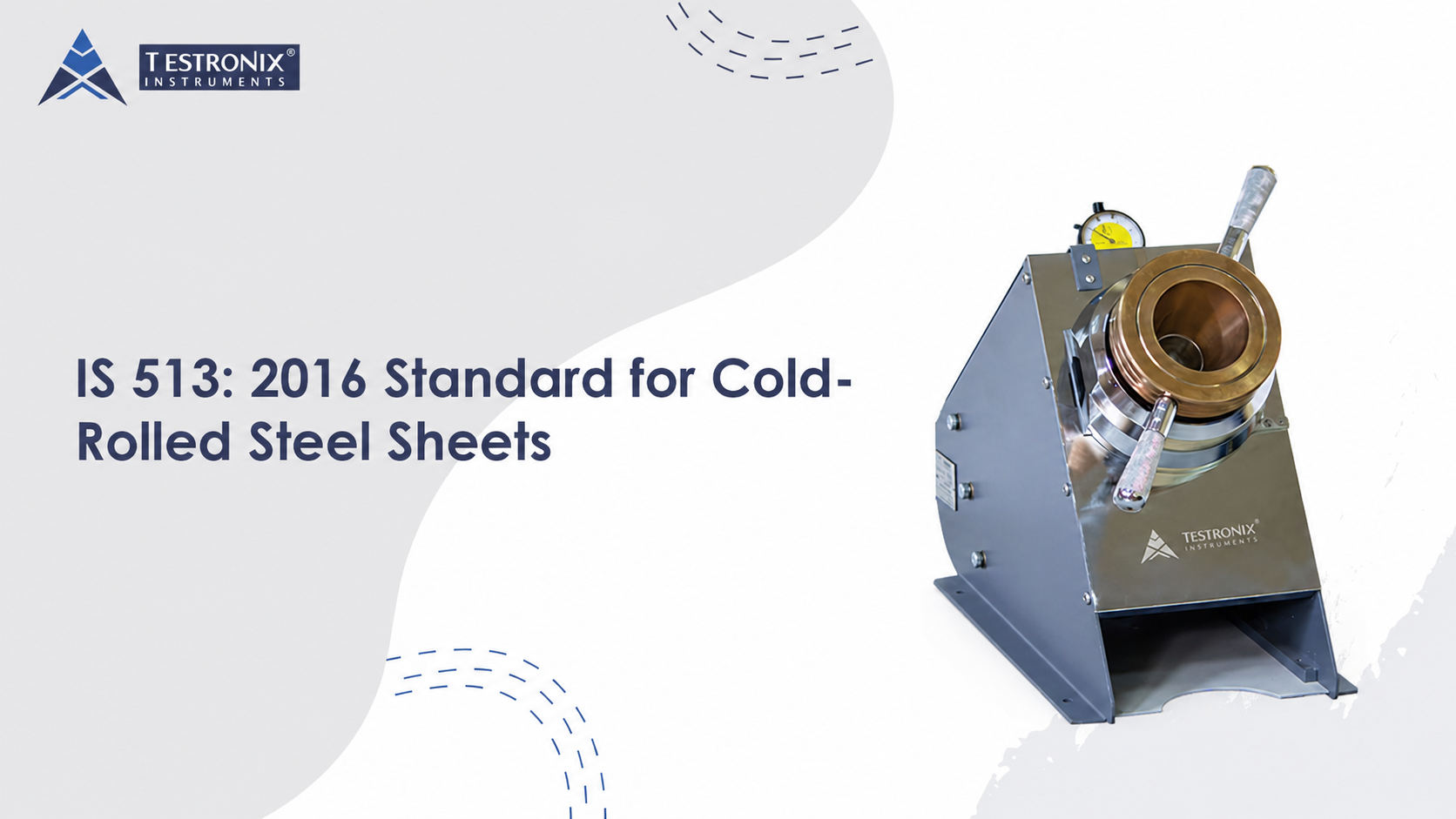
Testronix Cupping Testing Machine is designed specifically to perform the exact mechanical tests required by the IS 513 standard. It allows quality manufacturers to execute cupping tests and draw capability checks with high precision. This machine provides you with accurate data to confirm whether your raw materials are of the desired quality as per the Indian standards or not.
We use a powerful hydraulic testing system to apply a uniform force to the test pieces of sheet metal. It applies only the clamp load to the specimen to stop sample slip in the test. So, the elongation and deformation results you get are absolutely true. The digital display provides immediate feedback on the peak force applied and the exact depth of penetration before the material fails.
Using an IS 513-compatible machine means your testing methods line up perfectly with what auditors look for during plant inspections. The Testronix Cupping Testing Machine handles varying sheet thicknesses quite easily. It features user-friendly controls that allow shop floor operators to run tests without needing an advanced engineering degree.
Conclusion
Aligning your workshop procedures to conform to new IS 513 (Industry Standard) guidelines allowed for improved management of your material quality and reduced costly manufacturing errors. Using standardized testing also allows you to be confident that finished products will meet your performance requirements. Establishing and maintaining accurate testing as part of a consistent Quality Control (QC) process is critical to consistent results.
Related: Quality Control (QC) vs Quality Assurance (QA)
The use of guesswork in testing and Outdated Supplier Inspection Reports (OSIR) will ultimately lead to high rejection rates and wasted production time. By implementing a systematic testing process for your incoming sheets, you not only protect your machinery but also your brand image. The guidelines provide the roadmap but you need reliable tools to enforce those standards on your shop floor.
If you want to ensure your steel sheets match the requirements perfectly, take a look at the testing systems from Testronix Instruments. Contact us today to get a quote or arrange a product demonstration for the Cupping Testing Machine. Upgrade your quality control process and keep your production lines running smoothly without unexpected material failures.