A lot of products look perfectly fine during production but start failing once they face real weather conditions. Moisture is one of the biggest reasons behind that. It slowly affects electronic circuits, coatings, insulation, and even metal surfaces. The damage usually does not happen instantly, so many manufacturers miss the issue during regular inspection.
That is why humidity chamber testing is taken seriously in industries dealing with electronics and industrial equipment. IS 9002-3 is one of the standards used to check how products react when exposed to humid conditions for a controlled period. In this article, we will talk about what the standard actually means, how the testing procedure works, the major clauses involved, and why companies follow it before releasing products into the market.
What Is IS 9002-3 Standard
IS 9002-3 is an Indian Standard used for environmental testing of electrical and electronic products under humid atmospheric conditions. The standard explains how manufacturers should expose products to controlled humidity levels inside a testing chamber and then evaluate their performance.
In simple words, the 9002-3 standard is used to find out if a product can handle the moisture without deterioration and degradation of performance over time. As we know, excess humidity can be the reason for corrosion, weak insulation, short circuits or material deformation after consistent working for a long time. Generally, industries use humidity chambers to tackle humidity-related issues but when we use standards like IS 9002 (3), we can prevent the issue before it even arises.
The standard also defines the testing atmosphere, exposure duration, chamber conditions and inspection process after testing. Every product is tested under similar conditions so the final results remain reliable and repeatable.
Want Detailed Copy? Download IS 9002-3 PDF for FREE
If you are planning to perform humidity chamber testing or preparing quality management documentation, it is worth downloading IS 9002-3 PDF. The detailed standard explains the exact testing requirements, sample preparation methods, environmental conditions and reporting procedures during testing.
SOPs of IS 9002-3 Standard With All Clauses
The standard follows a proper sequence during testing. Every stage has a reason behind it. Even small mistakes during setup or recovery can affect the final observations.
Clause 1. Scope
The scope of the standard tells when and where the operating procedure applies and who needs to follow it. Generally, the scope applies to the entire standard procedure and industries, mainly focusing on electrical and electronic products that are exposed to humid environmental conditions.
The clause also provides a direct guideline that the test is performed to study the effect of moisture on the quality and functionality of product. Manufacturers follow these guidelines strictly to improve product reliability and durability before commercial use.
Clause 2. Object
This clause entirely focuses on the main purpose of conducting the humidity testing. It provides the guidelines to simulate the real-world conditions within a controlled chamber and check how a particular sample behaves before manufacturing a product.
Weak insulation systems, bad protective coatings, corrosion risks and failures caused by moisture may not show up during a normal inspection but this testing method can identify them with the right approach.
Clause 3. General Test Requirements
Before starting the test, the samples must be properly cleaned and checked visually. Dust, oil, or surface contamination can affect the testing outcome.
The standard also mentions that the humidity chamber should be calibrated properly. Temperature and humidity values need to remain stable during the complete testing cycle. This part matters because inaccurate conditions can easily produce misleading results.
Clause 4. Test Apparatus
The apparatus used for testing should maintain uniform humidity and temperature throughout the chamber workspace. Sudden fluctuations are not acceptable during testing.
The humidity chamber must also avoid unwanted water condensation directly on the sample surface unless the test specifically demands it. Controlled air circulation inside the chamber is equally important.
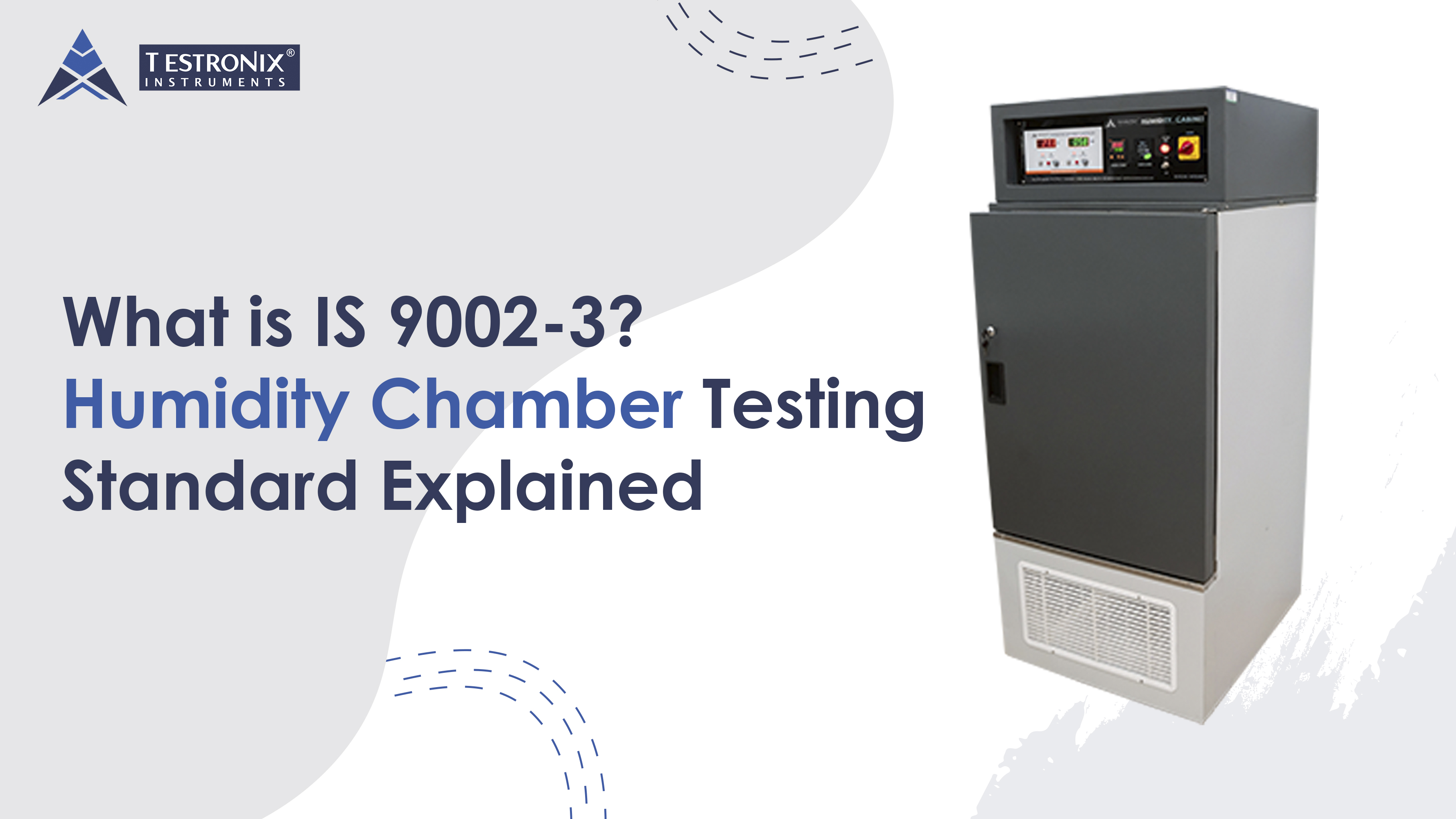
Many manufacturers use testing systems from Testronix Instruments for maintaining stable environmental conditions during IS standard testing procedures.
Clause 5. Conditioning Procedure
This section explains how the actual humidity exposure is carried out. The product samples are placed inside the humidity chamber under predefined atmospheric conditions.
Normally, high relative humidity levels combined with elevated temperature conditions are maintained for a fixed duration. The purpose is to accelerate moisture absorption and identify failures within a shorter testing period.
Depending on the product category, the exposure duration may vary. Sensitive electronic products usually require very controlled monitoring during this stage.
Clause 6. Recovery Procedure
After completion of humidity exposure, the samples are removed from the chamber and kept under normal atmospheric conditions for stabilization.
Some defects only become visible during this recovery period. Materials may expand during exposure and then crack or deform after returning to room conditions. Electrical instability can also appear during recovery testing.
Clause 7. Final Inspection and Measurements
Once recovery is complete, the products go through detailed inspection and measurement procedures.
The inspection usually includes checking for corrosion, discoloration, swelling, insulation failure, coating damage, and electrical malfunction. Test values are often compared with the readings recorded before humidity exposure.
If the product shows major deviation from acceptable limits, it may fail the testing requirement.
Clause 8. Test Report Documentation
The final clause focuses on documentation and reporting.
A proper test report normally contains sample details, humidity conditions, exposure duration, chamber settings, inspection observations, and final results. Many industries keep these reports for audits, supplier approvals and internal quality records.
Benefits of Compliance with IS 9002-3 Standard
Humidity related failures can become expensive for manufacturers. Products may perform well inside the factory but fail after installation in humid environments. That often leads to customer complaints, service costs, and damage to product reputation.
Detect Risks Early
Companies that follow IS 9002-3 can help to pinpoint those risks before the product is introduced to the market. Provides manufacturers with an understanding of the behavior of materials and components in moisture environments.
Reliability Improvement
Another huge advantage is reliability enhancement. Standards for environmental testing are crucial in industries such as electronics, automotive, telecom, aerospace and defense, where a single failure will cause significant operational issues.
Quality Certifications
The standard also supports quality certifications and compliance documentation. Many organizations ask suppliers to provide environmental testing records before approving products for commercial projects.
High-Quality Production
From a practical side, regular humidity testing also helps research and development teams improve product design. Engineers can compare coatings, insulation materials, and protective systems under the same testing conditions.
Partner With Testronix to Manage Your Quality Standards
Environmental testing becomes much easier when the equipment itself is reliable. A humidity chamber with unstable conditions can create inconsistent results and unnecessary retesting.
Testronix Instruments offers humidity chambers and quality testing equipment used across different manufacturing industries. Our systems are designed for controlled environmental testing and standard compliance applications.
For manufacturers handling electronic or industrial products, proper testing equipment can improve reporting accuracy and reduce quality related risks during inspections.
Conclusion
IS 9002-3 is an important standard for evaluating product performance under humid environmental conditions. It helps manufacturers detect moisture related weaknesses before products are used in real operating environments.
Correctly operated humidity chamber testing enhances reliability, assists with quality compliance and minimises product failure after production. When dealing with electrical and/or electronic products, it is certainly helpful to know this standard in the long term quality management.
To manage environmental testing more effectively, companies can also work with experienced testing equipment providers like Testronix Instruments for dependable humidity chamber solutions and testing support.