You must have seen companies mentioning ISO certified on brochures, websites, product packaging, or factory documents. Still, many people do not actually know what ISO means or why businesses spend time getting certified.
The main reason behind ISO standards is consistency. A company may produce a good product today, but customers expect the same quality every time. That becomes difficult when processes are not properly managed. This is why ISO standards became important across industries.
In this article, we will discuss what ISO is, its full form, important ISO standards and how businesses usually get ISO certification.
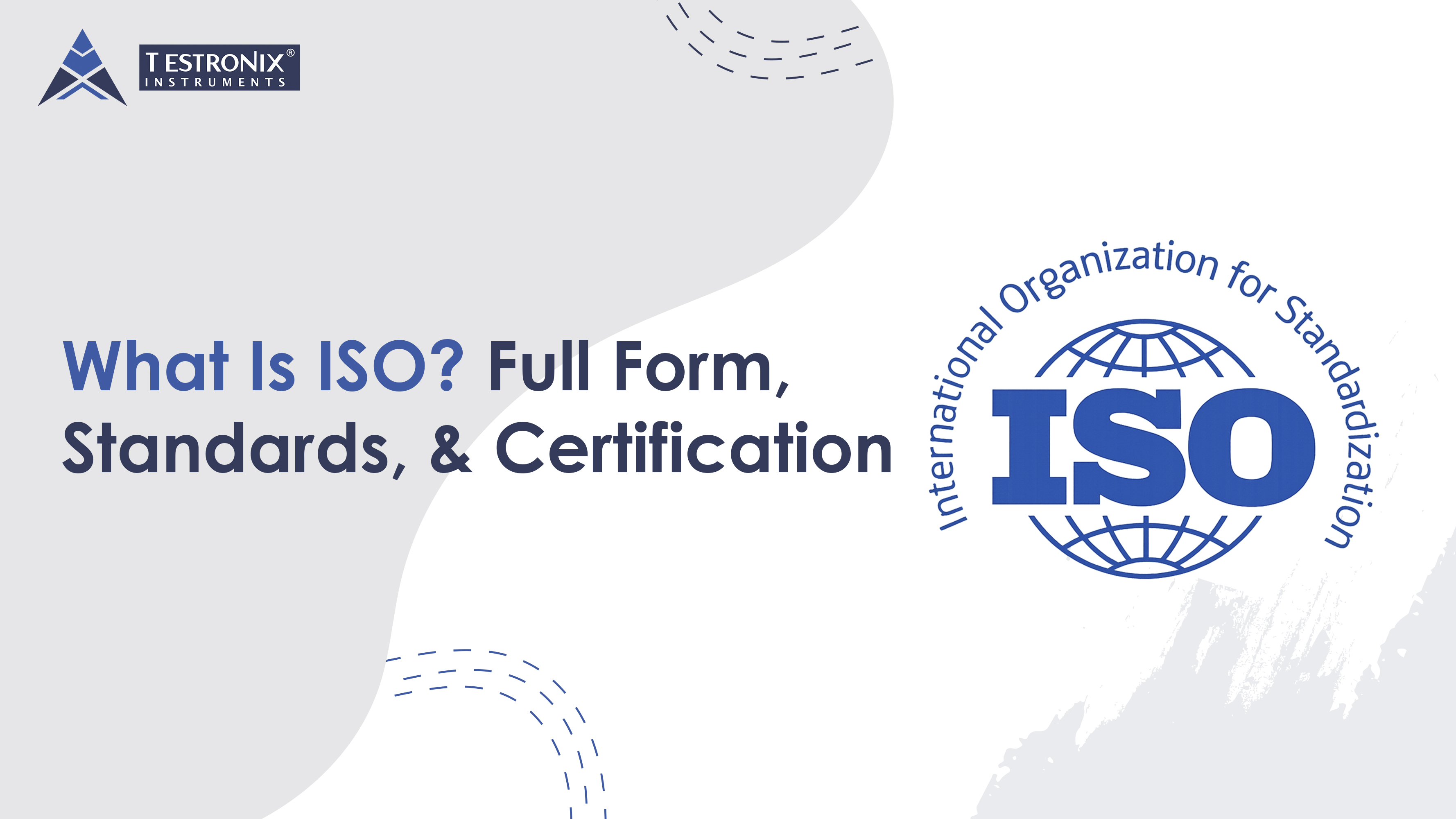
What Is ISO?
ISO is an international standard organization that formulates standards for quality, safety, efficiency, and management systems. These standards are followed by businesses globally to maintain the integrity of products and reduce operational issues.
In simple terms, ISO works like a blueprint for different industries including manufacturing, automotive, pharmaceutical, packaging and others. Businesses can use this guide to help them manage their quality records, documents, inspections, safety procedures and other important responsibilities.
Sadly, many manufacturers do not see the benefit of ISO until they are experiencing repeated issues with customer complaints or production problems. Sometimes products fail during shipping. Sometimes quality changes from one batch to another. ISO standards help companies control these situations better.
These standards are used in packaging, automotive, healthcare, electronics, food processing, laboratories, textiles, and many other sectors. Even service companies use ISO systems today.
One thing people often misunderstand is that ISO itself does not issue certificates. The organization develops standards. Certification bodies perform audits and issue the certification.
ISO Full Form
The full form of ISO is International Organization for Standardization.
The word ISO actually comes from the Greek word “isos,” meaning equal. The organization selected one short name that could work globally instead of creating different abbreviations for different countries.
ISO Standards List
ISO has thousands of standards covering different industries and business activities. Depending on the industry requirement, these standards are used from product quality to food safety, environmental management, data security and laboratory testing.
Below are some commonly used ISO standards.
|
ISO Standard |
Purpose |
|
ISO 9001 |
Quality Management System |
|
ISO 14001 |
Environmental Management System |
|
ISO 45001 |
Occupational Health and Safety Management |
|
ISO 22000 |
Food Safety Management |
|
ISO 27001 |
Information Security Management |
|
ISO 50001 |
Energy Management System |
|
ISO 13485 |
Quality Management for Medical Devices |
|
ISO 17025 |
Testing and Calibration Laboratory Competence |
|
ISO 22301 |
Business Continuity Management |
|
ISO 26000 |
Social Responsibility Guidelines |
|
ISO 31000 |
Risk Management Principles |
|
ISO 20000 |
IT Service Management |
|
ISO 37001 |
Anti Bribery Management System |
|
ISO 28000 |
Supply Chain Security Management |
|
ISO 55001 |
Asset Management System |
Different companies choose standards according to their operations. Understand this with an example: a food company uses ISO 22000 while a lab testing manufacturing industry may need ISO 17025. You can see that both industries are completely different but use the ISO standards. This is the range of ISO standards for its global partners.
ISO 9001:2015 & 14001: Commonly Used ISO Standards
ISO 9001:2015 and ISO 14001 are the two most popular ISO standards for quality management systems and environmental management systems, respectively. Below are the more details about these commonly used ISO standards:
ISO 9001:2015
The ISO 9001:2015 Standard is widely adopted by manufacturing industries. The primary focus of this standard is to maintain product quality throughout its life. It guides companies to effectively monitor their production and create an accurate history of product development. It is done through detailed documentation of records and inspections to ensure product quality and to treat customer complaints seriously.
This standard becomes very practical on the factory floor. A company cannot depend only on workers checking products randomly. There has to be a system. That is exactly what ISO 9001 tries to build.
During ISO preparation, many manufacturers also improve their testing process because auditors usually expect proper inspection records and quality data. Packaging companies, paper industries, and plastic manufacturers often use equipment like tensile testers, bursting strength testers, box compression testers, and other quality testing instruments.
This is where brands like Testronix Instruments naturally become relevant. Our testing equipment is used by national and international industries to determine material strength, packaging quality, and product performance.
ISO 14001
ISO 14001 is related to environmental management. Nowadays, industries are being pressured into controlling waste, reducing pollution and utilizing resources appropriately. This standard will assist companies in developing an adequate Environmental Management System as opposed to taking care of these issues in a haphazard way.
Factories dealing with chemicals, plastics, paper products, and industrial manufacturing usually pay close attention to ISO 14001 because environmental compliance has become a serious business requirement now.
ISO Certification: What is it and How to Get
ISO certification is proof that a company follows a specific ISO standard in its operations. The certification is issued after an audit by an authorized certification body.
The process usually starts with selecting the right standard. A manufacturer may choose ISO 9001 while a food company may go for ISO 22000.
After selecting the standard, the company starts preparing its internal system. This part takes effort because businesses need to organize documentation, define procedures, train employees, and improve process monitoring.
Testing equipment is a critical part of this overall certification process and what equipment you are using from which manufacturer matters a lot. Testronix Instruments produces accurate, advanced testing equipment that quality control teams can depend on to maintain clean inspection records. These instruments run product tests without inconsistency and walk into any audit with the documentation already in order.
Once the preparation of a quality program is done, the certification body (usually affiliated with ISO or ASTM) conducts an audit. The dedicated auditors inspect documents, factory operations, testing procedures, employee awareness and process controls to create their report. If everything is found satisfactory, the company receives ISO certification.
Once successfully receive your ISO certification, it can be used for three years as validated by the ISO. However, you may need to undergo regular surveillance audits that are conducted during these three years.
Conclusion
ISO standards have become an important part of modern industries because businesses now need consistency, proper documentation, and better quality management practices. Companies following ISO systems often handle operations in a more organized way compared to businesses running without structured processes.
For manufacturers, testing and quality inspection also play a major role during ISO implementation. Proper testing records and product evaluation help companies maintain quality standards more effectively.
Testronix Instruments offers high-quality lab testing equipment for paper & packaging, plastics, environmental, pharmaceutical and industrial sectors. If your business is looking to upgrade its quality management process and ISO compliance goals, contact us to get a quote for equipment that ensures ISO certification.