In laboratory practice, accuracy, reliability, and compliance are essential for producing dependable results. Two core practices used to maintain these standards are Quality Control (QC) and Quality Assurance (QA). Although QC and QA are often confused, they serve different purposes.
Quality Control (QC) focuses on identifying and correcting errors through monitoring, inspection, and testing. Quality Assurance (QA) focuses on preventing errors by establishing processes and procedures that promote consistent quality.
Understanding the difference between Quality Control and Quality Assurance helps laboratories maintain uniform performance, meet regulatory requirements, and ensure reliable results. The following sections explain the characteristics, processes, and applications of Quality Control, with examples relevant to laboratory and industrial practices.
What Is Quality Assurance in Laboratory?
Quality Assurance (QA) in a laboratory is a well-organized system of procedures, standards, and practices designed to ensure the accuracy, reliability, and validity of laboratory procedures. Quality Assurance covers the entire laboratory process, from handling samples to reporting results.
Quality Assurance (QA) includes procedures and processes aimed at reducing errors and ensuring the integrity of laboratory testing. These activities include establishing standard operating procedures, training staff, calibrating equipment, and continuously monitoring and auditing laboratory processes.
Characteristics of Quality Assurance
Quality Assurance (QA) is a methodology aimed at preventing defects and ensuring that products or services consistently meet specified requirements, standards, and customer expectations throughout the development or production process.
Process-Oriented
Quality Assurance (QA) is process-oriented and focuses on developing and implementing reliable processes and procedures to maintain consistent quality. QA emphasizes documenting these processes and strictly following them step by step, from design through delivery.
Proactive Approach
Quality Assurance (QA) takes a proactive approach by preventing defects and errors before they occur. QA uses quality checks, reviews, and audits throughout the development life cycle to identify potential issues before they become defects.
Continuous Improvement
Quality Assurance (QA) is a continuous process of evaluating, improving, and optimizing procedures and practices. QA incorporates feedback and data analysis to identify areas for improvement and increase overall quality in the long term.
Customer Focus
Quality Assurance (QA) focuses on understanding and fulfilling customer requirements and expectations. QA helps ensure that the end product or service matches customer needs and provides a smooth and satisfying user experience.
Fact-Based Decision-Making
Quality Assurance (QA) relies on data and information to assess quality, identify issues, track performance, and make informed decisions about improvements. QA uses metrics, audits, and feedback to objectively evaluate quality and support data-driven decisions.
Systematic Management
Quality Assurance (QA) incorporates quality management practices and principles into an organization's overall management system. QA ensures that quality goals are aligned with business objectives and supported by the required resources, policies, and procedures.
Quality Assurance Process
Quality Assurance (QA) is a systematic and proactive process aimed at anticipating defects in products, services, or processes and ensuring that they conform to specified quality requirements and customer expectations.
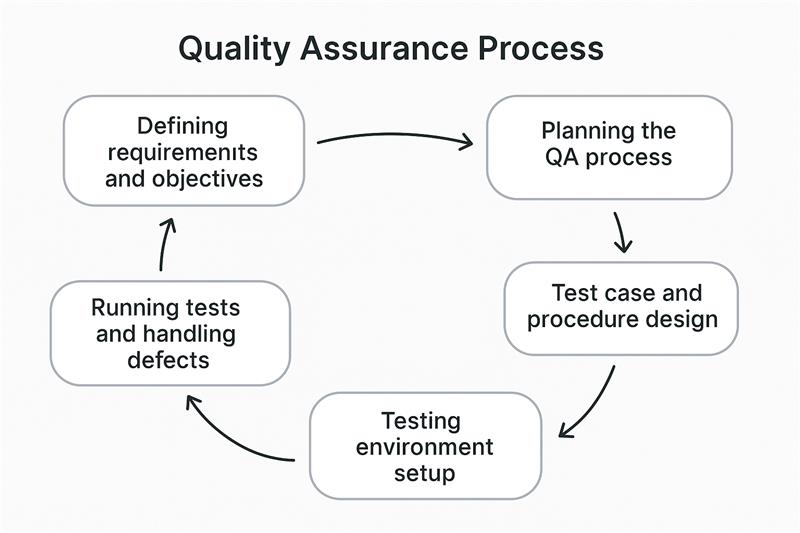
Defining Requirements and Objectives
The Quality Assurance process begins by clearly identifying quality requirements and standards for the product, service, or process. These requirements can be functional or non-functional, including performance, security, and usability requirements.
Planning the QA Process
Quality Assurance planning involves creating an overall quality management plan that defines how the required quality standards will be achieved. The plan includes the testing scope, required resources such as tools and people, timelines, and testing strategy.
Test Case and Procedure Design
Quality Assurance test case and procedure design uses the defined requirements and test plan to create detailed testing procedures. These procedures specify testing conditions, inputs, steps, and expected results for functionality and performance. QA teams may also develop testing scenarios, scripts, and automation scripts when necessary.
Testing Environment Setup
Quality Assurance requires a testing environment that simulates the production environment to support precise and dependable testing outcomes. The testing environment may include specific hardware, software, network settings, and other required configurations.
Running Tests and Handling Defects
The Quality Assurance (QA) team runs scheduled test cases using manual or automated testing methods. Issues and defects identified during testing are recorded and returned to the development team for correction.
What Is Quality Control in a Laboratory?
Quality Control (QC) in a laboratory is the process of monitoring and checking testing procedures to ensure that laboratory test results are accurate, reliable, and consistent. QC is primarily used to identify and correct errors in testing processes.
Quality Control includes checking and monitoring testing procedures, detecting problems, resolving errors, and confirming the quality and uniformity of laboratory results. Effective QC helps laboratories maintain confidence in their test results and supports accurate diagnosis and treatment decisions.
Characteristics of Quality Control
The main characteristics of Quality Control (QC) are that it is reactive, product- or result-focused, and dependent on inspection and testing. QC activities are designed to identify defects, deviations, or errors and determine whether a product or test result meets predefined quality requirements.
Reactive and Defect-Oriented
Quality Control is primarily reactive because it identifies problems after they occur or become detectable. The purpose of QC is to locate and correct defects rather than prevent every possible defect through process design.
Examples of reactive QC activities include finished-product checks, functionality testing, and other inspections designed to identify problems before a product or result is accepted.
Product- and Result-Oriented
Quality Control focuses on verifying that a product or test result meets predefined quality requirements. QC operations can include checking, testing, and analyzing the product or result to confirm its required attributes and performance.
By comparing actual results against established specifications or requirements, Quality Control helps identify deviations that require corrective action.
Inspection and Testing
Quality Control relies on inspection and testing to detect defects, errors, and deviations from established requirements. Depending on the industry and application, QC methods may include visual inspection, functional testing, performance testing, and analytical testing.
These inspection and testing activities provide evidence that a product, material, or laboratory result meets the required quality criteria.
Quality Control Process
Quality Control (QC) is the systematic process of verifying that products or services meet predetermined quality standards and specifications. The Quality Control process involves a sequence of steps for detecting, preventing, and correcting defects and variations to achieve consistency and reliability.
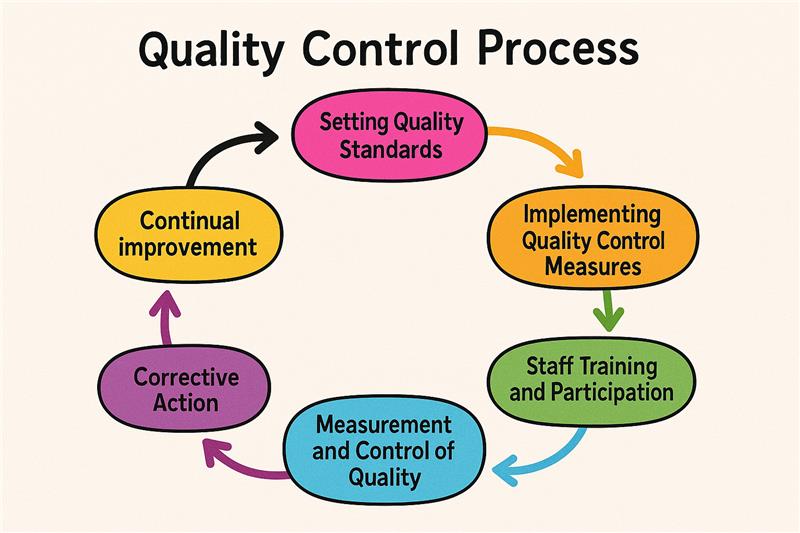
Setting Quality Standards
Quality Control begins with establishing clear quality standards and criteria based on customer requirements, industry regulations, or internal objectives. These standards define expectations for raw materials, manufacturing processes, and finished products.
Implementing Quality Control Measures
Organizations implement Quality Control measures through inspections and testing during production to ensure that products follow established standards. This includes inspecting materials at the beginning of production, during processing, and before finished products are shipped. Mechanical properties can be verified using a Universal Testing Machine (UTM) to ensure compliance with quality benchmarks.
Staff Training and Participation
Staff participation is essential to an effective Quality Control system. Training staff members in quality principles, tools, and techniques makes them aware of quality requirements and helps them solve quality-related problems.
Measurement and Control of Quality
Quality Control requires ongoing monitoring to ensure that quality requirements are maintained. Instruments such as control charts and statistical process control (SPC) can be used for ongoing monitoring. Data analysis helps detect problems and avoid escalation.
Corrective Action
Corrective action in Quality Control addresses the causes of quality issues and helps prevent their recurrence. Correcting the causes of quality problems and applying appropriate remedies helps ensure that the final product meets required standards and enhances efficiency.
Continual Improvement
Quality Control is a continuous improvement process that involves customer input, data analysis, and revision of quality standards. Continually refining the process helps companies keep their standards aligned with changes in technology and trends in the industry.
Quality control (QC) vs Quality assurance (QA)
Quality Control (QC) and Quality Assurance (QA) have different roles in laboratory quality management. QC checks laboratory results by identifying and correcting faults, while QA focuses on ensuring that the process used to produce those results is reliable and not faulty.
QC is reactive and product-focused, while QA is proactive and process-focused. Both Quality Control and Quality Assurance contribute to maintaining laboratory standards.

Difference between Quality assurance (QA) and Quality control (QC):
Here is a detailed list explaining the differences between Quality Assurance (QA) and Quality Control (QC).
|
Comparison Factor |
Quality Assurance (QA) |
Quality Control (QC) |
|
Objective |
Ensures confidence that desired quality standards are met |
Focuses on achieving the required quality |
|
Technique |
Systematic management of quality |
Inspection and verification of quality |
|
Phase |
Performed during development |
Not involved in the development phase |
|
Tool Type |
Managerial tool |
Corrective tool |
|
Process/Product Orientation |
Process-oriented |
Product-oriented |
|
Goal |
Eliminates defects before they occur |
Identifies defects and improves them |
|
Execution Order |
Performed before QC |
Performed after QA activities |
|
Technique Type |
Preventive |
Corrective |
|
Focus |
Intermediate process |
Final product |
|
Example |
Verification |
Validation |
Conclusion
Quality Control (QC) and Quality Assurance (QA) are both important components of laboratory quality management. QC verifies that testing results meet required standards by identifying errors, while QA establishes processes designed to avoid errors.
Together, Quality Assurance and Quality Control provide an integrated approach to maintaining accuracy, reliability, and conformity in laboratory operations.
Quality Control and Quality Assurance Tools
Testronix Instruments provides testing equipment for quality control and quality assurance applications. Readers interested in quality control and quality assurance tools can contact Testronix Instruments for information about its testing equipment.