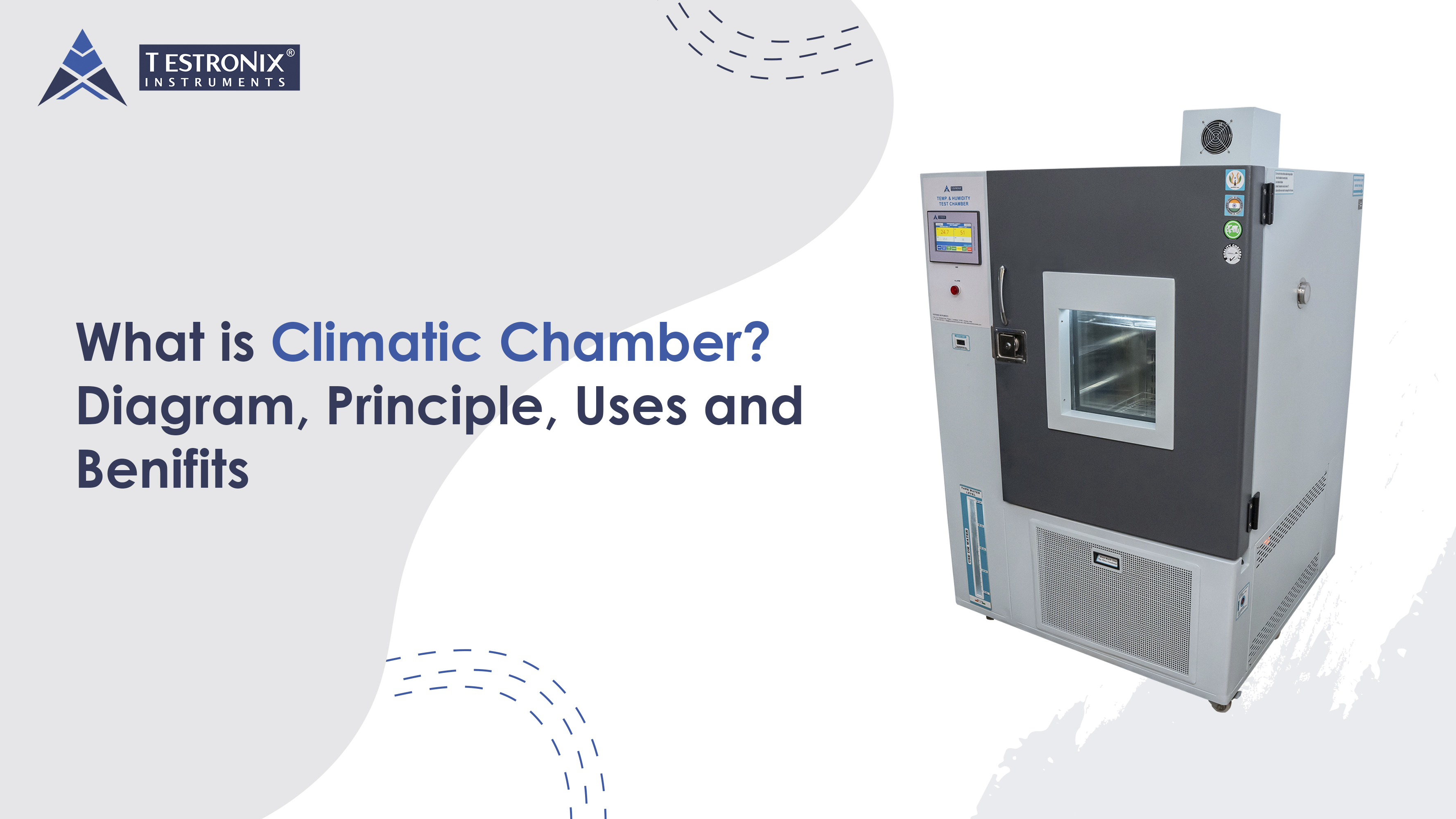
Manufacturers face huge challenges when launching new products in the market, not due to consumption but due to the product's performance in real climatic conditions. They may design something perfectly on paper but it is hard to analyze if the product will hold up in a freezing winter or a sticky tropical climate.
That is where a climatic test chamber comes in. Instead of guessing, manufacturers use a controlled setup to test the real harsh weather in just a few days. In this guide, we will look at what a climatic chamber is, how it works under the hood, and why it is a must-have tool for production labs.
What is Climatic Chamber
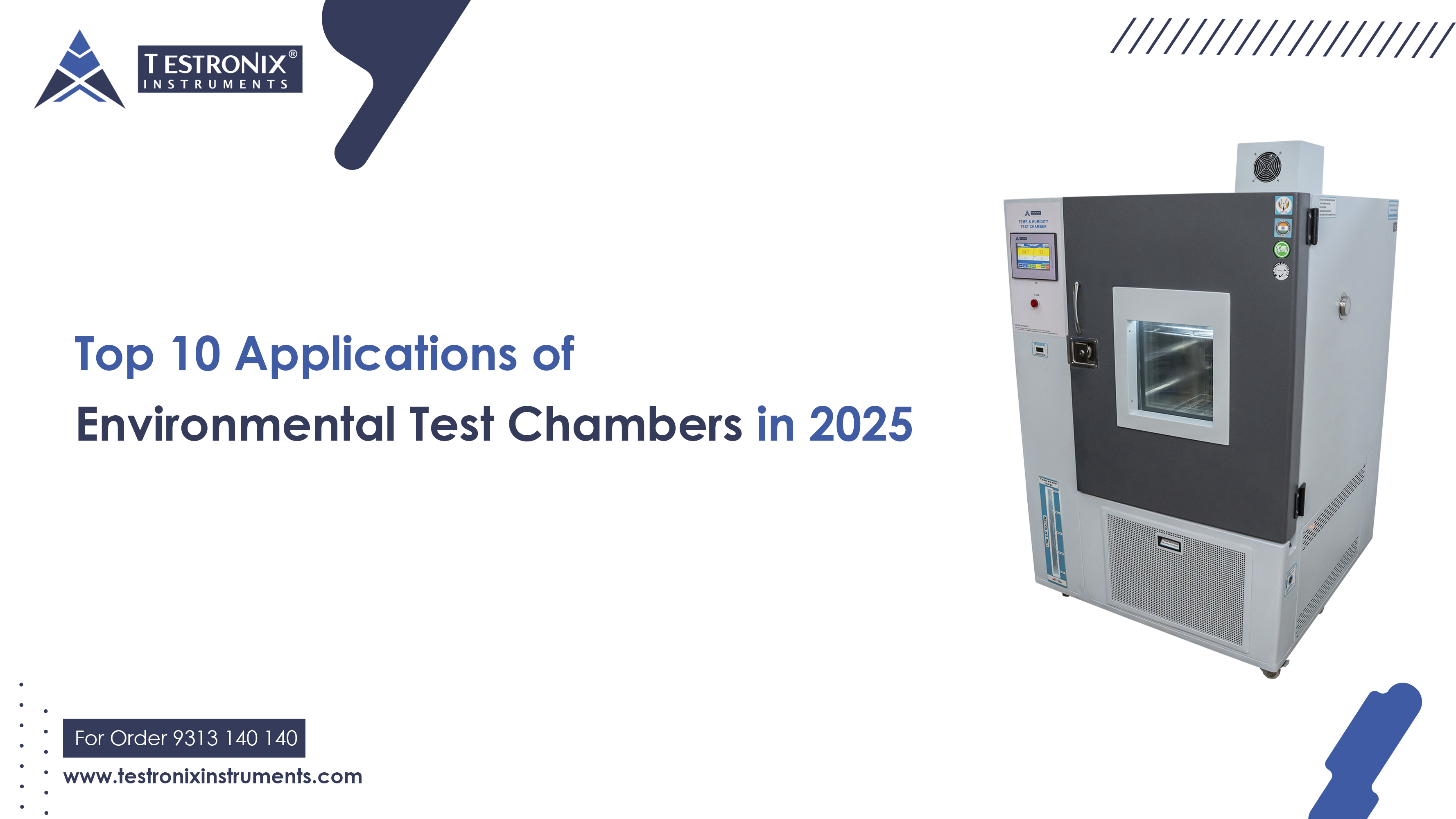
A climatic chamber is a testing enclosure that replicates precise temperature and humidity conditions to evaluate product durability. It allows engineers to see how materials, electronics, and packaging degrade or change when exposed to environmental stress.
These chambers are the simplest yet most powerful way to test the durability, performance and efficiency over the period. For example - Manufacturers test every smartphone before it hits the market. They test if a smartphone survives years of hot sun or hard climatic conditions like antarctica. Climatic testing is the answer: Testing products is put inside an enclosure and run a heavy test cycle for a few days under specified conditions.
Climatic Chamber Diagram
A climatic chamber diagram consists of a refrigeration system, insulated test cabin, heating element, steam generator, and central control panel. These elements form a closed loop system that controls the temperature and humidity inside a closed enclosure.
-
Inner Test Cabin: The Inner test cabin is the fundamental part of the climatic chamber where a sample is placed. It is usually fabricated of high-grade steel otherwise continuous temperature and moisture changes can rust it.
-
Heavy Insulation: Thick foam or fiberglass layers sit inside the walls. It stops the outside room temperature from messing up the conditions inside the box.
-
Circulation Fans: Fans keep the air moving constantly. Without them, you get hot or cold spots inside the cabin, which completely ruins the accuracy of your test.
-
Heaters and Cooling Coils: These parts change the temperature inside the box. The electric heaters warm things up for hot weather tests, and the cooling coils drop the temperature down to freezing for winter tests.
-
Steam Generator: This component controls the humidity. When you need a high-moisture test, it simply boils water to blow steam into the air.
-
Control Panel: The main screen where you program your cycles. It reads data from the sensors inside the box and tells the heaters or coolers when to kick on.
Climatic Chamber Working Principle
Climatic chamber principle works by maintaining a strict equilibrium between thermal energy and moisture control through automated feedback loops. High-accuracy sensors continuously read the internal climate and feed data back to a digital controller.
If a manufacturer programs a freezing test, the controller switches on the refrigeration compressor to pump coolant through the coils, taking the heat out of the air. When it is time for a hot cycle, the cooling shuts off and electric heating elements fire up to raise the temperature.
In the same way, industries control the humidity inside a climatic chamber. The system heats water to spray vapor into the air flow path to humidify the air. If the test requires bone-dry air, the cooling coils go through a quick cycle to condense the moisture out as water droplets that drain out of the machine. While this is happening, the internal fans are blowing air around so your product gets hit evenly from every side.
Applications of Climatic Chamber
Different industries use these chambers to put their products through absolute misery before selling them to customers. If a material has a hidden weakness, these machines will find it fast.
Electronics and Semiconductor Testing
Circuit boards and chips do not handle extreme heat or sudden cold drops well. Testing chambers simulate rapid temperature swings to check if solder joints crack or if components burn out under pressure.
Automotive Component Verification
Automotive components daily face harsh conditions, sometimes too much heat and other times chilling cold. It is not like that different vehicles are designed for different environmental conditions but they have to be made durable enough to survive any conditions. A climatic chamber ensures such endurance for every environmental condition.
Pharmaceutical Stability Studies
Medicines have to stay safe and effective until they hit their expiration date. Labs use chambers to create a steady warm and humid climate to see if pills or liquids degrade over several months on the shelf.
Aerospace and Defense Testing
Aircraft parts go from warm ground levels to freezing high altitudes in a matter of minutes. Testing chambers mimic these sudden changes so engineers know navigation gear won't fail mid-flight.
Packaging and Container Durability
Shipping boxes take a beating during global transit. Putting cardboard and plastics through high humidity tests shows whether the packaging will turn to mush and ruin the goods inside.
Benefits of Climatic Chamber
Benefits of a climatic chamber include accelerated product development, reduced recall risks, and highly accurate, repeatable testing data under extreme conditions. With a climatic test chamber, manufacturers get reliable, messy-weather data right from the comfort of a clean lab room.
-
Speeds Up Development: You do not have to wait around for winter or summer to see how a product reacts to real weather.
-
Saves Money on Recalls: Precaution is better than fixing and it is completely true about the climatic chamber. A product may be a minor crack, low pressure endurance, low temperature sustaining, etc. And a climatic test chamber can easily find out before actual production.
-
Meets Industry Rules: Every industry runs on a specific set of its rules and guidelines to ensure high-quality products. Industries follow the specific standards, material selection, design and structural considerations and many others. The chamber helps to achieve all these goals.
-
Gives Repeatable Results: The climate chamber is not something like testing specific environmental conditions outside the manufacturing unit. It tests the climate inside a closed enclosure where they can check the products and materials to get repeatable results.
Testronix Climatic Chamber - Trusted Equipment for All Climatic Conditions
If you are looking for reliable testing gear that can handle everyday lab abuse, Testronix Instruments makes highly durable machinery. Our equipment handles intense industrial testing schedules without breaking a sweat.
Testronix climatic chamber stands out because it balances high-end performance with user-friendly operation. It offers exceptionally accurate temperature uniformity across the entire internal cabin which is important to meet ASTM, ISO, and IS testing standards. The equipment features high-grade stainless steel interior walls that easily withstand decades of high humidity testing without rusting. With responsive digital controls, setting up complex multi-step thermal profiles is straightforward and highly efficient for busy lab technicians.
Conclusion
Putting your products through simulated environmental stress is the only real way to guarantee they will last out in the real world. Relying on unpredictable outdoor conditions just slows down production and leaves way too much up to chance. For labs that need heavy-duty build quality and spot-on accuracy, Testronix Instruments offers great setups built for rigid industry standards. Get in touch with Testronix Instruments to look over their options and find the right chamber size for your testing goals