In the food industry, pH is not just a quality parameter. It is a control point that runs through nearly every stage of the process. A small deviation in pH can change how a product tastes, how long it lasts on the shelf and if it is safe to sell to the end customer.
Food manufacturers deal with this across every category. Dairy, beverages, meat, bakery and fermented products. The pH parameter shows up everywhere and the cost of getting it wrong varies from a rejected batch to a compliance failure. This article covers what a pH meter actually is, why it carries significant weight in food quality systems, and seven specific areas in food production where pH measurement is not optional.
What is a pH Meter?
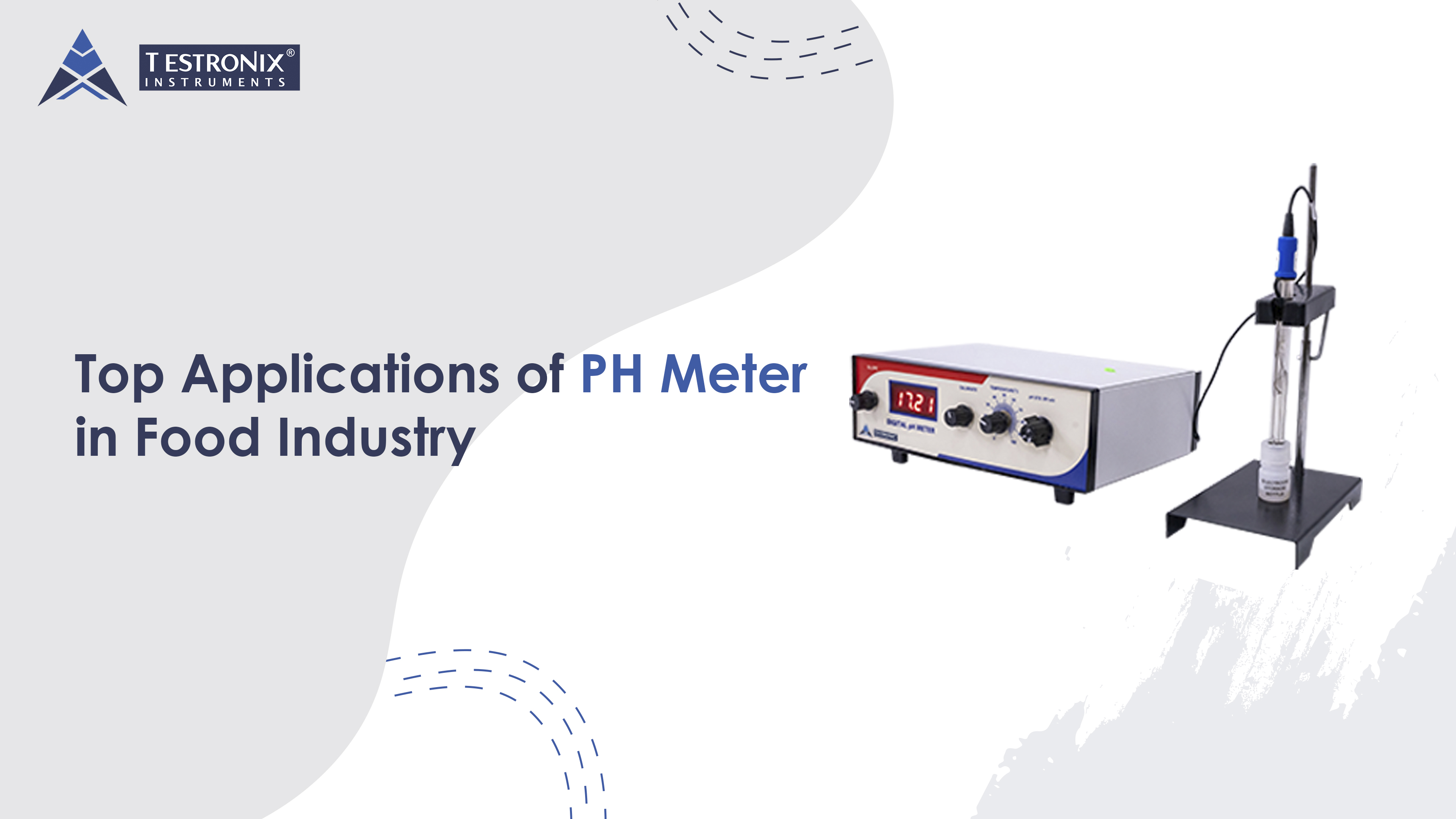
A pH meter is an electrochemical device to measure the acidity or alkalinity of a liquid solution. pH value is calculated from 0 to 14 based on the solution's hydrogen ion concentration. Lower hydrogen ion concentration means higher pH and higher concentration means lower pH. It represents a tenfold difference in ion concentration which is why a solution at pH 4 is a hundred times more acidic than one at pH 6.
The working principle of pH meter involves a glass electrode that sits in the sample and generates a small voltage based on the hydrogen ion concentration in that liquid. The meter converts that voltage into a pH reading on the display. Simple in concept. The reason it matters over alternatives like litmus strips or colorimetric kits is accuracy. A pH strip gives you a rough estimate. A calibrated meter gives you a value you can document, defend and act on.
Temperature affects pH readings. Most food-grade pH meters have automatic temperature compensation built in because production environments are not controlled lab settings. A reading taken in a 40°C processing area without temperature compensation will not match a reading taken in a cooled holding room, even on the same sample. That kind of variation creates problems in quality records.
A properly calibrated meter with temperature compensation removes that variable from the equation entirely.
Related: What is a pH Meter?
Importance of pH Meter in Food Industry
pH does more in food production than most people outside the industry realize. It affects microbial behavior, texture, color, preservation and regulatory compliance all at once.
A neutral pH provides support for the growth of many pathogens; however, the presence of an acidified (less than 4.5) environment can lead to many pathogens or organisms such as Clostridium Botulinum, dying as a result. Acidification is more than simply providing flavor; it is a method of preservation. Understanding acid use within the context of preservation requires knowledge of pH levels as well as the safety of food products.
However, there are other effects that pH has on food production, such as how proteins function will change throughout different processes based on their environment, how emulsifiers will act in a sauce and how pigments will react or maintain when exposed to temperature. Regulatory frameworks for acidified and fermented foods require documented pH evidence at production. A pH meter is the instrument that makes all of that documentation possible.
Top Applications of PH Meter in Food Industry
1. Dairy and Cheese Production
Milk enters processing at around pH 6.6 to 6.8. During fermentation, that number drops as bacteria produce lactic acid. The rate and endpoint of that drop determine curd formation timing, rennet addition, texture and final flavor. For yogurt, a finishing pH of 4.0 to 4.6 is the target. Too high and the product is flat. Too low and the sourness is unpleasant. Continuous pH monitoring during fermentation is what keeps dairy batches consistent and within spec, not guesswork or fixed timers.
2. Beverage Manufacturing
All types of juices, carbonated beverages, energy drinks and flavored waters must be produced according to established specifications that include pH levels based on two criteria: taste and shelf life. The pH of fruit varies by its natural acidity from one fruit to another based on the type of fruit, maturity at the time of harvest, and the season of harvest; therefore, if there is no monitoring and correction of the pH of raw fruit throughout the processing of that fruit, finished product pH will be affected by variations in raw materials.
The mix pH of a brewing process will have an impact on enzyme activity and fermentation efficiency. If a brewer measures pH only once at the completion of the entire brewing process, any problems with pH levels will likely have already occurred.
3. Bakery and Dough Fermentation
Dough behaves differently at different pH levels. Yeast activity slows or accelerates based on acidity, gluten development is affected, and the final crumb texture changes with it. In sourdough, the ratio of lactic to acetic acid bacteria determines whether the bread has depth of flavor or just sourness. That ratio is controlled through pH. For industrial bakeries running high volumes, this matters because no two raw material batches are identical. Flour protein content varies, water quality varies, and ambient temperature varies.
pH monitoring during mixing and fermentation is what keeps the finished product consistent despite all of that. A 0.3 unit drift in dough pH is not a small thing. It shows up in the rise, the texture, and the eating quality of the final product.
4. Meat and Poultry Processing
Once the animal is harvested, glycogen in the muscle breaks down into lactic acid and pH starts falling. Normal process. The issue is how that fall plays out. Some carcasses hold at a higher pH than they should. Bacterial growth is not well suppressed at that level, shelf life shrinks, and spoilage risk goes up. Others drop too fast. The result is pale, soft meat with poor moisture retention. Processing yield suffers and the product looks off. Both scenarios are problems that cost money.
5. Fermented Foods and Pickle Production
Fermentation is essentially a managed pH decline. Sauerkraut, kimchi, pickles, fermented sauces — all of these rely on microbial acid production to reach a pH low enough for preservation and flavor development. The question in production is always: has the product reached a stable and safe pH endpoint? That answer requires measurement. Testronix pH meters handle this kind of repeated batch measurement reliably, maintaining accuracy even in high-acid environments with significant particulate content which is common in fermentation production.
6. Sauces, Condiments, and Acidified Foods
For acidified food products, pH 4.6 is not just a quality specification. It is a safety threshold defined by food safety regulations in multiple markets. Below this value, Clostridium botulinum cannot grow. Above it, the product carries a risk that cannot be managed through other means. Ketchup, mustard, dressings and vinegar-based products all sit in this category. pH measurement at the formulation stage and again at the finished product is standard practice, and the results need to be recorded for compliance purposes.
7. Processing Water and Sanitation Control
Water is used across washing, cooking, cooling, and cleaning operations in food facilities. Its pH affects how sanitizers perform, how equipment surfaces respond to cleaning chemicals and in some cases, the food product being processed. Chlorine-based sanitizers, for example, have a functional range between pH 6.5 and 7.5. Outside that range, efficacy drops.
Washing water for fresh produce needs to be in a controlled pH range to support microbial reduction without damaging product texture. Facilities running HACCP programs verify water pH as part of their routine monitoring and a reliable pH meter is what makes that verification practical.
Conclusion
pH measurement is not a single-point check in food production. It runs through raw material intake, processing, fermentation, finishing and sanitation. Getting it right consistently requires an instrument that is accurate, reliable, and calibrated for the conditions it operates in.
Testronix Instruments is a trusted pH meter manufacturer and supplier in India. We offer instruments built for the demands of food industry environments. For facilities looking to source or upgrade pH measurement equipment, contact us directly to discuss the right specification for your application.