Plastics are an inevitable part of our daily lives nowadays, as they are found in car hoods, water pipes, electronics, pharmaceuticals, and many other industries as well. People often think plastic products last forever but they do not in reality. For example, if you leave a plastic chair outside in the rain and sun for a long time, it fades, gets weak and breaks.
Water, humidity, and salty sea air slowly ruin plastics by breaking down the material from the inside out. For companies making these products, this is a big problem. If you ship thousands of plastic parts to a wet or coastal area and they break right away, you lose money and customers.
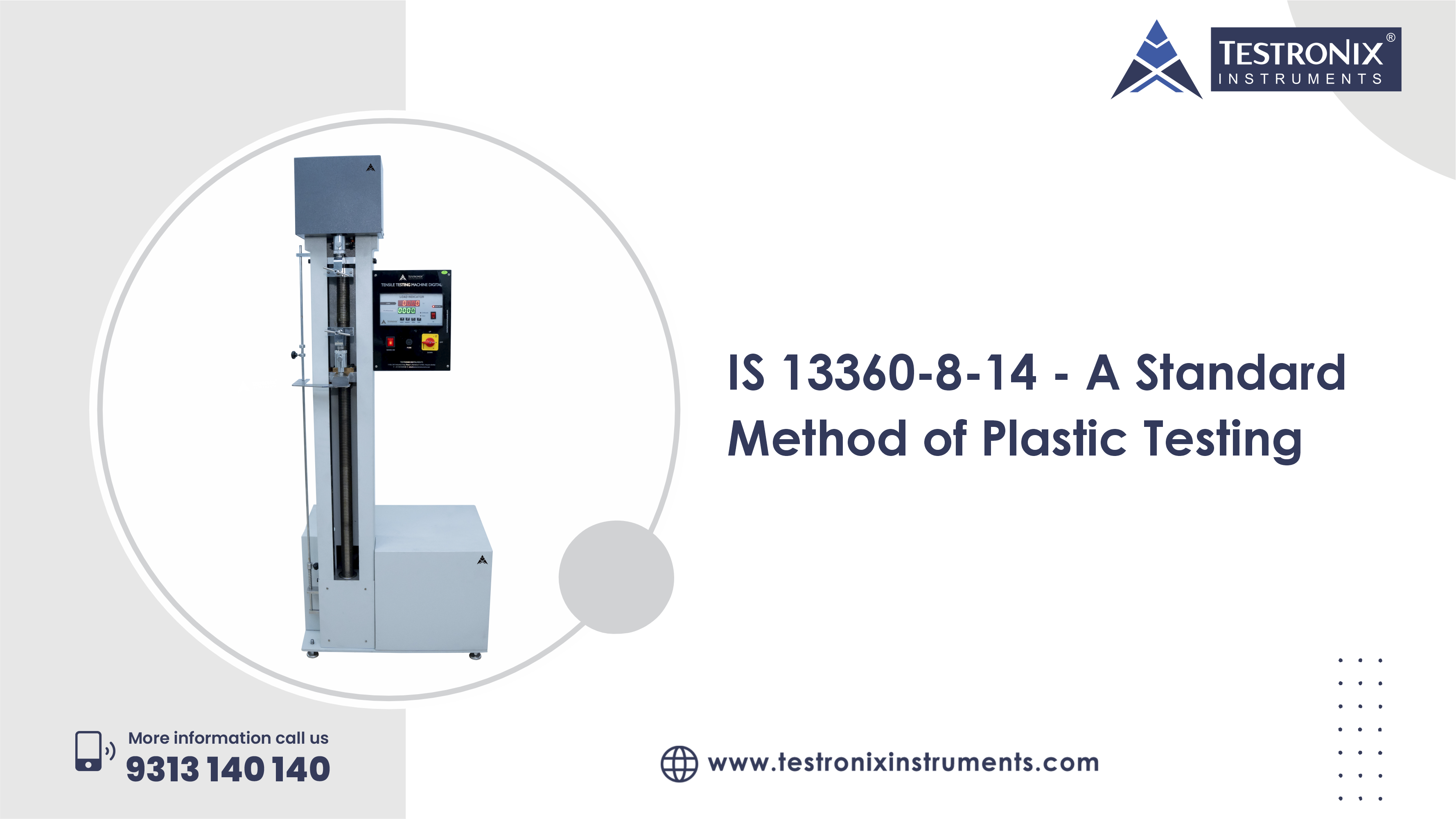
This is where IS 13360-8-14 is required for companies to evaluate the quality of products and their longevity against harsh environmental conditions. In this article, we will talk about what the IS 13360-8-14 standard is for plastic testing, what the working procedure is, and how to use the tools to protect plastic against moisture and salt.
What is IS 13360-8-14?
IS 13360-8-14 is an Indian Standard developed by the Bureau of Indian Standards. It is a dedicated testing method under the broader family of plastic testing guidelines. Specifically, this section focuses on the chemical and permanent properties of plastic materials.
This standard would not tell you what plastic is but tells how it can withstand opposite environmental conditions of moisture, dust, salt or fog. When a plastic material is put under the testing machine, it simulates the forces years of outdoor damage can cause in just a few days. So, you can see if the material is tough enough.
Purpose and Scope of IS 13360-8-14 for Plastic Testing
The main purpose of 13360-8-14 for plastic testing is to describe the method to evaluate how plastic material will perform over time. Manufacturers do not have to wait years to see if a plastic product will last in a certain environment.
By using a specialized salt spray test chamber to replicate intense moisture and corrosive exposure, this test lets you know if your plastic sample can survive the wet or salty conditions. When plastic is submerged in water, it can swell up and get soft. When you add salt, it speeds up the damage and ruins the color. This test catches those flaws early. The IS 12260-8-14 guideline applies to all types of raw plastic materials, flat plastic sheets, and fully finished products that are used by daily users and businesses as well.
The following are some popular applications for which this standard is used:
-
Cars: Bumpers, door handles, and engine parts that get hit by rain and road salt.
-
Electronics: Outer boxes and wire covers that stay outside in the weather.
-
Pipes: Underground water lines that stay wet all the time.
IS 13360-8-14 PDF Download
If you are running a lab or manufacturing unit, you must understand the basics and detailed procedure requirements of IS 13360-8-14. This standard helps businesses to manufacture plastics based on real-world applications to ensure high strength and durability over time. Download IS 13360-8-14 PDF for free from the given link below and improve your products today.
Download IS 13360-8-14 PDF
IS 13360-8-14 Procedure for Plastic Testing
To run the IS 13360-8-14 test correctly, you must follow these five steps in order.
Step 1: Prepare the Sample
Divide the plastic samples into the exact shapes and sizes required by the rules. Then, you clean them completely. It is to be noted that even a little amount of oil from your fingers can alter the test results significantly. This is the sensitivity level of the test and should be handled carefully.
Step 2: Ensure that the initial conditions were accurately recorded
Before starting the test, make sure that the initial testing conditions are accurately recorded. For that purpose, measure the weight, volume, color and dimensions of the sample. After testing, you can analyze and compare the testing results before and after disintegration.
Step 3: Place Sample into the Equipment
The next most critical step is to put the sample in the plastic testing equipment. Check all the environment and testing conditions before introducing the sample for testing. When more than one sample is being stored for different climatic conditions, it must be separated and stored within a sufficient distance so that the air can be ventilated effectively and there is no interstitial contamination between samples.
Once the sample is placed, the following steps are taken:
-
Increasing the temperature of the air inside.
-
Adding moisture to the environment to create moisture-rich air.
-
The sample is covered with salty water or a very fine fog of water and the test is started.
Step 4: Wait for Specified Time
Once the sample is placed inside the testing machine, you may need to wait for some time as already specified. The time can be 48 hours, 96 hours or even a few weeks depending on which type of plastic is being tested and what the specific climatic conditions are.
Step 5: Check the Damage
When the specified time limit is completed, the system displays the alarm of test completion. The operator can take out the sample, wash out the sample clearly to remove salt and keep it to dry. Once this process is done, check the sample carefully for any damage as follows:
-
Visual changes: Look for cracks, bubbles, swelling or faded color.
-
Weight changes: Weigh them again to see if they absorbed water.
-
Strength changes: Bend or pull the plastic to see if it has become weak or brittle.
Testronix Plastic Testing Equipment: Compatible with IS 13360-8-14
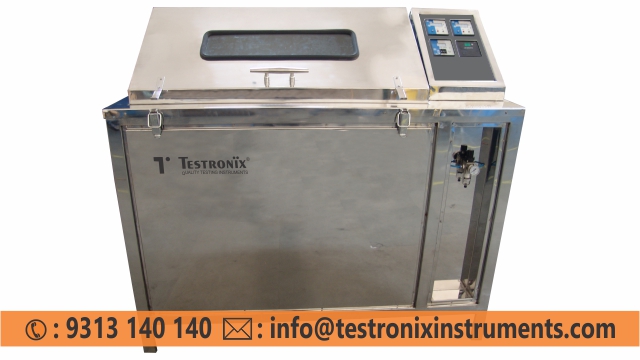
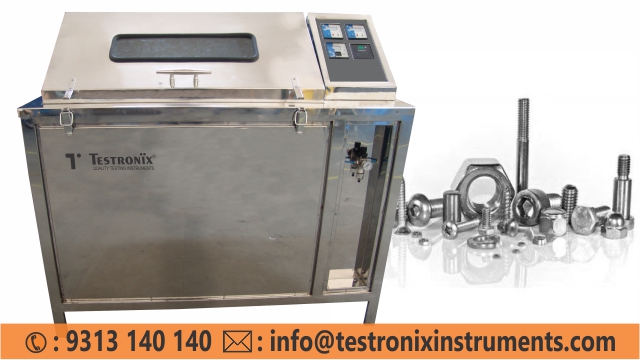
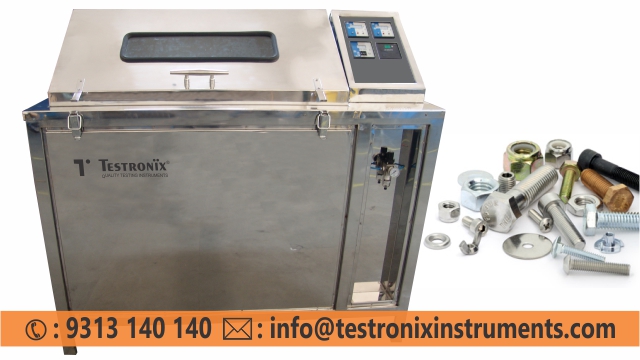
Plastic testing to follow standard 13360-8-14 should be done very carefully and follow the right instrument. Do not try to perform the test at home or use any inferior equipment. The whole testing process needs to be precise at the levels of heat, moisture and salt exposure. Testronix Instruments is a leading manufacturer of plastic testing machines in India and businesses use our plastic testing machines to ensure that the standard regulations are followed. Testronix manufactures Salt Spray Chambers, Humidity Chambers & other machines as per the guidelines of the IS 13360-8-14 standard.
Because salt water rusts metal very fast, our machines are built of thick, corrosion-proof plastics and high-grade parts. The machines also have simple yet innovative digital screens. A lab technician can type in the temperature and humidity chambers, press start, and walk away while the machine does all the work.
Conclusion
In the plastic industries, skipping weather tests can create big issues for businesses involved in plastic products or plastic manufacturing. The IS 13360-8-14 standard gives you real facts showing that your plastic items can handle rain, heat, and salt without breaking down early.
To get accurate results, you need the right tools. Reliable lab machines protect your business from making bad products. If you want to set up a new lab or are looking for efficient products, book a call with Testronix Instruments or reach out to us for customized solutions for your plastic testing industry.