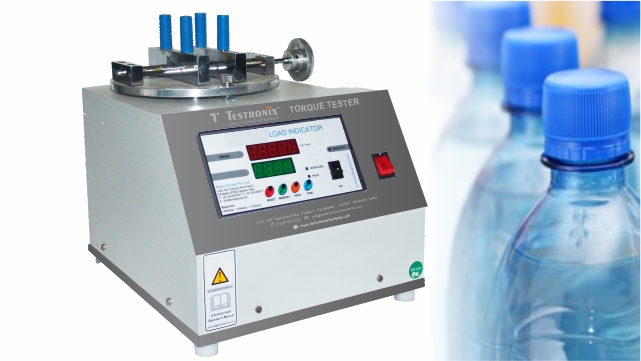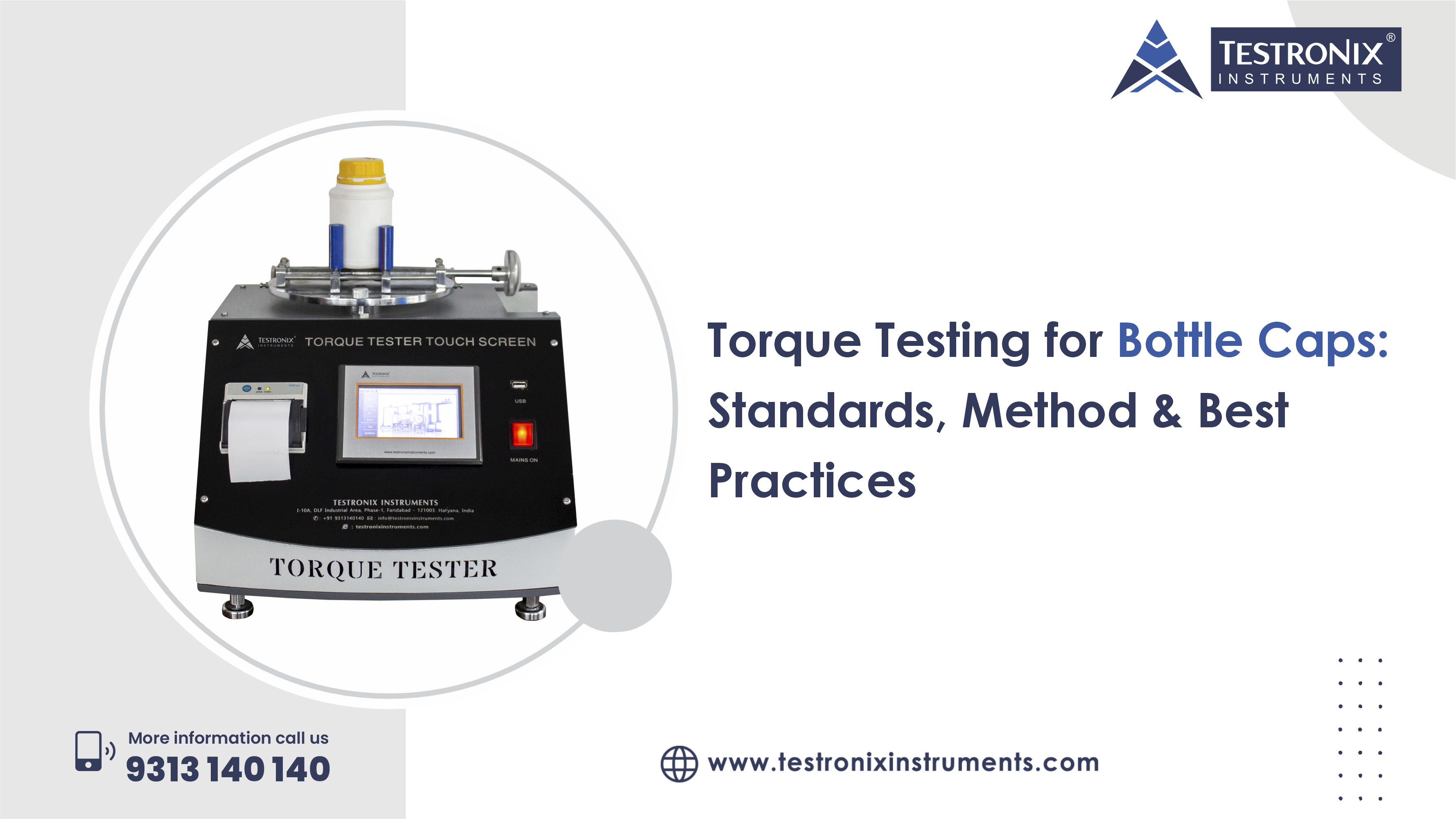
Bottle cap torque testing is a critical quality control measure in packaging operations across beverages, pharmaceuticals, and chemicals. Loose caps cause leakage during transit, while overly tight caps frustrate end users or break unbreakable seals.
Packaging lines run fast and small changes in set-up can influence the tightness of closures on thousands of units. Quality control teams are constantly under pressure to find a compromised product for leak prevention and easy manual opening. This article describes the fundamentals of closure torque, key industry test methods, related standard frameworks and practical guidance to help you keep your line’s seal performance steady.
What is Torque Testing?
Torque testing measures the rotational force required to apply or remove a threaded closure from its container finish. It quantifies how securely a cap seals against the bottle land area using specialized torque measurement instruments.
Simply put, torque is a twisting force. On the subject of bottle caps, there are two primary metrics we track: application torque and removal torque. Capping application torque: Torque applied to the cap during manufacturing. Removal torque is the rotational force required by a consumer or testing machine to unscrew the cap.
Think about a standard plastic soda bottle. If the packaging machine applies 15 pounds of torque during filling, the closure sits tightly against the neck rim. When a customer opens it later, the initial twist required to break the thread friction and snap the security ring is the removal torque. If that removal torque is too low, product leaks out. When the torque is excessive, opening the bottle by hand becomes nearly impossible.
Importance of Torque Testing for Bottle Caps
Proper torque testing helps protect product integrity, avoid chemical spills and maintain a good brand image with consumers. Without regular measurements, packaging facilities could be subject to rejection rates and costly product recalls. Torque Testing is performed with:
To Prevent Leakage and Spillage
Under tightened caps, leave micro gaps between the cap liner and bottle lip. Liquid creeps through these spaces during transportation stress.
Vibration from road shipping imposes a constant movement of containers. Weak closures slowly retract their threads under continual shaking. Fluids leaking that destroy secondary packaging and spoil entire pallet shipments. We test to ensure that the caps maintain sufficient seating pressure to prevent fluid movement during rough transit.
To Maintain Product Life
Air ingress degrades sensitive contents like carbonated beverages, pharmaceuticals, and perishable liquids. Proper seal pressure creates an airtight seal that keeps atmospheric oxygen out.
If the pressure on the closure falls below the desired level, carbonated soft drinks quickly lose the carbonation. Oxygen in the air entering pharmaceutical bottles oxidizes active ingredients, reducing the potency of medicines. The container closure system is regularly challenged to demonstrate it retains its barrier properties throughout the shelf life of the target.
To Protect Consumer Convenience
Excessive application torque turns cap removal into an annoying chore for customers. Elderly users and individuals with limited hand strength suffer most when caps are over-tightened.
This part matters when building customer trust. Customers want a tool-free, easy-to-open process that requires as little human effort as possible. Customers can get frustrated and often move on to other brands if the cap is too hard to open.
To Prevent Broken Safety Seal
Safety bands must break cleanly away from the closure skirt during opening. Misaligned torque levels can crush or strip these delicate plastic bridges during application.
If capping equipment applies excessive torque, the tamper ring bridges stretch or snap right on the production line. Consumers view broken rings on store shelves as compromised safety seals. Torque testing checks that application force stays within the window where seals remain intact during assembly but break properly upon initial opening.
Torque Testing Method
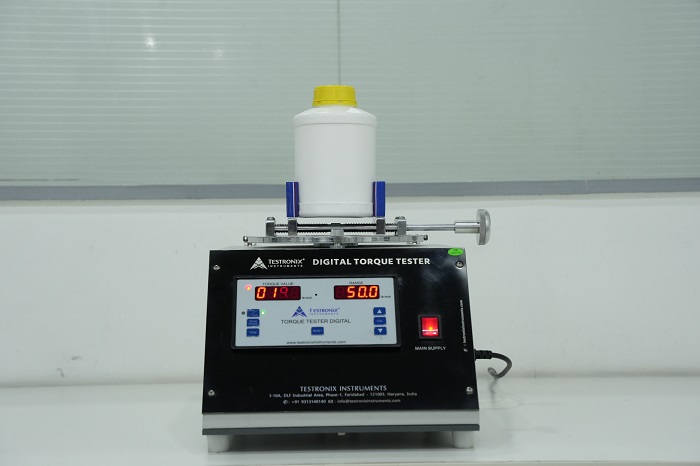
For a correct torque test, the bottle container is clamped in a calibrated torque tester and the cap is rotated either manually or automatically to record peak forces. The standard procedure will yield dependable baseline data for production adjustments.
Bottle cap torque testing is a systematic way to get clear readings. The test assembly is equipped with a torque instrument, either motorized or manual, with adjustable peg fixtures. These pegs engage the body of the bottle firmly without distortion of the sidewalls. Changing the shape of the container changes the geometry of the thread and leads to false values of torque.
-
First, condition the sample bottles to standard ambient laboratory temperatures. Plastic cap flexibility and liner compression resilience are affected by temperature variations. Place the test specimen in the base holder of the torque tester in a vertical position. Tighten the holding pegs until the bottle is completely firm. The bottleneck must be centered with the measurement spindle.
-
On the device, the digital gauge is zeroed for removal torque testing. Hold the cap tightly around the outside edge of it. Turn the cap smoothly and continuously in the CCW direction. Don’t push down when turning, since that creates an artificial friction that distorts your test output. The digital display holds the increasing torque value until the cap is freed from the resistance of the thread. Note the maximum reading and this is the maximum removal torque. When testing foolproof closures, keep turning until you separate the plastic bridge security ring and record that secondary peak value as well.
-
For application torque testing, place an unsealed cap onto the thread finish. Zero the meter, then turn the cap clockwise at a steady pace until it reaches hard stop resistance. The peak value displayed indicates the force exerted to seal the container.
Important Standards for Torque Testing
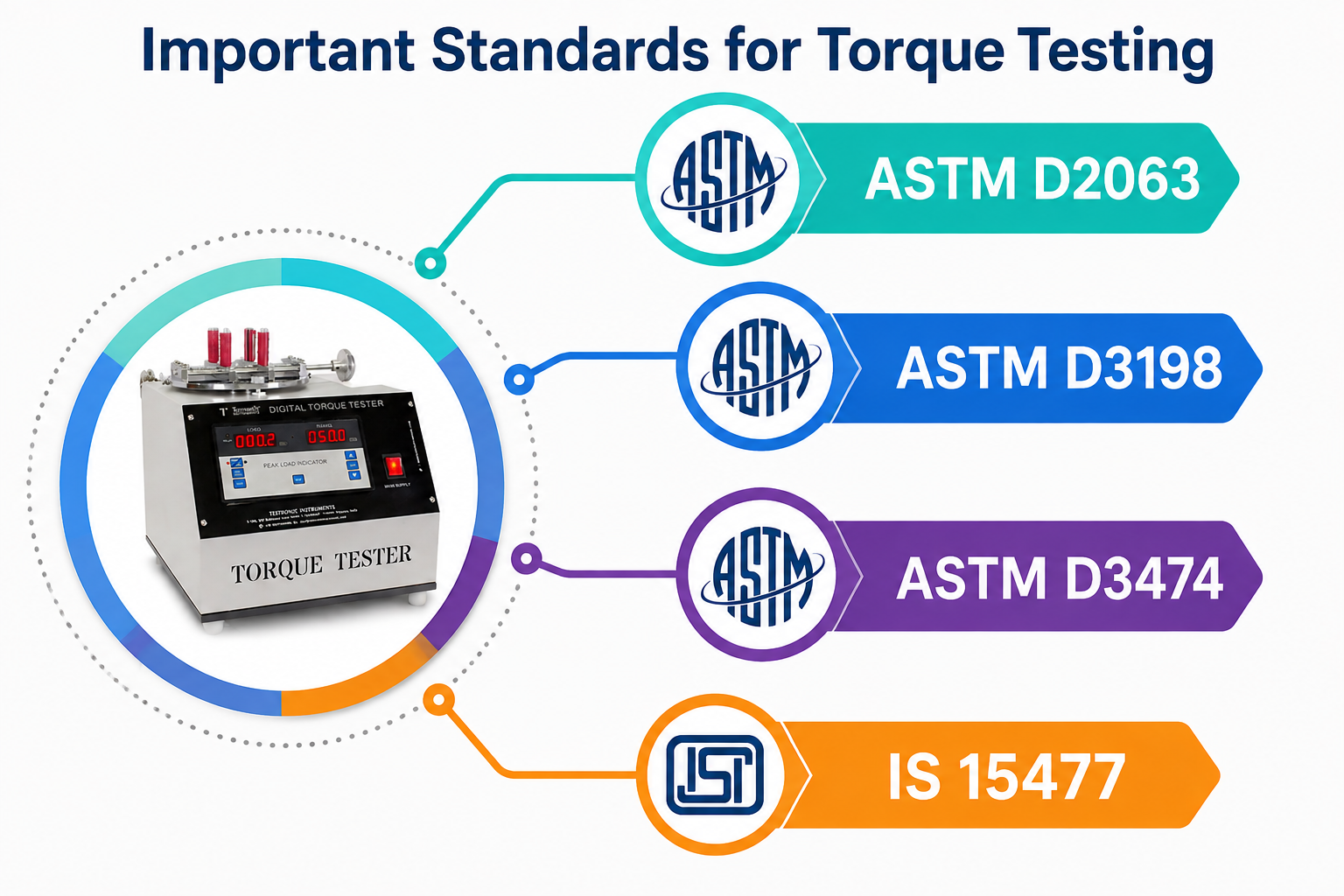
Recognized international standard methods are established for standardized testing protocols, clamping requirements and reporting of units. In this way, consistent quality assurance data will be provided for all packaging facilities all over the world when these standards are adhered to. These standards are applied to guarantee consistent quality assurance data for all packaging facilities worldwide.
-
ASTM D2063: Standard Test Methods for Measurement of Torque Retention for Packages with Continuous Thread Closures. This standard is based on measuring the loss of torque over time after initial capping, which is caused by plastic stress relaxation and liner creep.
-
ASTM D3198: Standard Test Method for Application and Removal Torque of Threaded or Lug Style Closures. It gives detailed instructions for measuring the immediate applied force and the initial opening resistance by means of either manual or automated torque measuring devices.
-
ASTM D3474: Standard Practice for Calibration and Use of Torque Meters Used in Packaging Applications. This standard offers guidance to laboratory operators for proper mounting and calibration procedures for torque testing instruments and sensor alignment.
-
IS 15477: Indian Standard for performance evaluation of plastic closures for plastic containers. It describes the leak resistance, cap strength and acceptable torque removal limits test procedures.
Best Practices to Conduct Torque Testing for Bottle Caps
By following the best practices for torque testing, operators ensure that bottle caps are delivered for what they are intended to do.
-
Regularly check and maintain calibration: Calibration of torque sensors should be done every 6 months with certified calibration weights to avoid drift in measurement.
-
Sample temperature balance: Plastic parts need to be thermally balanced. So, leave bottles in the test lab for at least 2 hours before testing.
-
Do not use downward pressure: Tell lab operators to turn caps horizontally, but not to put downward pressure on the bottle top during manual testing.
-
Control gripping pressure: Use rubber-coated fixture pins which grip bottles firmly without any squeezing or deformation of the container body.
-
Identify test time periods: Set test times after capping (e.g., immediately after filling and 24 hours) as the torque naturally decreases as the components settle.
-
Secondary peak values: Register the first and secondary torque to be applied to the thread release. Register the secondary torque to break tamper-evident bands. Use the values of the secondary peaks.
Testronix Instrument Torque Tester
Testronix Instrument offers a precise torque tester that is built specifically for modern bottle packaging quality control. Their digital torque testers provide accurate readings built to withstand rugged factory floor conditions.
A reliable testing instrument eliminates uncertainty from the evaluation of the testing process. The Testronix torque tester features strong digital sensors, easy-to-read display units and powerful sample clamping devices. Variable holding pegs for a variety of bottle sizes: from small pharmaceutical vials to large heavy-duty chemical containers. A Testronix digital torque tester can be used by plant technicians to detect capping machine drift during the routine quality control procedure and prevent bad batches from leaving the factory.
Conclusion
Robust quality testing of bottle cap torque helps protect product quality, avoid shipping leaks, and keep the end user happy. Standard testing procedures are in place to make sure that each production batch is packaged correctly.
You need quality checks you can count on to protect brand image and avoid leaks in any bottling operation. Understanding closure mechanics, employing accepted ASTM protocols and practicing good lab techniques keep packaging lines moving. Selecting high quality equipment makes a measurable difference in operational reliability when choosing testing hardware for your laboratory. Testronix is the world’s largest manufacturer of torque testers and offers dependable and highly accurate instruments to make sure that packaging operations are completely safe and compliant.