Brittle building materials can withstand a lot of downward pressure but tend to crack when they are under tension. Civil engineers and laboratory technicians face difficulty pulling solid rock cores from each end without breaking the sample near the grips. The testing parameters, including the forces exerted, are standardized by IS 10082:1981, which lays down the procedure for tensile strength testing.
In rock mechanics and geotechnical engineering, it is important to know the response of the material to tension. Glued caps fail early, and clamping forces fracture edges long before the core is at its true failure point. So engineers use standardized, indirect measures to get a good read on tensile performance.
In this article, we will walk through the exact testing requirements under IS 10082:1981, set by Indian Standards for rock samples. You will learn about sample preparation parameters, loading rates, calculation formulas, and how modern laboratory equipment helps maintain strict compliance during everyday testing.
What is IS 10082:1981?
IS 10082:1981 is the official Indian Standard code that defines the test procedure for determining the tensile strength of rock specimens using indirect loading methods. It lays out clear rules for preparing circular rock discs and splitting them under controlled compressive loads.
The IS 10082:1981 standard was published by the Bureau of Indian Standards. Instead of machining a rock core, a cylindrical disk is placed between curved or flat jaws in a horizontal position and compressed across its diameter. This force is compressive and causes uniform stresses which tend to stretch the material in directions at right angles to the line of loading. The rock cleanly cleaves along the center diameter of the rock. This gives a good measurement of the tensile strength.
This standard provides uniform guidelines for all the geotechnical testing laboratories in India. It removes the guesswork from the specimen dimensions, allowable variations and required loading speed. A uniform protocol enables engineers working with tunnels, dam foundations, and mining shafts to compare lab data with total confidence.
Purpose and Scope of IS 10082:1981 in Tensile Strength Testing
The main purpose of IS 10082:1981 is to provide a practical and repeatable way to evaluate rock tensile capacity without the high failure rate of direct pull tests. It applies to solid rock specimens gathered from site drilling cores used in major infrastructure projects.
In nature, rock structures are subject to complex load conditions. Roof sag in the tunnel crowns due to underground excavation. Rock anchor plates exert point loads. Intense tensile waves due to blasting. It is important to know the precise tensile limit of rocks, for they are nearly ten times weaker when pulled than when squashed and catastrophic structural failure can happen if they are pulled too hard.
Using a specialized tensile strength tester designed for indirect splitting tests allows technicians to apply precise compression across the disc diameter. The scope covers circular core discs with a diameter not less than 45 millimeters and a thickness approximately half the diameter. Lab managers rely on a high-precision tensile strength tester to maintain steady loading rates so the specimen fails purely in tension across its center plane.
IS 10082:1981 PDF Download
You can download IS 10082:1981 PDF document directly from the official Bureau of Indian Standards portal or authorized code archives to review full technical clauses.
For detailed IS 10082:1981 guidelines, access the official Indian Standards repository or your organization's standard database to download the complete document. Having the official reference guide on hand gives your quality team quick access to specific dimensional tolerances, jaw-curvature formulas, and raw-data recording requirements.
IS 10082:1981 Standard Test Method for Tensile Strength
Usually, smooth circular disks of rock are prepared, seated in special alignment jaws and subjected to a continuous compressive force until the specimen fails down the middle. The indirect tensile strength value is determined by taking the peak failure load.
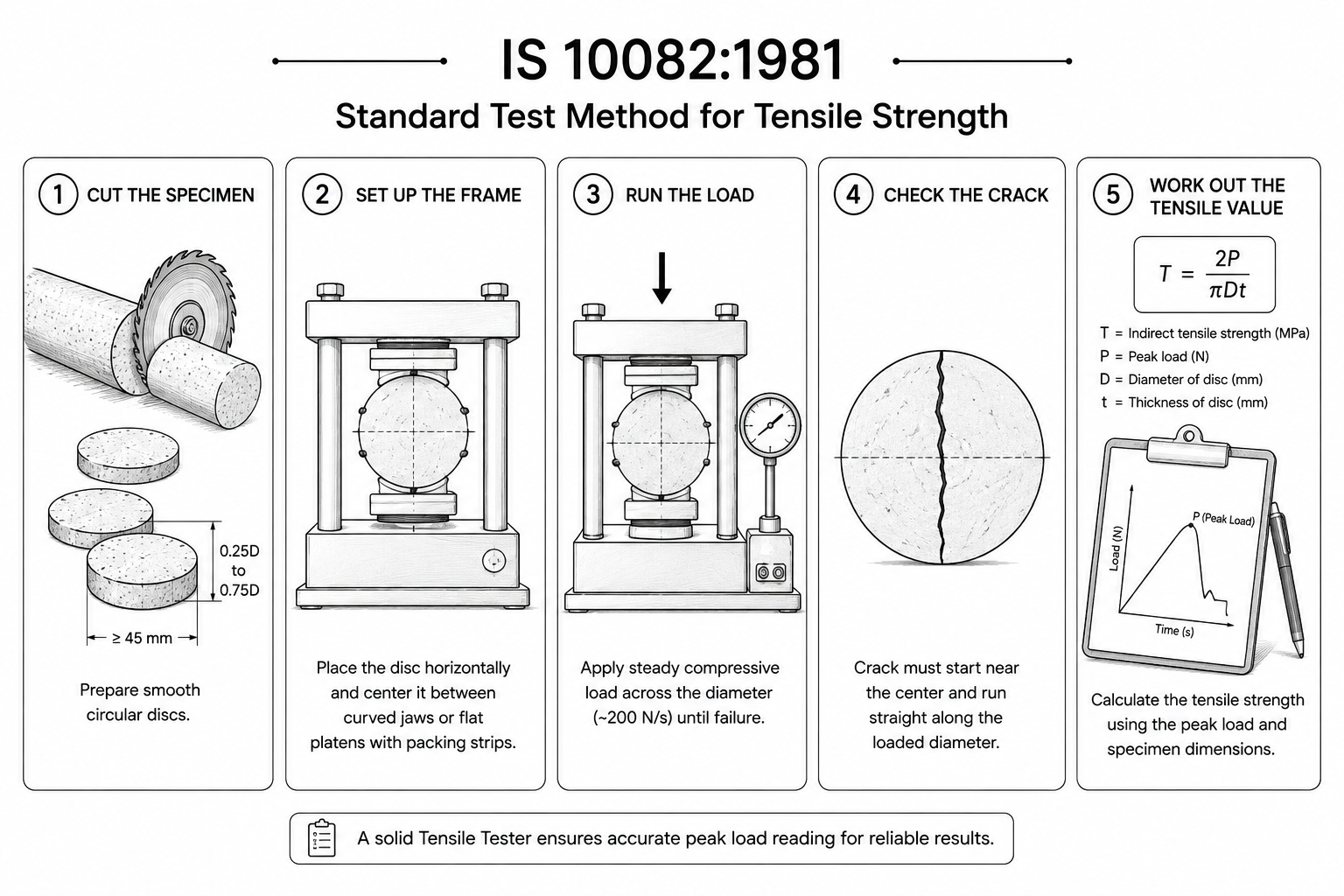
Cut the Specimen
First, take your drill core and slice it into thin discs. You need a diameter of at least 45 mm. Aim for a thickness that's roughly half the diameter, though anywhere between 0.25 and 0.75 works. Don't skip grinding the top and bottom faces. If they aren't flat and parallel, the load won't spread evenly across the rock.
Set Up the Frame
Lay the disc horizontally inside the loading frame. Place curved jaws or flat platens with thin packing strips along the top and bottom edges. Take an extra minute to center everything. Off-center alignment creates significant shear stress, which throws off your final numbers.
Run the Load
Turn on your Tensile Tester and set it to apply steady compression across the disc's diameter. Aim for around 200 Newtons per second. Keep your eye on the gauge as force builds up to the breaking point.
Check the Crack
Don't just write down the peak load right away. Look closely at how the rock split. The crack has to start near the center and run straight along the loaded diameter. If the edges crushed or the break looks crooked, scrap that run. It isn't valid.
Work Out the Tensile Value
If the crack passed inspection, plug the peak load into your formula. You'll divide that load by pi times the disc's diameter and thickness. A solid Tensile Tester gives you an accurate peak load reading so you aren't guessing on the math.
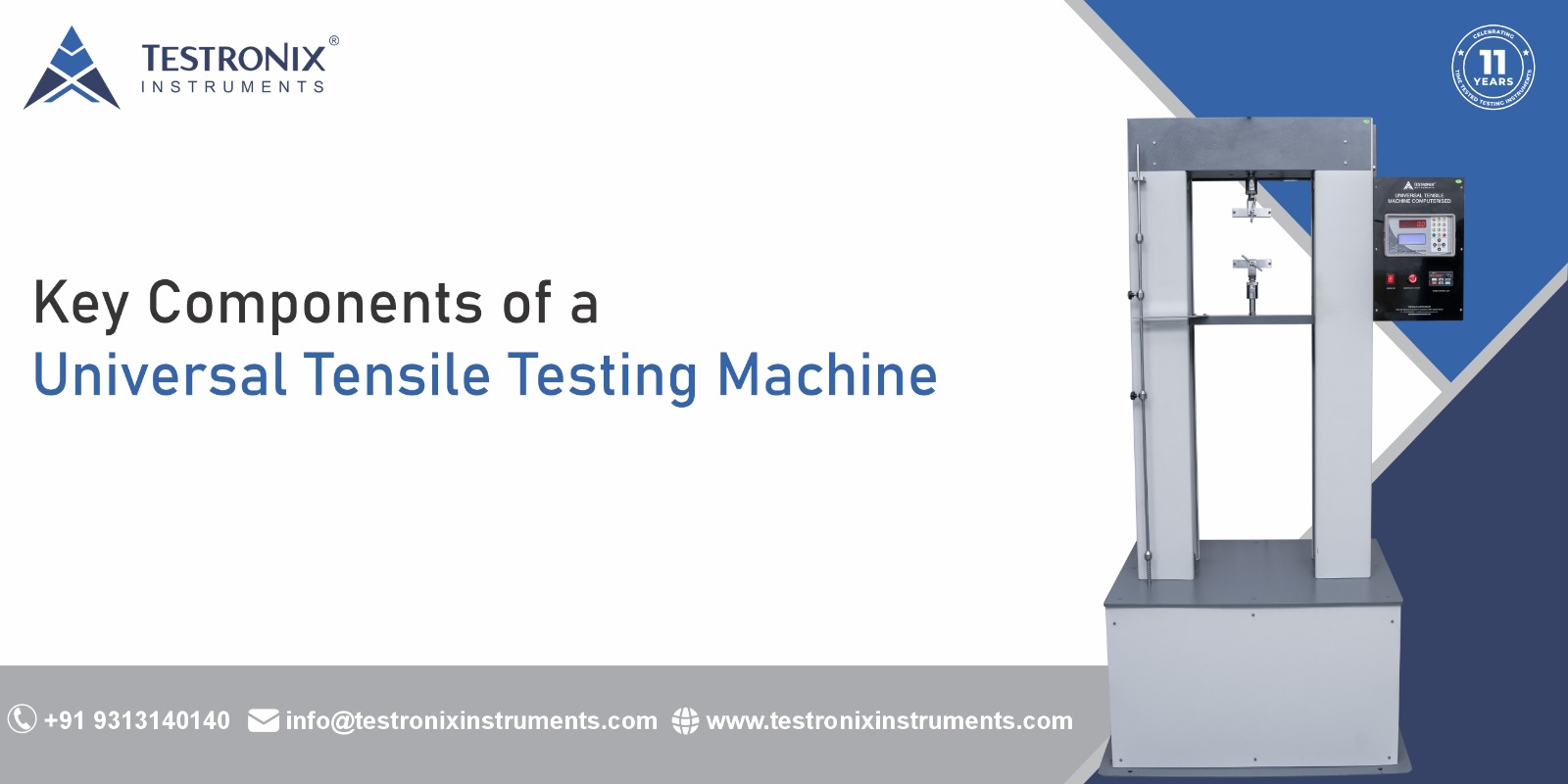
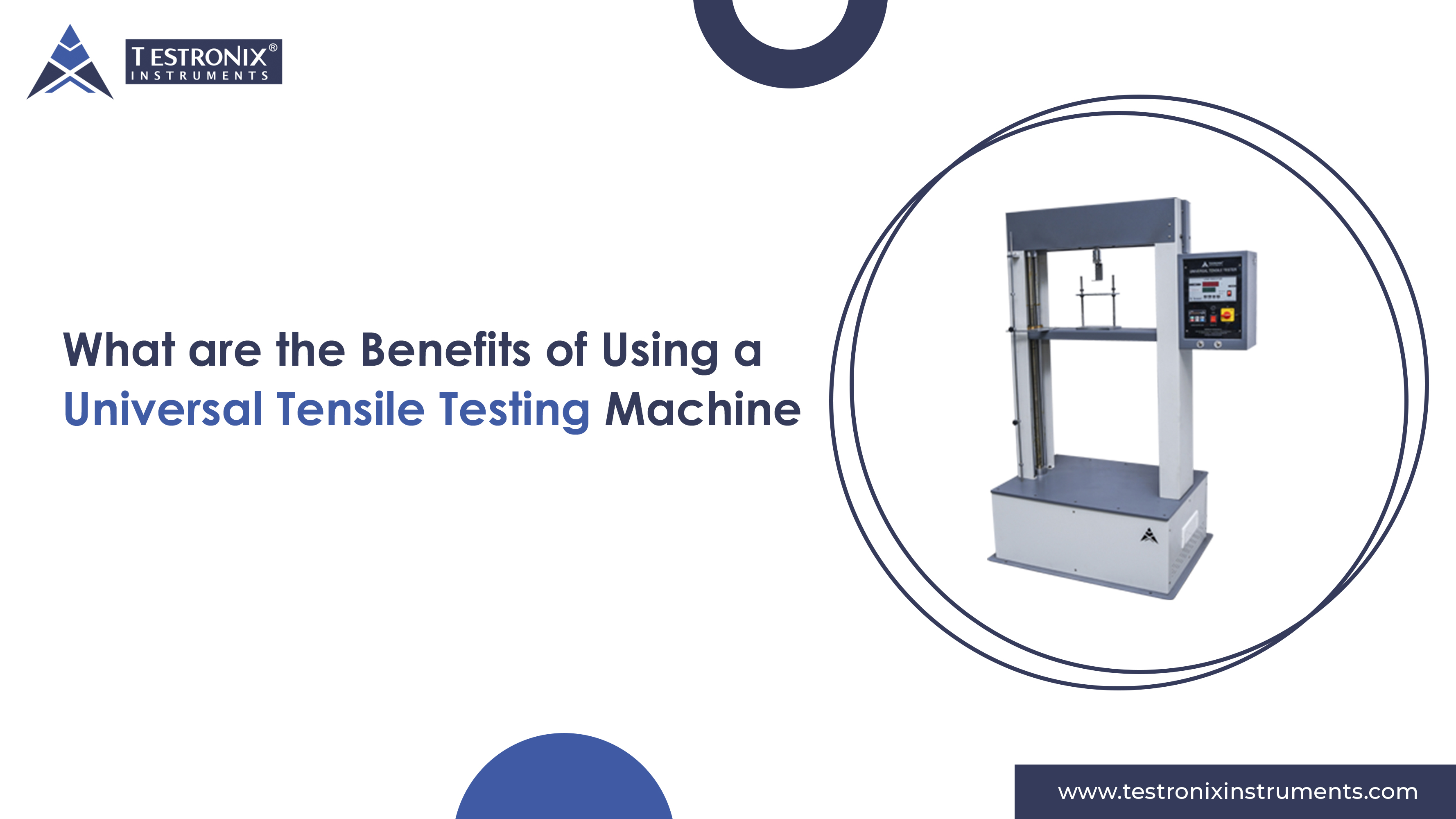
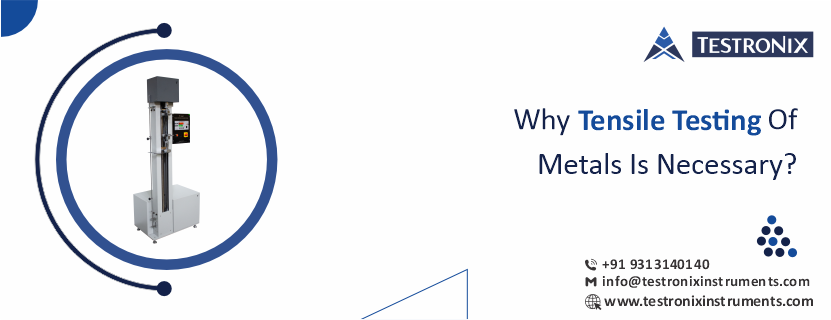
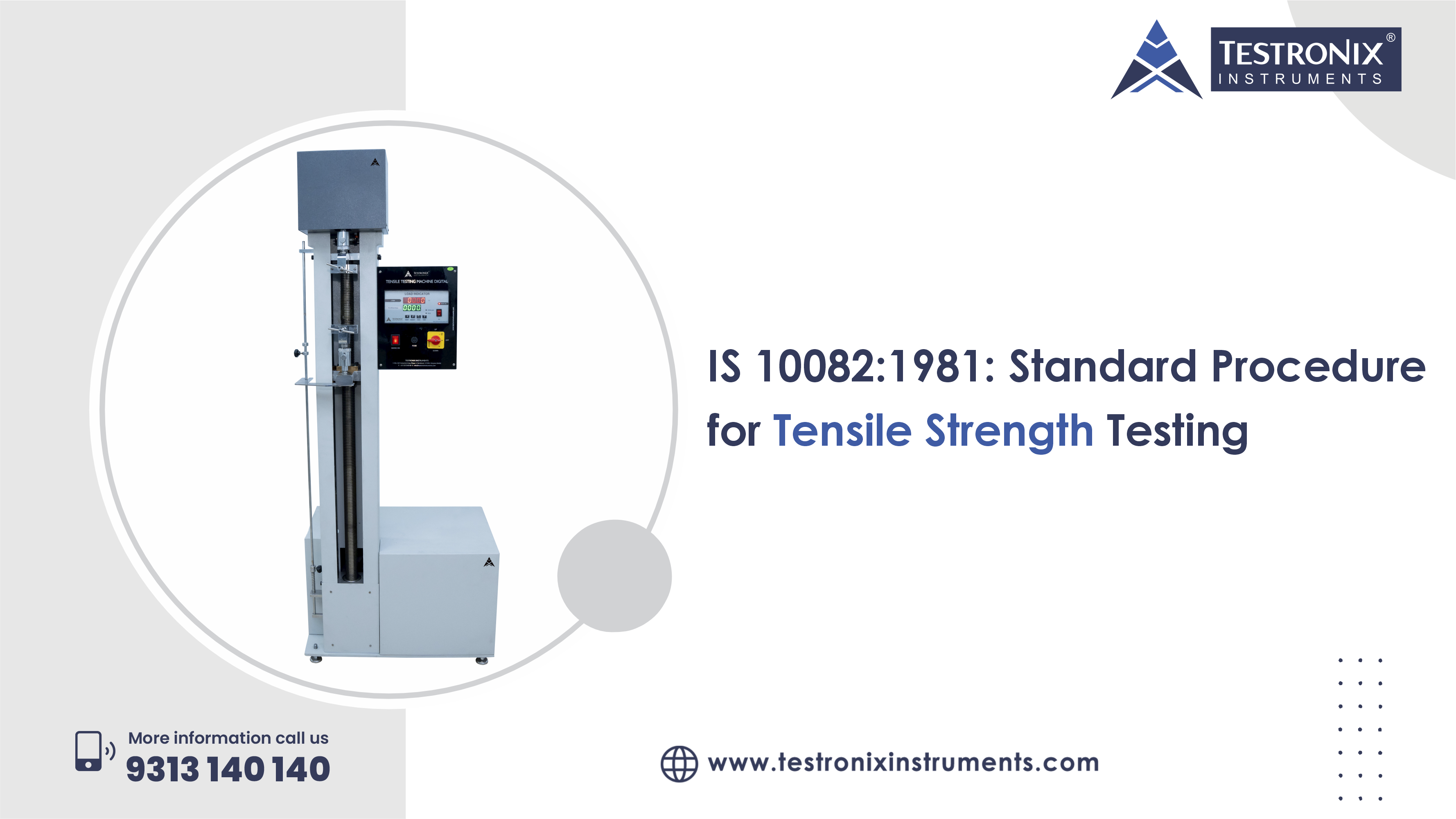
Testronix Tensile Strength Tester: Compatible with IS 10082:1981
Testronix Tensile Strength Tester provides the accurate load control and rigid frame stability needed to perform IS 10082:1981 splitting tests smoothly.
The testing system has good microprocessor controls providing a constant loading rate and no sudden jumps in force. The lab staff can easily load rock core samples with the solid steel platens and flexible mounting fixtures that are used. Digital displays that read out immediately capture peak force values, reducing human calculation errors in fast-paced testing regimes
Built with heavy-duty materials and holding calibration over long periods of heavy use, the versatile jaw attachments make it easy for teams to switch between a rock-splitting disk setup and other standard material tension tests.
Conclusion
IS 10082:1981 ensures the accuracy and reliability of the rock tensile strength data for all engineering purposes. These are hard rules that quality control teams can easily follow if you have the right testing hardware. Testronix Instruments manufactures rugged precision testing equipment for the demanding needs of material testing workflows. Contact Testronix Instruments today for a custom quote and find high-performance testing solutions. Our testing instruments are designed to meet your needs, upgrading your laboratory capabilities today.