Plastic films used in packaging can go off track during the manufacturing process if the right degree of smoothness or grip is not chosen. To use any film in a production machine, the friction properties of the film must be suitable to avoid jams or sliding of products stacked on top of each other. Here we will take a closer look at the reasons why it is important to measure the properties of the surface and how friction testing can help avoid costly production problems.
When plastic film rolls are processed on automated form-fill-seal machines, the material moves over metal guides, rollers, and other film layers continuously. If the film slips around too easily, rolls collapse or packages misalign on conveyor belts. If the material is too sticky, machinery drags, causing tears or complete line stoppages. Surface friction directly controls how smooth the feeding process goes.
These problems are common in manufacturing facilities when changing resin formulations or storage conditions without testing surface properties in advance. Understanding of surface dynamic behavior enables engineers to correctly balance slip additives in the extrusion process. We will explain basic concepts, test procedures, standard requirements, and practical equipment selections so you can establish a reliable testing routine in your quality control lab.
What is Coefficient of Friction (COF) Test?
A Coefficient of Friction test measures the ratio of force required to slide a material surface against another object or itself. It determines both the force needed to start movement and the force needed to keep it moving.
Simply put, COF gives two particular numerical values that characterize the behavior of the surface. The first value is the static friction. This is the first force required to unstick two surfaces that have stuck together. The second value is called dynamic friction or kinetic friction. This is the constant force needed to keep moving material at a steady rate once it is already in motion
To see how this force works in practice, consider a stack of plastic loaf bags sitting on a retail shelf or on an automated packing line. If static friction between individual bags is too low, the whole stack slides apart and falls onto the floor when someone touches it. Conversely, if dynamic friction is too high inside a packaging machine, film clings tightly to the former metal tube. The motor on the machine is struggling to pull the material, causing bags to stretch and the print to distort. Testing gives quality control teams real numbers, so they can verify that a batch meets targeted levels of slip before shipping thousands of meters of film.
Coefficient of Friction (COF) Test Procedure for Plastic Films
The testing procedure involves mounting a flat piece of film on a horizontal table and dragging a weighted sled wrapped in film across it at a set speed. The force required to start and sustain motion is recorded by a digital force sensor.
It is important to prepare samples carefully and to handle them cleanly to have a successful test. Friction values are changed immediately with the introduction of fingerprints, dirt or surface contamination. Using clean cutting tools, technicians take two different sections of the plastic film roll. One sample is bolted nicely on the flat aluminum or stainless steel test bed. The second sample is wound up neatly around a standard metal sled, typically weighing about 200 grams. When attaching the film to the trolley or plane, it is important to avoid stretching or wrinkling the film.
After positioning the specimens, the sled is attached to the load cell mechanism by a flexible string or a rigid arm. The machine is switched on and pulls the sled at a constant speed over a stationary sheet. The initial motion spike is a time when the load cell is used to measure peak load. This is a peak that is caused by static friction. Once the sled is leveling off, continue dragging it for a given distance. The average load recorded during this movement phase is dynamic friction.
After the run, the measured forces are divided by the weight of the sled either via software or manual calculations. The resultant values of static and dynamic COF are dimensionless. And if you run a lot of tests in different sections of the film, you get a good average. This part matters because film surface characteristics can vary from edges to center on a large roll. Testing film to film contact as well as film to metal contact gives a complete picture of operational performance on factory equipment.
Requirements of ASTM D1894 for Coefficient of Friction Test
ASTM D1894 is a standard test used to establish exact parameters for determining static and kinetic friction of plastic film and sheeting. It defines the weight of the sled, the rate at which it is pulled, the size and number of samples to be tested and the conditions in which the test is to be conducted so that test results may be duplicated.
Standardized testing eliminates the guesswork in comparing film batches from different suppliers and between different film conversion machines. ASTM D1894 sets the rigorous standards that lab equipment must meet. The test plane should be level and flat. The standard calls for a sled that weighs 200 grams and will have a soft felt bottom for the wrapping specimen to be held securely. The travel speed of the sled or plane must stay at a controlled rate of 150 millimeters per minute.
Another required provision of the ASTM D1894 guidelines is environmental control. The behavior of slip additives incorporated into polyolefin films is greatly influenced by the room temperature and the relative humidity. The migration process of additives such as erucamide or oleamide to the surface over time is also affected by the ambient air temperature. Before testing, the samples shall be conditioned to standard laboratory conditions, normally 23 degrees Celsius and 50 percent relative humidity. ASTM D1894 is the industry standard for lubes and compliance means you can be sure your values are in line with global industry norms and customers can have total confidence in your material specs.
Why You Need a Coefficient of Friction Tester By Testronix
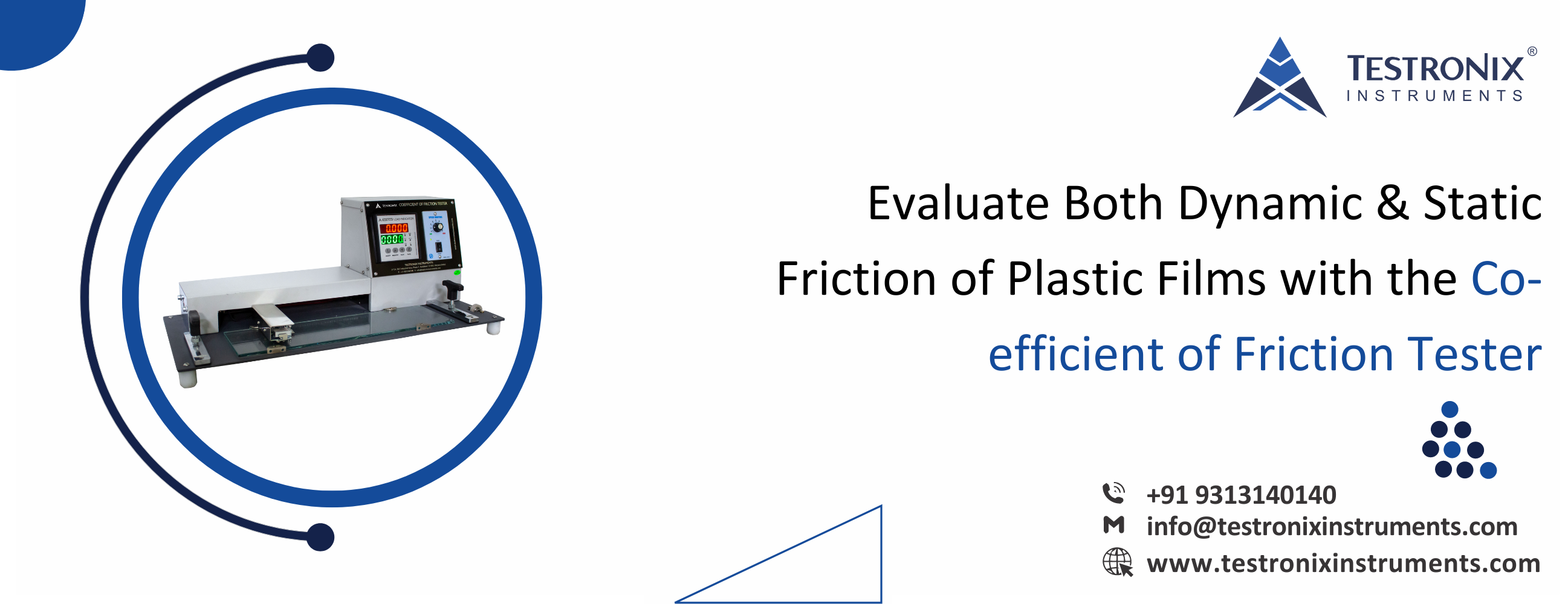
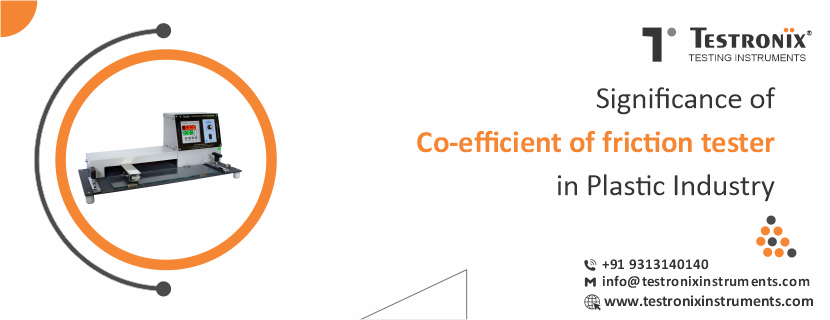
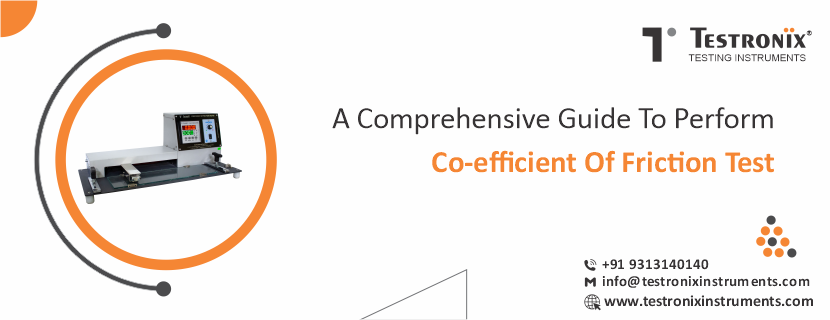
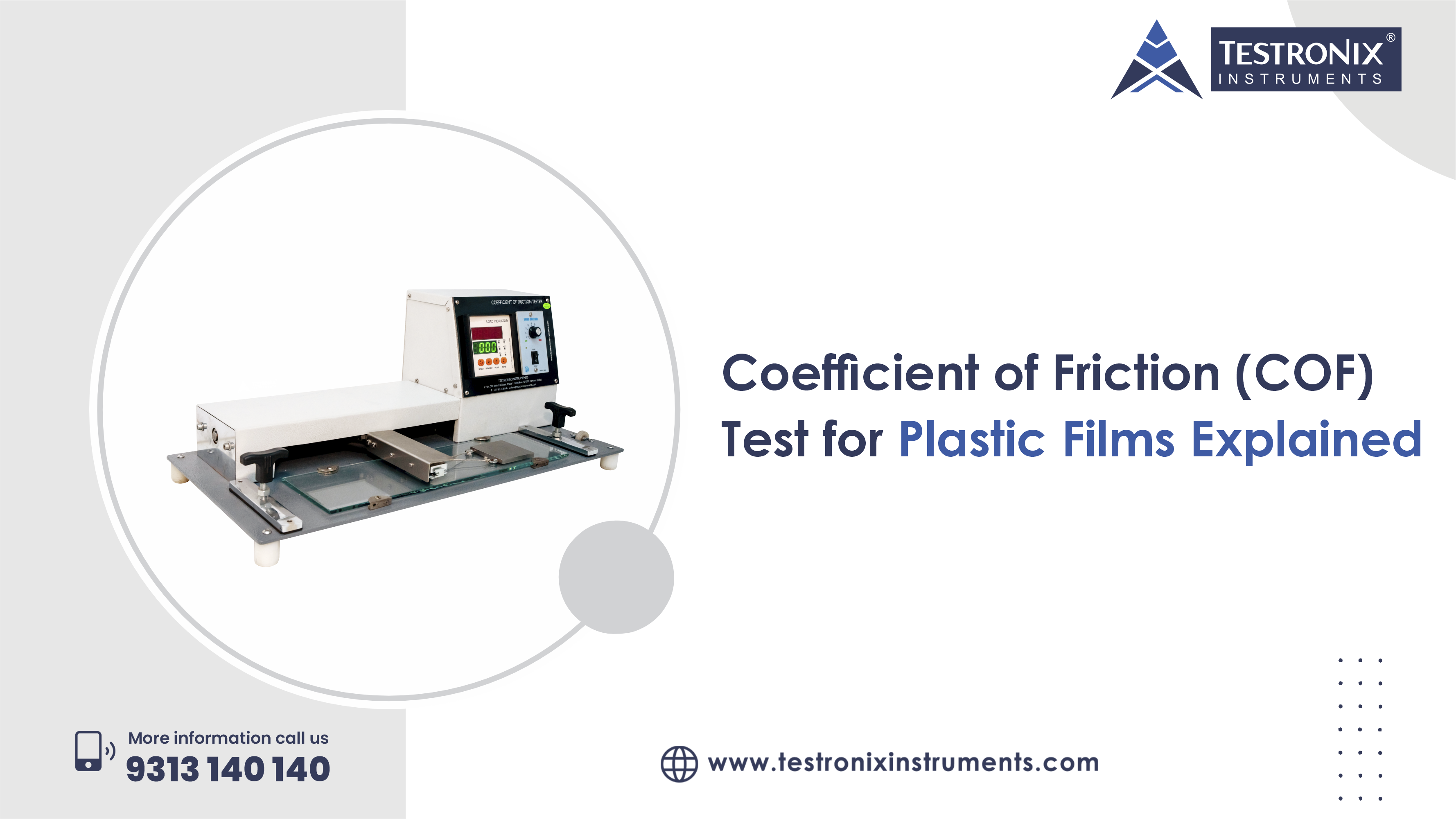
A specialized testing instrument like the Coefficient of Friction Tester by Testronix delivers high-precision load cell measurements and automated speed control required for consistent quality checks. It eliminates operator variance and provides direct digital readings for both static and dynamic friction values.
Modern quality control labs demand a level of repeatability impossible to achieve with manual testing methods or improvised drag rigs. Testronix produces equipment that accurately handles thin, flexible substrates without slip or clamping errors. The drive system is microprocessor controlled providing a smooth motion at the exact speed required by international testing standards.
Using a dedicated digital tester streamlines routine factory testing. Operators load specimens onto the wide test plane, attach the sled, and press a single button. Our coefficient of friction tester automatically senses peak static force and calculates the kinetic average across the full stroke length. Testronix equips these units with clear digital displays and memory features to store multiple test runs. Built with heavy-duty components and precision load sensors, the equipment stands up to continuous factory floor usage while keeping calibration simple and maintenance low.
Conclusion
Smooth running of plastic films on packaging lines and good stacking in store depend on control of surface friction. Routine testing is used to ensure that manufacturers don't experience unplanned downtime, product damage, or customer complaints.
When performance is stable, customers are content with the quality and credibility they have reaped with the reliable lab equipment. Static & kinetic resistance are measured under strict adherence to standard procedures and optimized additive compositions and process parameters. Testronix is one of the leading manufacturers of Coefficient of Friction Testers and is a reliable supplier of instruments that meet high standards such as ASTM D1894 for plastic film testing.