Aluminium coatings face constant atmospheric exposure, leading to silent degradation if not tested properly. Standard aluminium coatings are supposed to shield the metal underneath, but when an electroplated layer is slightly too thin or uneven, failure happens much faster than planned.
That is why getting familiar with IS 9844:1981 is so important. In this article, we will discuss what this Indian standard actually requires, why quality control teams rely on it daily, and how simple lab setups reveal coating weaknesses before your customers do. You will get a complete standard testing procedure for corrosion resistance testing for aluminium coatings.
What is IS 9844:1981?
IS 9844:1981 is an Indian Standard that outlines specific accelerated methods to evaluate how well aluminium coatings resist surface degradation. It establishes clear protocols so test results remain consistent across different production batches and testing facilities.
Manufacturers can’t wait five years to see if an anodized layer will survive the elements. IS 9844:1981 removes that bottleneck by standardizing accelerated environmental tests for aluminum surface treatments. It has been published by the Bureau of Indian Standards and gives the exact steps of sample preparation, test parameters and failure criteria.
It takes away the guesswork. Instead of relying on a visual check and hoping for the best, you run structured tests. If a sample makes it through without blistering, peeling, or pitting, your finishing line is working correctly. It gives suppliers and buyers a single baseline to agree on.
Purpose and Scope of IS 9844:1981 for Aluminum Coatings
The main purpose of IS 9844:1981 is to provide standard methods to test how aluminium coatings perform under corrosive environments. Its scope covers various coated metal parts used in industrial, automotive, and architectural applications.
Coating metal is about two things: appearance and real-world durability. This standard focuses squarely on the durability side. By exposing test panels to severe synthetic environments, you can catch micro-flaws in the finish long before parts reach shipping boxes.
Physical durability matters just as much as chemical resistance. Before running any corrosion routines, lab technicians often run samples on a tensile tester to confirm base substrate strength and coating bond integrity. When a component handles physical stress on a tensile tester and then passes IS 9844:1981 checks, you know it is ready for harsh field conditions. The scope spans everything from small hardware fittings and auto trims to heavy industrial machinery housings.
IS 9844:1981 PDF Download
Download IS 9844:1981 PDF, which provides full, detailed parameters for setting up your lab compliance procedures. To understand what are the scope, technical specifications, testing methodology, and how to perform the test accurately, you must have the official standard document. You can also download IS 9844 PDF for free from the link below and get a detailed analysis of the standard for corrosion resistance.
IS 9844:1981 - Method of Corrosion Resistance Testing for Aluminium Coatings
IS 9844:1981 testing method covers sample cleaning, chamber prep, running the exposure cycle, and checking for visual surface failure. Getting reliable numbers out of this test comes down to discipline in the lab. If you cut corners on panel prep or let the chamber temperature drift halfway through a run, the data ends up useless.
-
First off, you cannot just throw raw parts into the chamber. You need to thoroughly degrease and clean the aluminium test panels so oils or fingerprints do not mess with the results. Cut edges are a massive vulnerability, so seal those off with inert tape or wax. Otherwise, salt creeps under the coating from the exposed sides, giving you a false failure reading before the surface coating even has a chance to perform.
-
Next comes mixing the salt solution. Dissolve technical-grade sodium chloride in distilled water to hit a 5% concentration, making sure the pH stays sitting right in that neutral 6.5 to 7.2 pocket. Once that is ready, load your samples into the chamber. Angle them somewhere between 15 and 30 degrees from vertical. If you lay panels flat, salt fog pools on top and ruins the test.
-
Now you start the exposure cycle. Fire up your Salt Spray Tester and bring the internal cabinet up to a steady 35°C. The machine continuously atomizes the saline solution, creating a dense, fine fog that settles over every panel evenly. Using a proper Salt Spray Tester matters here because it keeps fog fallout rates and thermal levels locked in without sudden spikes.
-
Verify the samples at regular intervals, for example at 24, 48, or 96 hours, depending on the specification you are targeting. Remove the samples and rinse them with warm water to remove salt deposits and inspect them under bright light. What you should look for in the sample is any signs of tiny pinholes, blisters, or white rust on the base metal. Log when the first sign of breakdown shows up, and you have your result.
Testronix Salt Spray Tester: Compatible with IS 9844:1981
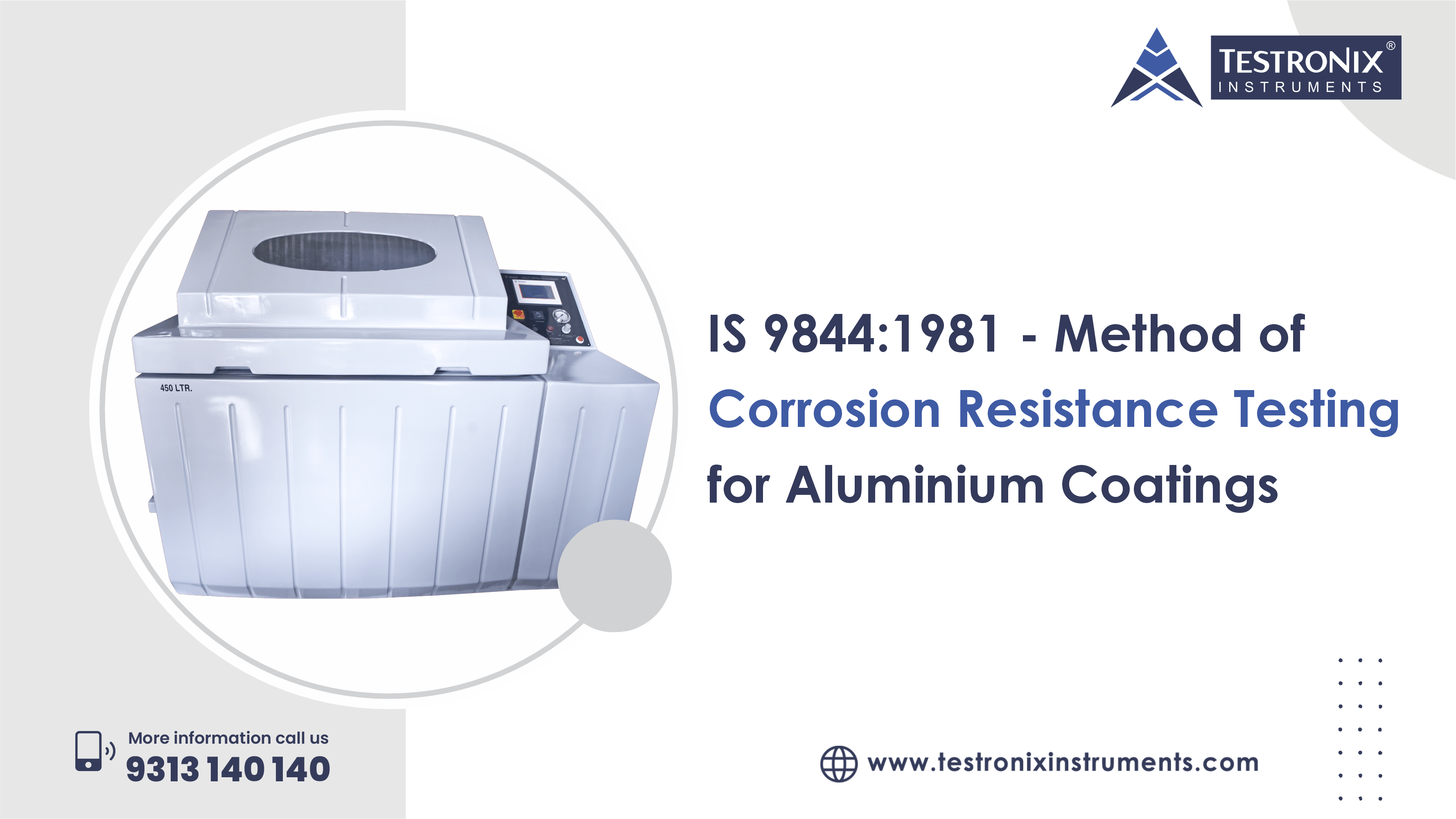
Testronix Salt Spray Tester is designed to meet all parameters required by IS 9844:1981 for aluminium coating evaluations. It delivers precise fog atomization, temperature control, and durable chamber construction for reliable testing.
Getting reliable results under IS 9844:1981 comes down to chamber stability. If your test temperature drifts by a few degrees or fog settles unevenly, your batch results end up useless. The Testronix Salt Spray Tester prevents those issues entirely. It combines precise digital temperature regulation, uniform atomizer nozzles, and simple digital controls so operators can set up tests without hassle.
The main body uses thick fiber-reinforced plastic, meaning the cabinet will not corrode from internal salt exposure over time. The spray system spreads fine mist evenly across every specimen rack inside. That level of consistency lets quality labs run 24-hour or multi-day tests specified by IS 9844:1981 without constant manual adjustments.
Conclusion
Under IS 9844:1981, standardized corrosion testing is important for excellent quality of aluminum finishes. Proper investments in testing instruments make sure that products can withstand challenging actual conditions.
With a proper IS 9844:1981 test process set up, manufacturing defects get identified in the early stages of production, which saves expense on field recalls later on. Proper standard protocols combined with tough lab hardware give you total confidence in your product line.
If you are looking to upgrade your lab setup or need equipment built to standard specs, take a look at Testronix Instruments. Reach out to our technical team to find the right salt spray chamber or mechanical testing setup for your production line.