Every year, defective products result in huge losses for enterprises when they leave the production line without being verified. In the absence of clearly defined test procedures, defective goods reach customers, thereby leading to costly product recalls and negative consequences for the reputation of the manufacturer. This is where the quality assurance process steps in to ensure that every process follows the predefined sets of quality checks. In this article, we will discuss the importance of quality control for modern manufacturing, explain how testing is conducted, and describe the equipment used for quality assurance.
What is Quality Assurance?
Quality assurance (QA) is a proactive, systematic process to ensure that a product or service meets specified requirements and customer expectations. The method creates rules, audits, and guidelines to determine the quality of the product from step one instead of finding the defect at the very end of the production.
In the manufacturing industry, quality assurance is a system of planned activities that prevents manufacturing defects before assembly begins. Quality assurance sets parameters during every stage of production, which means that finished products always comply with standards.
Most of the time, people are unaware of the difference between quality assurance and quality control. Though they both involve managing quality, they focus on different aspects of the production cycle. Quality control is the last step of making sure only good items are released. Quality assurance deals with the overall picture. It evaluates raw material suppliers, machine settings, and worker handling routines. When you fix problems inside the workflow, reliable output happens naturally.
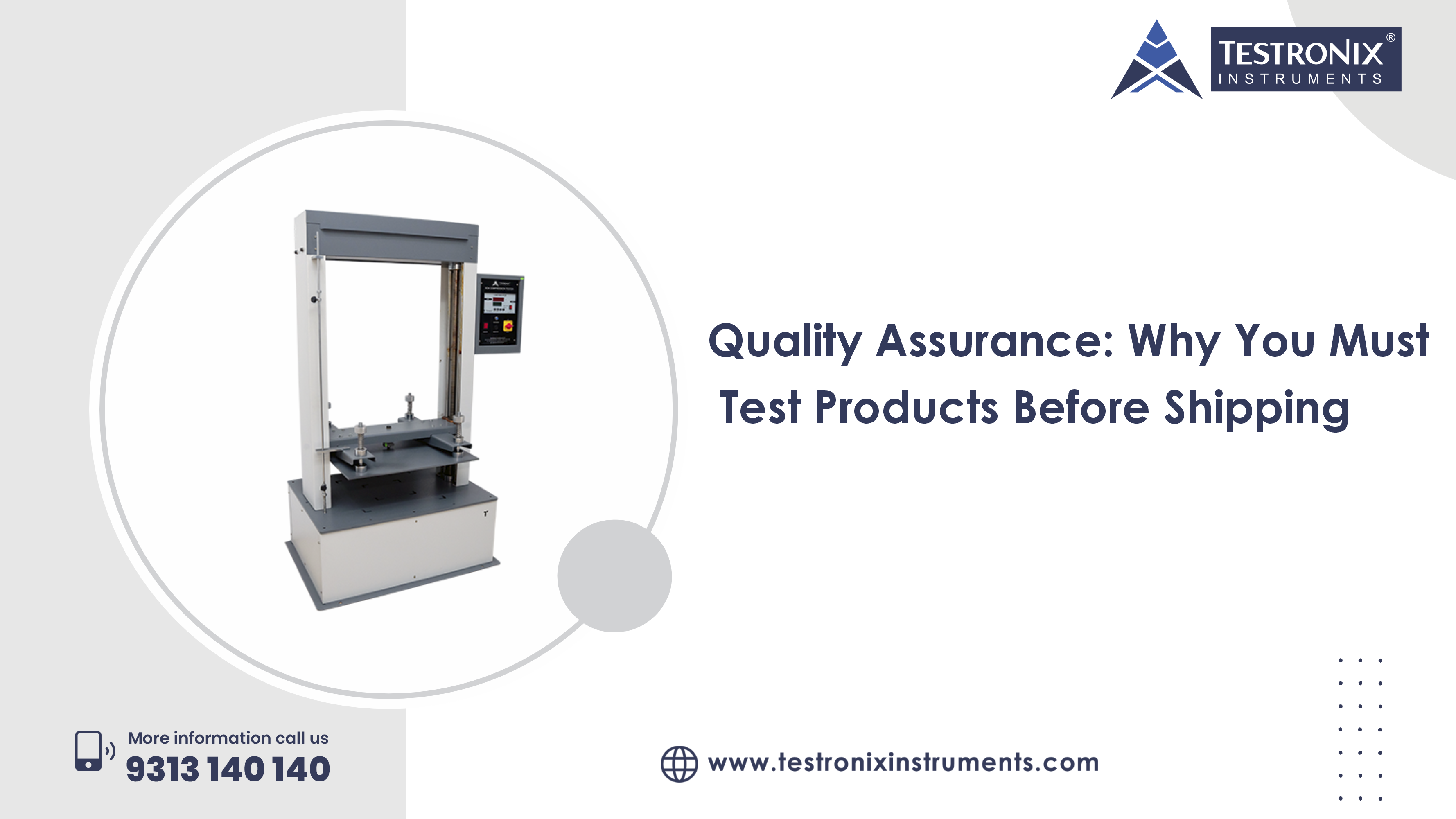
Think about a manufacturer using a corrugated box testing machine to test packaging for heavy appliances. If the paper strength drops during milling, packed boxes crush under normal shipping weight. Quality assurance sets strict paper density checks, moisture limits, and bursting strength requirements before full-scale runs start. That quick check stops hundreds of bad-quality boxes from ever reaching the loading dock.
Setting up an active quality assurance environment involves several distinct components:
-
Standard operating guidelines written for every machine setup
-
Material receiving protocols that block subpar raw inputs
-
Routine calibration schedules for lab measurement devices
-
In-line monitoring during active manufacturing runs
-
Data tracking to spot machine wear before parts fail
Types of Quality Assurance in Manufacturing Industry
Manufacturing facilities use three primary types of quality assurance: raw inputs, active assembly, and facility operations. Applying all three methods creates complete protection against unexpected product failures.
Process Quality Assurance
Process quality assurance monitors real-time conditions along the assembly line to keep operations within safe limits. It focuses on variables like heat settings, line speed, and machine pressure during active production.
Floor operators perform periodic spot checks on running machinery. If a heating element cools down slightly during a plastic molding run, operators adjust settings right away. Catching that drift prevents an entire batch of brittle plastic parts from heading to assembly.
Product Quality Assurance
Product quality assurance tests actual samples of raw materials and finished goods against structural criteria. Lab technicians run physical or chemical evaluations to verify real-world durability.
In a manufacturing unit or laboratory, random samples are taken from the entire batch to take the destructive measurements. Then the adhesive strength of the samples is measured using crush resistance, as it is also a primary factor during shipping. These physical tests indicate that finished products can withstand rough handling during transportation.
Quality Assurance System
Quality assurance systems provide the overall management of documentation processes, corporate rules, and compliance audits within the organization. It ensures that processes in the factory are in accordance with established standards for quality such as BIS and IS.
This layer provides full traceability of each batch produced. Whenever there is an issue with quality found months later, it would be possible to find out about the origin of raw materials from specific suppliers due to the logs in the system.
How to Perform Quality Assurance
Executing quality assurance requires a practical step-by-step plan built into daily plant routines. Following a clear process keeps testing organized and prevents missed steps during busy production schedules.
-
Establish specifications and limits related to the quality of every product line. So, the quality would be maintained from the very first step of the testing process.
-
Create a flow diagram of the entire assembly line from raw materials acceptance to packing of the finished product. As the product runs through multiple lines, it is tested rigorously by the quality assurance team.
-
Implement quality control at stations in necessary process steps.
-
Employ testing laboratory equipment and devices provided by Testronix Instrument.
-
Instruct operators in the logging of measurements.
-
Examine daily reports to identify which station or line the quality issues mostly occur in that can be fixed for future processes.
In simple terms, you set clear targets, check work as it moves, and adjust equipment before errors turn into scrap.
Applications of Quality Assurance
Quality assurance is present in almost all verticals of manufacturing, ensuring both product functionality and safety for consumers. Each market sector adopts the basic principles of quality assurance to suit its own environment.
-
In the case of paper and corrugated packaging, testing takes place to determine such factors as bursting strength, edge crush resistance and the ability to withstand puncturing. Because warehouses are built to stack pallets, the bottoms of the boxes should be able to sustain pressure when loaded. Tests on the paper materials thus help avoid very costly damages during distribution.
-
Automotive parts production relies heavily on metal coating tests and stress evaluations. The components of vehicles have to withstand years of severe climate changes and the effects thereof. In order to estimate the corrosion resistance of components, manufacturers run tests with salt water, which helps create the equivalent of many years of experience on the road in just weeks.
-
To test plastic and PET bottle producers, they measure perpendicularity, top load capacity, and the torque force on caps. The bottles have to maintain their integrity without losing pressure as they are covered with caps automatically.
-
Companies that produce medicine packages do testing for leakages too. If the seal is wrong, the pills are exposed to moisture and thus become useless.
Testronix Instrument: The Definition of Quality Equipment
Testronix Instrument builds specialized laboratory testing equipment that provides precise measurements for industrial quality assurance. Our testing machines help manufacturers evaluate material limits with repeatable accuracy.
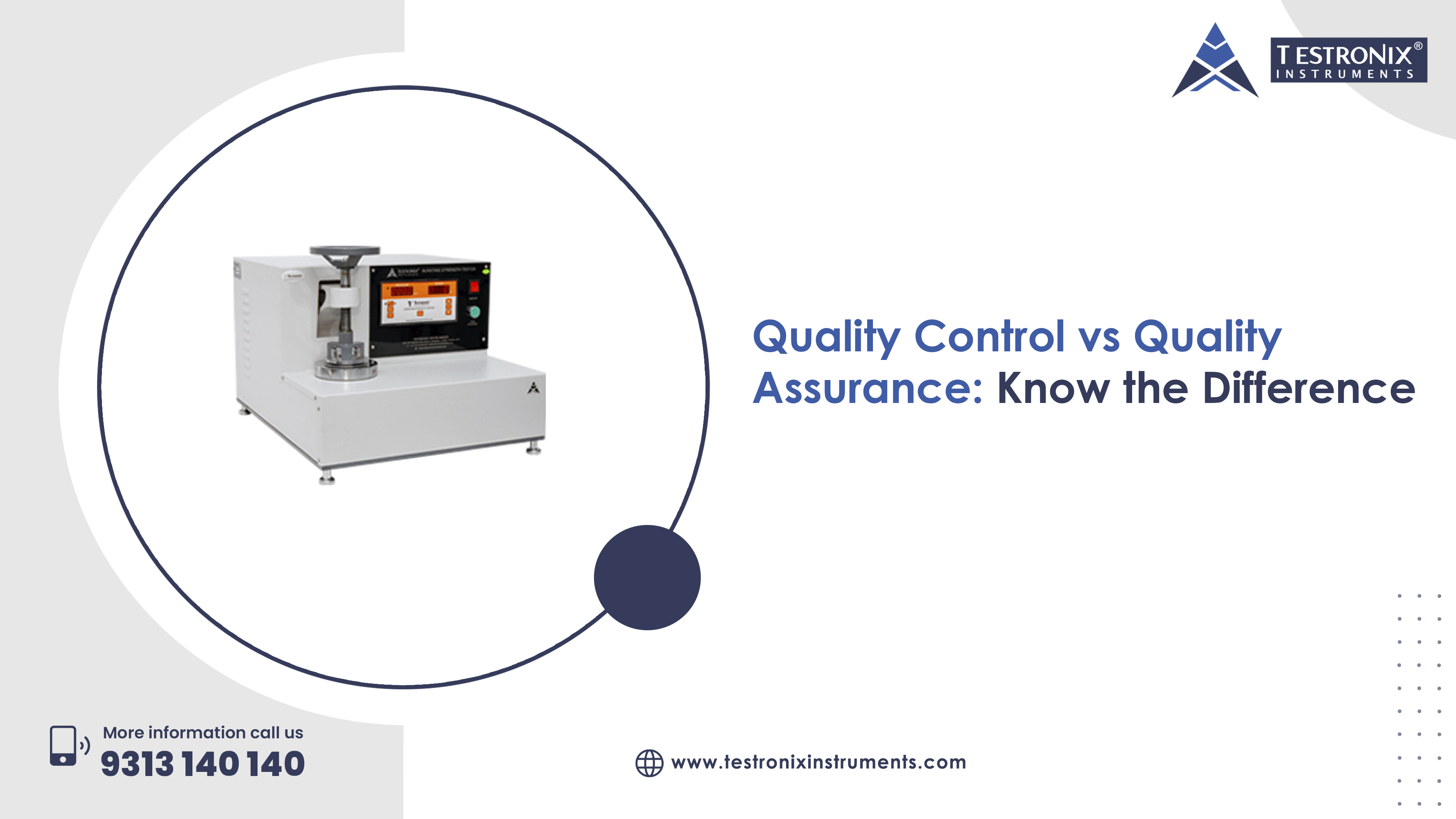
Even the best quality assurance framework breaks down if lab tools produce inconsistent numbers. Testronix Instruments addresses this issue by engineering durable instruments like bursting strength testers, box compression testers, and salt spray chambers. These devices give quality control managers actionable data to make informed floor decisions.
Using dependable testing hardware cuts down measurement error across busy production runs. In the end, having accurate lab equipment means you catch actual material flaws instead of chasing ghost errors caused by faulty tools.
Conclusion
Quality assurance prevents manufacturing companies from costly failures in products and from losing their customers’ trust. Incorporating clearly defined quality inspection protocols into factory processes guarantees adherence to product specifications in all working shifts. Collaborating with trustworthy laboratory equipment suppliers such as Testronix Instruments allows achieving rigorous industry norms. It is better to invest money in reliable quality assurance testing today than lose much on excessive product recalls tomorrow.
For any quality-related queries and testing equipment purchasing, contact us today and start manufacturing best-quality products.