Corrosion is one of those silent issues that manufacturers worry about even after their products have been shipped. The product was initially manufactured with high quality but after a few months, it received complaints about rust spots, leaks and unexpected breakdowns. Unfortunately, corrosion is extremely difficult to predict and does not exhibit any initial symptoms.
Automotive components, outdoor furniture, pipelines, electronic housings, and others are frequently tend to corrosion and prevention is not optional. It is one of the smartest investments you can make in product reliability. This article will explain what is corrosion, review ten common types and offer practical solutions for each. We will also see how a reliable testing tool can help you catch issues long before your customers do.
What is Corrosion in Simple Terms
Corrosion is the gradual chemical or electrochemical breakdown of metals when they interact with their environment. It happens as the metal reacts with oxygen, moisture, salts or other substances and slowly reverts to a more stable form.
The process of corrosion is very simple. The metal loses electrons to oxygen, water, salts and its environment turns into a weaker compound. Think rust on steel that has a white powder on its surface like bliching. Moisture usually plays the role of conductor and the later reaction spreads to the complete material. Heat, road salt, industrial fumes or even constant vibration can make things worse and faster.
The worst part? It often starts small and hidden. By the time you see obvious damage, a lot of strength or appearance may already be gone.
What are Types of Corrosion
|
Type of Corrosion |
Description |
|
Uniform Corrosion |
Steady even attack over the whole surface |
|
Galvanic Corrosion |
Faster damage when two different metals touch in a wet setting |
|
Pitting Corrosion |
Small deep holes that form in one spot |
|
Crevice Corrosion |
Heavy attack hidden inside tight gaps or under deposits |
|
Intergranular Corrosion |
Damage that sneaks along the grain boundaries inside the metal |
|
Stress Corrosion Cracking |
Cracks that appear when stress and corrosion team up |
|
Erosion Corrosion |
Combined chemical attack plus physical wear from moving fluids |
|
Fretting Corrosion |
Surface damage from tiny repeated rubbing between parts |
|
Microbiologically Induced Corrosion |
Corrosion made worse by bacteria or other living organisms |
|
Selective Leaching |
One element gets pulled out of an alloy, leaving it weak |
Uniform Corrosion
Uniform corrosion is the most common type and is easy to identify in most metals. Rusted or scaled metals exhibit an even coat of corrosion due to each rusting surface corroding at a fairly uniform rate. You will typically expect to see the dull brownish-red color of dull steel spreading throughout due to the unchanging rate of corrosion that can be improved to accommodate material loss caused by the corrosion of the metal surfaces.
The fix is usually straightforward: slap on a solid barrier like paint, powder coating or a layer of zinc through galvanizing. In some cases, adding inhibitors to the surrounding liquid or picking a naturally tougher alloy helps too. It is always advised to keep the surface clean and timely coating before it starts to wear.
Galvanic Corrosion
Imagine two different metals sitting next to each other in damp conditions. One becomes the “sacrificial” victim and corrodes much faster while protecting the other. You will often notice heavy rust or deep pitting right where the two metals meet. It is common when steel bolts hold aluminum panels or when stainless fittings touch regular carbon steel.
Using clever prevention methods for metal corrosion will help you prevent mismatching metals whenever they are possible or at least eliminate the electrical connection using plastic insulation (washers or gaskets). An example of a long-standing procedure is to use sacrificial anodes to protect your main part by sacrificing one instead.
Pitting Corrosion
Pitting corrosion is unpleasant in terms of product appearance. It creates tiny holes that look harmless on the surface but can drill deep into the metal like little tunnels. A stainless steel tank might look fine overall yet one small pit can cause a leak that brings everything down. Chlorides from salt water or de-icing chemicals love to trigger it.
Pitting corrosion can be fixed by choosing better stainless grades with more molybdenum, keeping surfaces clean and no protective oxide layer stays unbroken. Good coatings that heal small scratches also make a big difference.
Crevice Corrosion
Crevice corrosion commonly appears under a washer, inside a lap joint or beneath a gasket. Oxygen gets cut off in that tight space, the chemistry turns nasty, and corrosion goes into overdrive. The damage stays hidden until it is quite advanced.
The best defense is effective design. Use continuous welds to close all gaps in your application, use moisture resistant seals, make sure excess water can drain from your application. Adding a little bit of corrosion resistant caulk in the right spot will not hurt either.
Intergranular Corrosion
Intergranular corrosion can be an occasional issue within the core structure of metal. Improper welding or heat treatment processes may lead to inter-granular corrosion of these metallurgical interfaces. Although the part may look good after being manufactured, it will become brittle and break under stress without any warning.
Using low-carbon or stabilized stainless steels and running proper post-weld heat treatments usually keeps this problem from starting.
Stress Corrosion Cracking
Stress corrosion cracking is the one that can surprise with a sudden break. When constant pulling stress meets the right corrosive chemical, fine cracks start growing and branching. The outside might show almost nothing until the part fails.
By relieving inherent stress (stress between molecules) through a heat treatment called "annealing", adding compression via a surface treatment called "shot peening" and selecting an alloy (material) to better suit the corrosive environment they are exposed to. Additionally, periodic non-destructive testing will enable you to identify any cracks before the crack becomes a failure (accident).
Erosion Corrosion
Erosion-corrision happens when high-velocity fluids (or solids) are used to erode the surface of a material while at the same time removing any protective oxide layer that may be present on the base material. Some common examples of this type of damage can be seen as smooth grooves or cavitated areas that follow the flow.
Harder alloys, smoother flow paths in your design and protective liners help a lot. Filtering out abrasive bits and slowing the flow speed when possible can extend life considerably.
Fretting Corrosion
In fretting corrosion, tiny vibrations between two tightly clamped parts rub away the thin oxide layer again and again. Fine debris forms and the damage speeds up. You will often spot reddish-brown stains or small pits at bolted joints or press fits.
Special anti-fretting lubricants, slight design changes that reduce movement or the addition of a thin elastic layer between surfaces usually solve the problem.
Microbiologically Induced Corrosion
Bacteria and other microbes can establish themselves and create their own corrosive pockets by producing acids or stealing oxygen. You might notice slimy deposits or odd black staining that does not behave like normal rust.
Keeping systems clean, using biocides where needed and avoiding stagnant water areas go a long way. Good ventilation and drainage make it harder for microbes to get comfortable.
Selective Leaching
In some alloys, one element dissolves out faster than the others and this is called selective leaching. Brass, for example, can lose its zinc and leave behind spongy, weak copper. The part may still look normal until you try to put a load on it.
The straightforward answer is often to switch to a more suitable alloy or apply a good protective coating. Controlling the chemistry of the fluid it touches helps too.
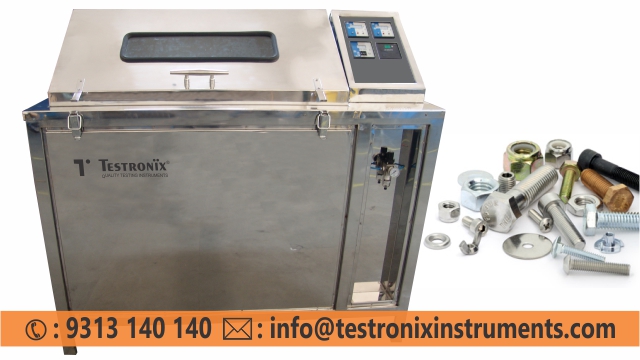
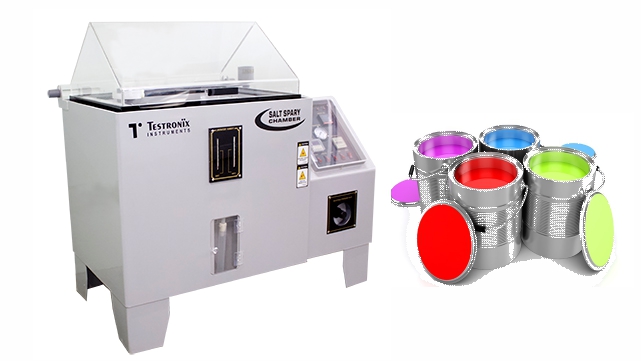
Protect Your Products With Testronix Salt Spray Chamber
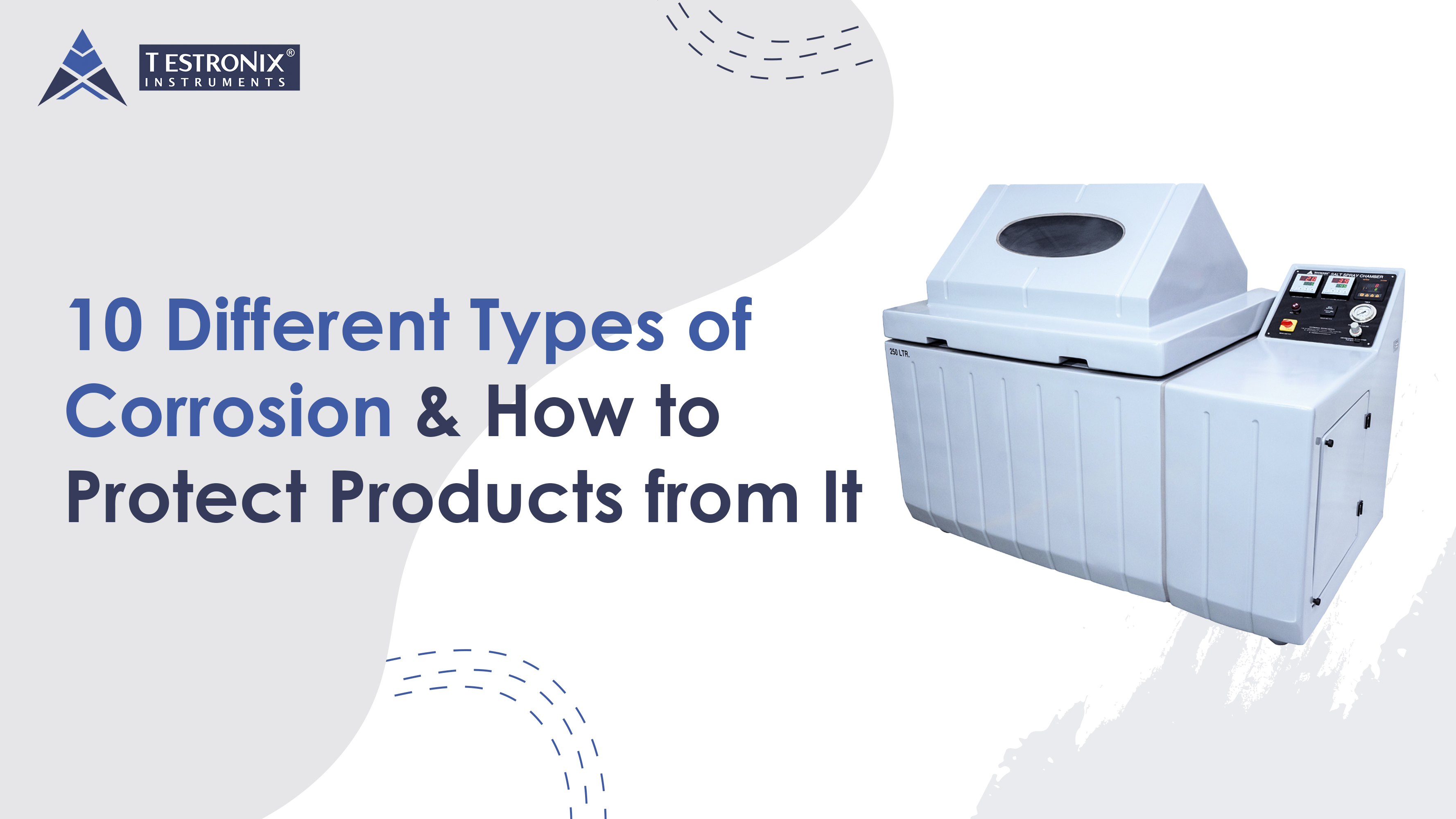
No matter how carefully you design and coat your products, real-world performance still needs to be verified. That is where accelerated corrosion testing comes in. The Testronix Salt Spray Chamber creates a harsh, repeatable salt fog environment that compresses years of potential exposure into days or weeks.
Our salt spray tester lets manufacturers evaluate coatings, surface treatments and material choices under controlled conditions that follow standards like ASTM B117. Numerous manufacturers utilize it for validating conceptual designs, conducting production batch audits or comparing various protective methods before committing to full scale production.
The data produced from these validation and verification efforts is objective, recorded and provides substantial confidence in your products' capability to survive the actual environmental conditions they are subjected to.
Conclusion
Corrosion may be a natural process but its impact on manufactured goods does not have to be expensive or unpredictable. Understanding these common types of corrosion assists in material choices, design improvements and protective measures. Testronix Instruments supports this work by offering practical, accurate testing equipment such as their salt spray chambers which help translate knowledge into reliable results.
If you want to strengthen your products against corrosion, get in touch with Testronix Instruments today. Their testing solutions can help you deliver the long-term durability your customers expect.