Tensile testing sounds simple until it is performed practically or in any unfortunate situation of product failure. Tensile testing follows the basic steps: You pull a metal sample; it stretches and eventually it breaks. But if you belong to this industry, you know that there is a lot more happening between those two points, which is important to understand for sustainable products.
This is where IS 1608 comes in. It is the standard most Indian labs and manufacturers follow when they need reliable stress and strain data from metallic materials. Whether you are testing a steel rod, a flat sheet or a tubular section, IS 1608 standard tells you how to conduct the test and how to get accurate results.
What is IS 1608 Standard?
IS 1608 is a Bureau of Indian Standards specification for tensile testing of metallic materials. The standard defines how a tensile test should be set up, conducted and reported to meet the product guidelines used across industries.
The standard covers specimen preparation, test speeds, how to apply the load, and the formulas used to calculate properties like tensile strength, yield strength, elongation, and reduction in area. It is closely based on ISO 6892-1, so labs working with both domestic and international clients will find a lot of overlap. The key point is consistency. Two labs following IS 1608 properly should get comparable results from the same material. That does not happen when everyone is doing things their own way.
Get Your Free Copy: Download IS 1608 Standard PDF
To get started with your own testing, you can download a copy of the IS 1608 standard PDF here. This document provides the exact technical SOPs and mandatory guidelines that you need to ensure your results are accurate and meet Bureau of Indian Standards requirements.
[Get IS 1608 Standard PDF]
Why IS 1608 Important for Tensile Testing
IS 1608 is important because it standardizes tensile testing methods for metallic materials. It ensures that the stress and strain values are accurate, consistent and accepted across industries.
Without this standard, two labs testing the same material could get completely different results just because they used different specimen sizes, different test speeds or different calculation methods. IS 1608 eliminates this variability. It defines everything upfront so the results are comparable whether you are testing in Delhi or Chennai, in-house or at a third-party lab.
For manufacturers, this directly affects product quality decisions. The yield strength, tensile strength and elongation values measured under IS 1608. These are not theoretical numbers. They determine whether a steel section can carry a load whether a wire will hold under tension or whether a forged part will survive its working conditions. Getting those values right, through a defined and repeatable process, is exactly what IS 1608 makes possible.
Related: Tensile Strength vs Yield Strength
Standard Procedure for IS 1608 (Stress and Strain): Step-by-Step
The IS 1608 standard procedure itself is not complex but skipping or rushing any step tends to show up in the results. Here is how it works in practice.
Step 1: Prepare the Specimen
IS 1608 gives specific dimensions for different specimen types that include round, flat and tubular. The gauge length needs to be marked before the test because that is the section you measure elongation across. Machining quality matters here. A rough surface or uneven cross-section will affect how the specimen behaves under load and often not in a way you can easily correct for later.
Step 2: Measure the Original Dimensions
First of all, measure carefully the cross-section area. For a round bar, it means taking several diameter measurements in the gauge section and averaging them. For flat specimens, measure both width and thickness. These numbers go directly into your stress calculations, so a sloppy measurement here means your final values will be off even if everything else goes perfectly.
Step 3: Mount and Align the Specimen
Fix the specimen into the grips of the tensile tester. This step gets underestimated. If the specimen is even slightly off-center, it experiences bending forces alongside the axial load, and that throws off your yield point readings. Take the time to align it properly.
Step 4: Set the Correct Test Speed
IS 1608 specifies strain rates for different stages of the test. The elastic portion generally requires a slower and controlled rate. Pushing too fast through this region shifts your apparent yield strength. The standard gives you ranges and staying within them is not optional if you want results that hold up to scrutiny.
Step 5: Run the Test and Capture the Curve
Now comes the important step where you need to apply the load continuously. The machine will record force versus extension data. As a result of this data, you will obtain a stress-strain curve showing the elastic region, yield point, plastic deformation and eventual fracture. Each part of that curve is telling you something different about the material. So the quality of that data matters.
Step 6: Calculate the Key Properties
Once the test is done, the calculator of tensile strength is fairly straightforward as discussed below:
Tensile Strength = Maximum Force divided by Original Cross-Sectional Area
Yield Strength = Force at yield divided by Original Cross-Sectional Area
Percentage Elongation = Change in gauge length divided by original gauge length, multiplied by 100
Percentage Reduction in Area = Change in cross-sectional area divided by original area, multiplied by 100
Step 7: Record and Report
IS 1608 also defines what the test report should contain. Specimen dimensions, test speed, temperature, and the calculated values all need to be documented. This is the part many labs treat as an afterthought but a well-documented test report is what separates a number from actual evidence.
Tips for Accurate IS 1608 Testing Stress and Strain
Calibration should not be skipped
A tensile tester that is even slightly out of calibration will give you load readings that are off, and those errors will not be obvious from the data alone. Calibration should be current and documented before any batch of testing.
Specimen finish matters more than it looks
Surface scratches or machining marks on the gauge section act as stress concentrators. The specimen may fracture at one of those points rather than at the weakest cross-section of the material itself. That kind of result looks fine on paper but is actually misleading.
Grip alignment is often the hidden problem
Misaligned grips introduce bending into what should be a pure tensile load. The effect is most visible in yield strength values which tend to read lower than they should. Many experienced labs use alignment fixtures during setup to catch these issues before the test starts.
Equipment quality makes a real difference
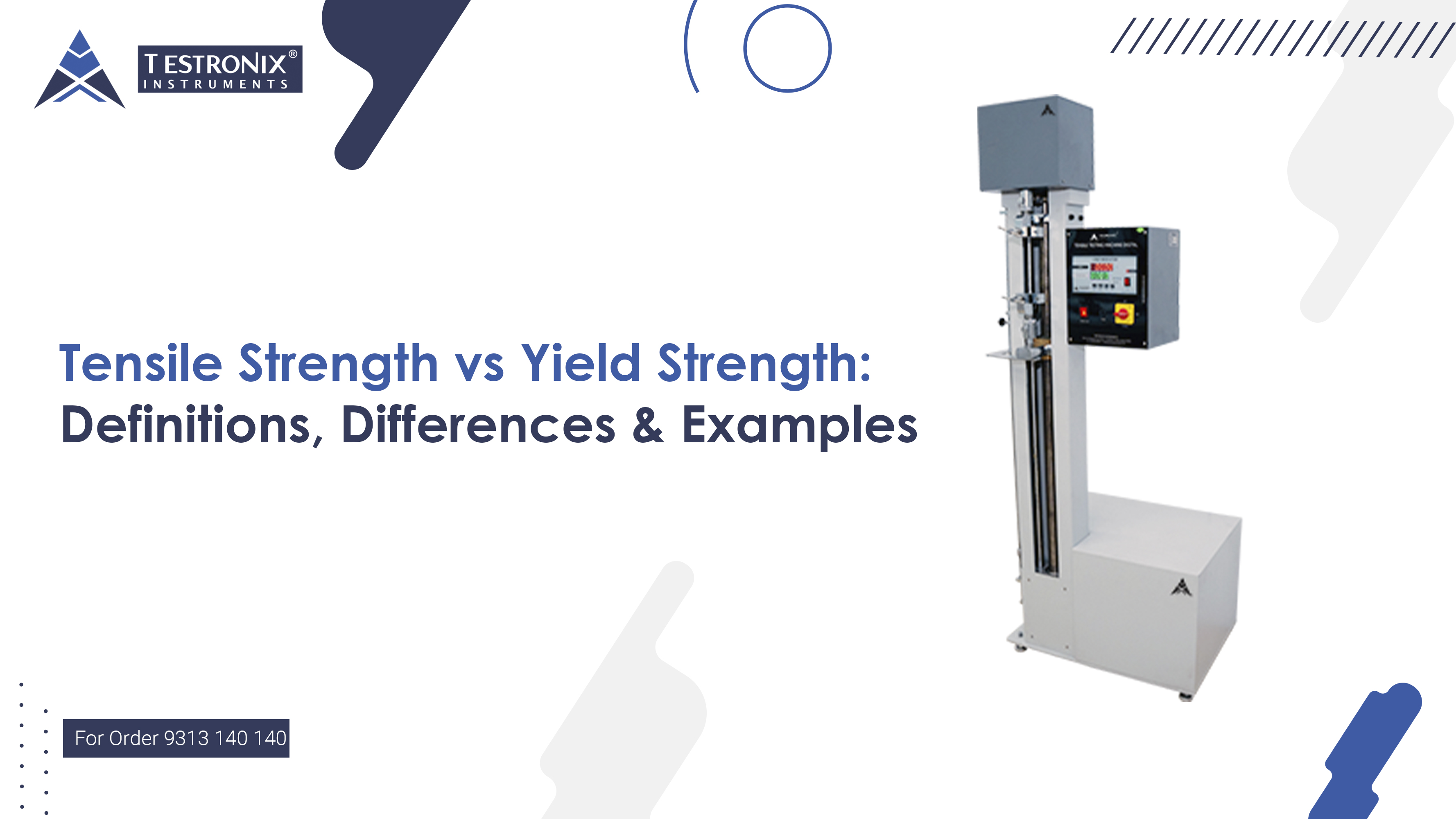
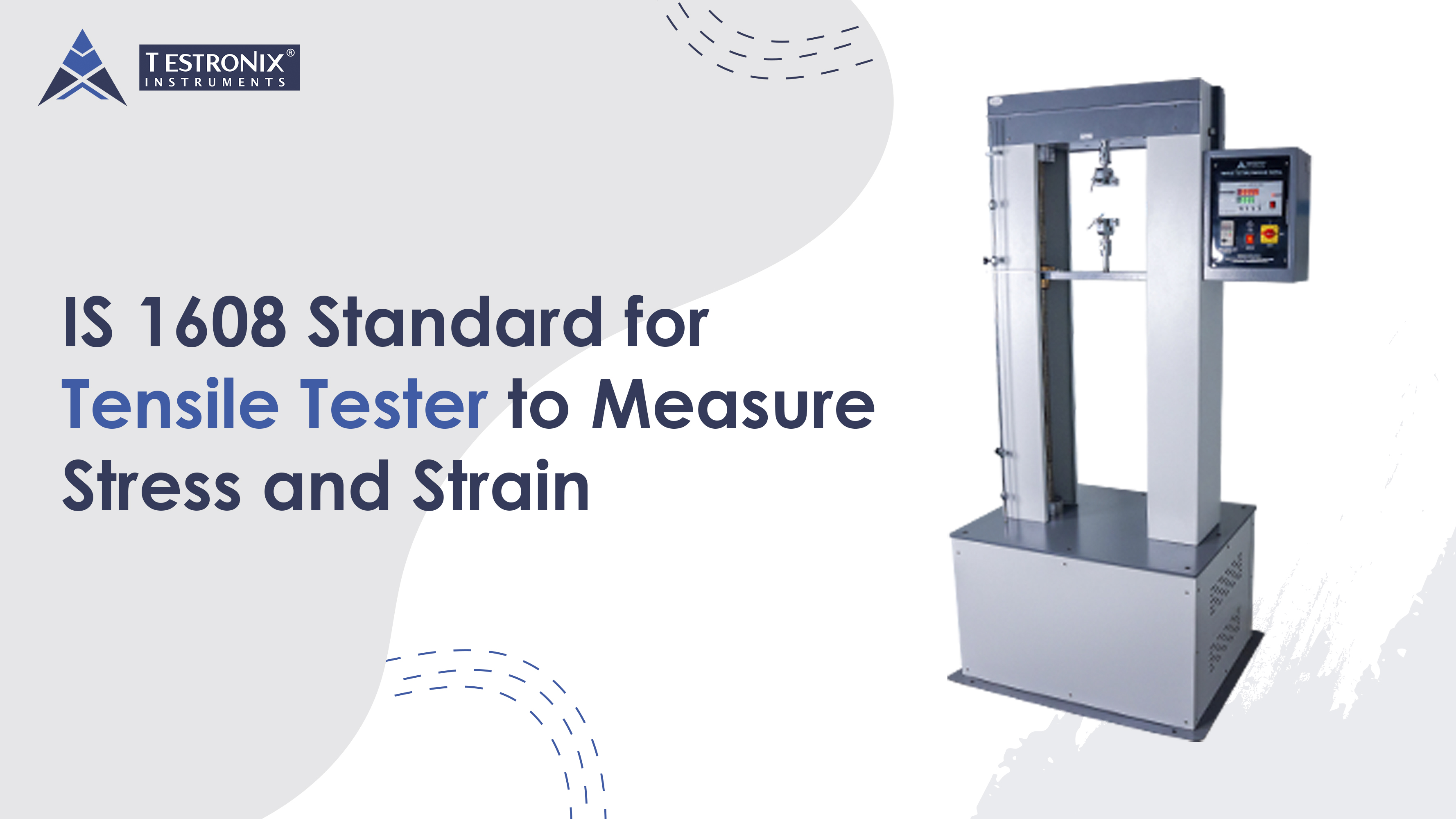
Equipment quality is one of the most critical factors that affects the accuracy of tensile testing. To address this challenge, Testronix Instruments designs tensile testers specifically for standards IS 1608. Our machines also generate stress-strain curves and calculate properties automatically which removes a layer of manual calculation from the process. For labs doing repeated IS 1608 testing, that kind of reliability builds up quickly.
Monitor the extensometer
If you are using a clip-on extensometer to measure strain directly, make sure it is seated properly on the gauge section and does not slip during the test. Extensometer slip mid-test is a surprisingly common problem and it produces a curve that looks almost right but is not.
Conclusion
IS 1608 is one of those standards that does not get talked about much until something goes wrong. But labs and manufacturers who follow it consistently tend to catch material problems earlier, produce data that holds up under review and avoid the kind of failures that are expensive to explain after the fact.
Getting the most out of IS 1608 testing comes down to two things: knowing the procedure and having equipment that can actually execute it properly. Testronix Instruments has built a strong reputation as one of India's leading tensile tester manufacturers with machines designed to meet IS 1608 requirements and the application support to back it up.
If your lab is setting up tensile testing or looking to improve the reliability of your current results, connecting with Testronix is a practical place to start. Reach out to our team and find out which tensile testing solution fits your material and production requirements.