Measuring thickness without cutting, drilling or destroying the sample is something many industries need. Traditional mechanical methods work up to a point but the moment you are dealing with thin coatings, plastic walls or non-ferrous materials, they fall short.
Hall Effect gauging is one solution that has been around since the 1980s and still holds up well in modern labs. This method provides accurate thickness measurements for materials that are not accessible to other methods or cannot be measured by them. While the science behind it is very basic, the impact that it has on industry makes it truly useful.
This article covers what Hall Effect gauging actually is, the physics behind it, how the measurement works in practice and where it gets used.
What is Hall Effect Gauging?
Hall Effect gauging is a non-destructive thickness measurement technique. It uses a magnetic probe and a small target to measure the thickness of non-magnetic materials without any contact with both sides of the surface at once.
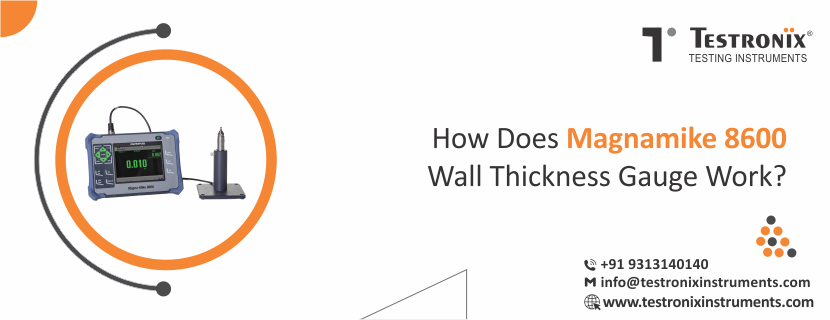
Basically, a small steel ball is inserted into or behind a sample, while the probe is on the outside. The distance from the probe tip to the metal target is the reading on the gauge and is the thickness of your wall or coating. The reliability lies in the physics: The sensor's response to changes in the magnetic field as the distance between the probe and target changes.
Principle of Hall Effect Gauging
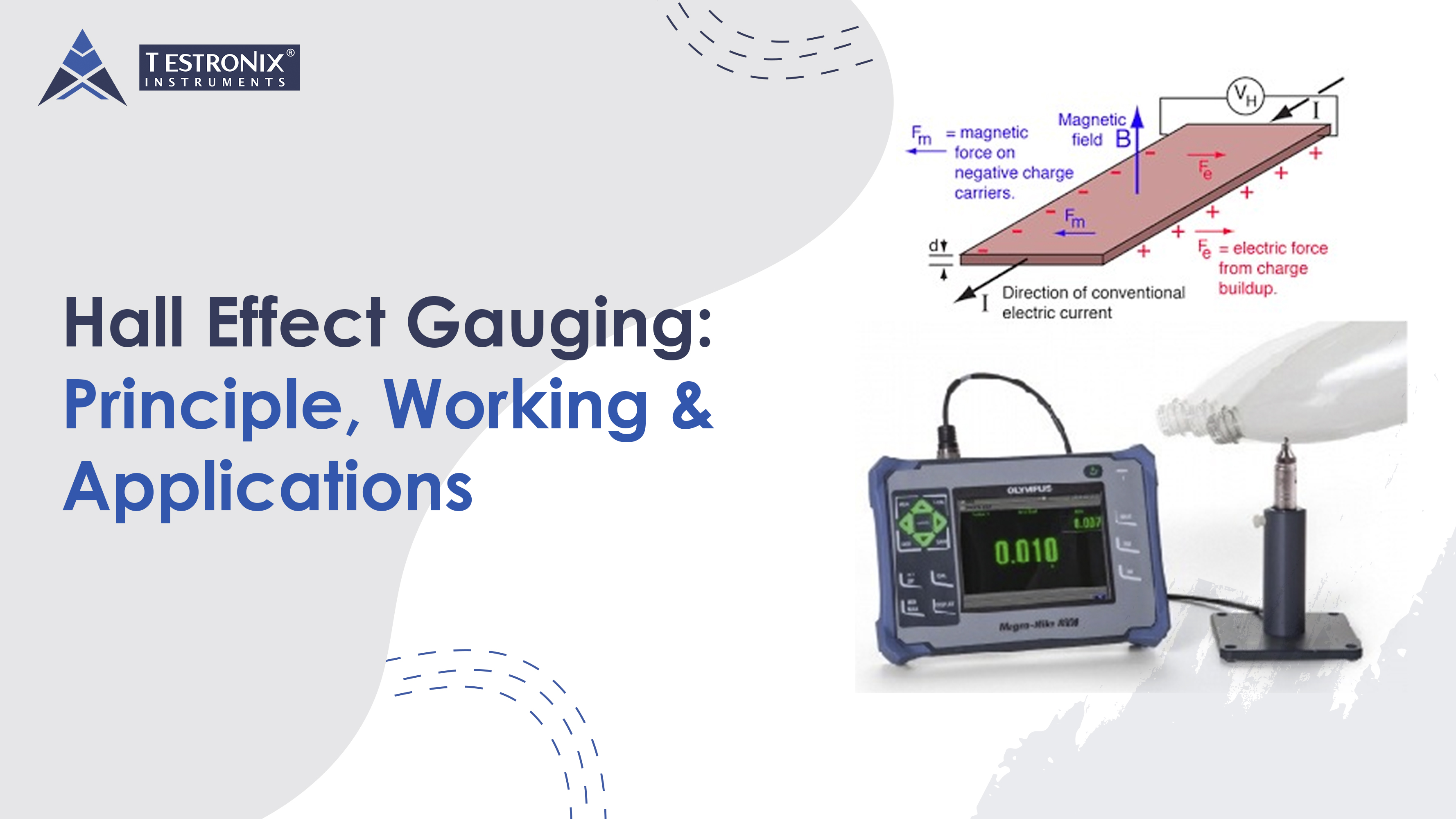
The principle of Hall Effect is based on an electrical phenomenon. Accordingly, the current flows through a conductor and a magnetic field is applied perpendicular to the current. As a result, a voltage is generated across the conductor which is perpendicular to both conductor and magnetic field. That voltage is called the Hall voltage.
The reason for this is that the moving charge carriers in the conductor are affected by the magnetic field that is pushing them to one side and producing a measurable potential difference. The important point is that the Hall voltage varies according to the strength of the magnetic field to which the sensor is exposed. In gauging, the Hall effect becomes useful because the magnetic field strength at the sensor changes depending on how far the steel target is from the probe.
How Hall Effect Gauging Works
Hall effect gauging works by measuring the magnitude of a magnetic field between a probe and a target (typically a steel ball) that are on opposite sides of a non-magnetic material. As the magnet moves, the magnetic field changes. The sensor detects these changes and converts them into an electrical signal. This allows accurate measurement of displacement, thickness, or fluid level.
The following are the exact steps of how it works:
-
Put the probe on one side of the material and drop the steel ball on the other side. The magnet in the probe draws the ball toward it through the wall and the sensor catches the field strength at that gap.
-
Put the probe on one side, drop the steel ball on the other. The probe's magnet pulls the ball through the material wall and the Hall Effect sensor measures the field strength at that gap.
-
The thicker the wall, the further the ball is from the probe, the weaker the field, and the lower the voltage which is called the Hall voltage. The thinner the wall, the closer the ball is to it, the more the field is strengthened and the higher the voltage.
-
The electronics of the instrument read this voltage continuously and convert it to a thickness reading that is displayed on the screen.
Most modern Hall Effect gauges are calibrated using reference standards of known thickness before measurement begins. The calibration sets the relationship between voltage and thickness for the specific material being tested which is why the method stays accurate across materials with different densities and compositions. Measurements are fast and repeatable and require no special surface preparation.
Applications of Hall Effect Gauging
Hall Effect gauging is used wherever you need accurate thickness measurement on nonmagnetic materials and physical access to both sides of the sample is limited or impossible.
Plastic and Packaging Industry
Plastic and packaging industry is one of the biggest application areas. Plastic bottles, containers, and films need consistent wall thickness for structural integrity and weight control. Hall Effect gauges are used to measure wall thickness on formed plastic parts without cutting samples from the production line. A small ball is dropped inside the bottle, the probe is placed on the outside, and the reading is taken in seconds.
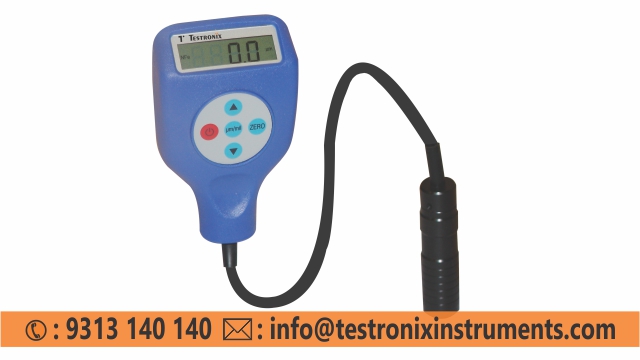
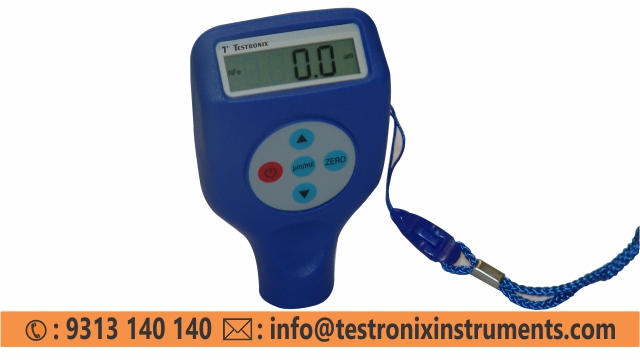
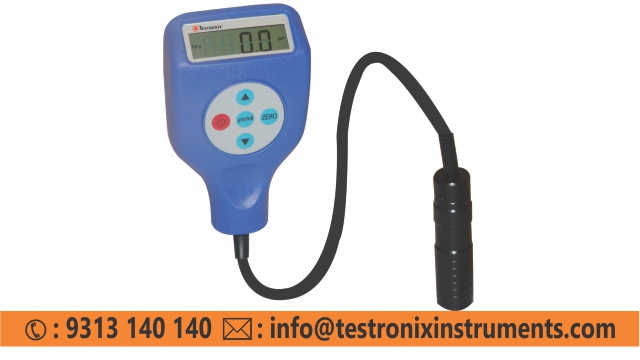
Testronix offers Coating Thickness Gauge built on Hall Effect and eddy current principles. This equipment is frequently used by quality lab operators and manufacturers to measure coating and surface layer thickness on metal substrates quickly and without damaging the part.
Coating Thickness Measurement
Hall Effect sensors are used to measure the thickness of non-magnetic coatings like paint, powder coating and zinc plating. It is also used for anodizing on ferromagnetic substrates like steel. The sensor measures the change in the magnetic field between the probe and the substrate below the coating. This is common practice in metal fabrication, industrial painting, and automotive finishing and is directly related to the corrosion resistance and product life.
Glass and Composites
Glass panels, composite sheets, and laminated materials are all measurable with Hall Effect gauging. These are materials where ultrasonic methods sometimes struggle with signal coupling and eddy current methods do not apply at all. The Hall Effect fills that gap cleanly.
Aerospace and Automotive
Thin-walled titanium and aluminum components used in aerospace are tested for wall uniformity using Hall Effect gauges. The method is fast enough for production line use and precise enough for engineering tolerances. Automotive manufacturers use it for plastic interior panels, fuel tanks, and body components where wall variation affects both performance and safety.
Medical Devices and Tubing
Medical-grade tubing, syringes, and plastic housings need tight dimensional control. Hall Effect gauging allows in-line or sample-based thickness checks without any risk of contaminating or deforming the part.
Conclusion
Hall Effect gauging sits in a category of measurement methods that just work. No surface damage, no complicated setup, and reliable results across a range of materials and geometries. For labs and production teams dealing with non-magnetic materials where traditional measurement falls short, it remains one of the most practical tools available.
If your quality process involves coating thickness measurement on metal parts, Testronix Instruments offers coating thickness gauges built on Hall Effect and eddy current principles, designed for accurate and repeatable results in both lab and field conditions. Contact Testronix Instruments to find the right gauge for your specific application and material requirements.