You may have never thought twice about which freezer you are using until something goes wrong. A batch of vaccines lost potency. A research sample degraded overnight. A shipment of frozen goods arrived compromised. These are real situations that occur when people think that freezers and deep freezers are the same.
The truth is, freezers and deep freezers are built for fundamentally different jobs. Yes, they both freeze things. But the science behind how cold they get, how they maintain that cold and what kinds of materials they are actually designed to protect varies quite a bit.
More businesses, labs and facilities are expanding into temperature-sensitive work and the equipment decisions being made early on tend to stick around for years. Correctly setting up your system will save time, money and often, a great deal more than just those two items. This article will provide you with a breakdown of what each of your systems is, how each of your systems works, their comparative temperatures and an accurate description of where each of your systems is supposed to go.
What is a Freezer?
A freezer is a refrigeration appliance that preserves perishable items by maintaining internal temperatures below the freezing point of water. It is the most common cold storage solution in the world, present in virtually every home, restaurant, grocery outlet and food business you can think of. Most people use a freezer every day without even thinking about it.
Refrigerant fluid continually circulates through a closed system comprising a compressor, a condenser, an expansion valve and an evaporator in each refrigerator. Compressing the refrigerant increases its temperature prior to venting it to the atmosphere through the coils of the condenser outside of the refrigerator.
The refrigerant after entering the expansion valve shall experience a reduction of pressure at the expansion valve causing it to flow through into the evaporator inside of the cabinet where it will evaporate through absorbing heat from inside the refrigerator; this evaporating process (along with absorbing heat from inside the refrigerator) is what cools your refrigerator down to keep things cold inside. The cycle continues to operate without interruption and you will never notice the process working.
Standard freezers typically hold temperatures between 0°C and -18°C which works perfectly well for the vast majority of everyday food storage needs.
What is a Deep Freezer?
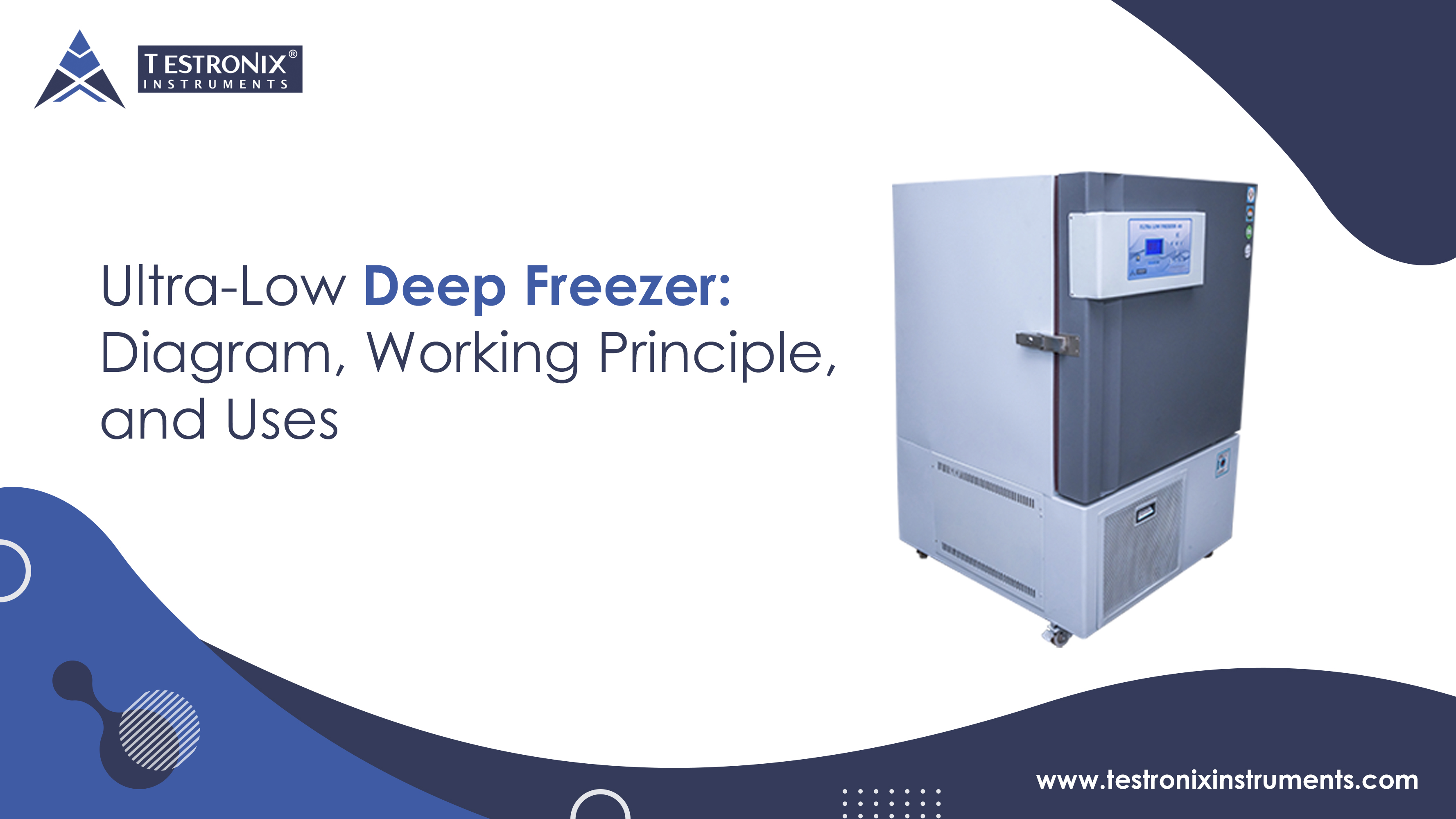
A deep freezer is a high-performance refrigeration unit purpose-built to reach and sustain temperatures far beyond what any standard freezer can achieve. These are not consumer appliances. They live in laboratories, hospitals, pharmaceutical facilities and industrial environments where what is being stored is too valuable, too fragile or too critical to trust to ordinary cold storage.
Achieving temperatures of -40°C to -86°C and sometimes lower requires a fundamentally different kind of engineering. Most deep freezers run on what is called a cascade refrigeration system which essentially stacks two independent refrigeration circuits on top of each other. The first circuit handles the initial cool-down, bringing temperatures to an intermediate range.
Then the second circuit, using a refrigerant with a much lower boiling point, takes over and drives temperatures down further into extreme territory. In addition, the strong insulating material in construction, ability to produce high vacuum panels and ability to produce precision sealing doors enable the production of equipment that is capable of maintaining consistent subzero temperatures for many years.
Freezer vs Deep Freezer: What is the Difference?
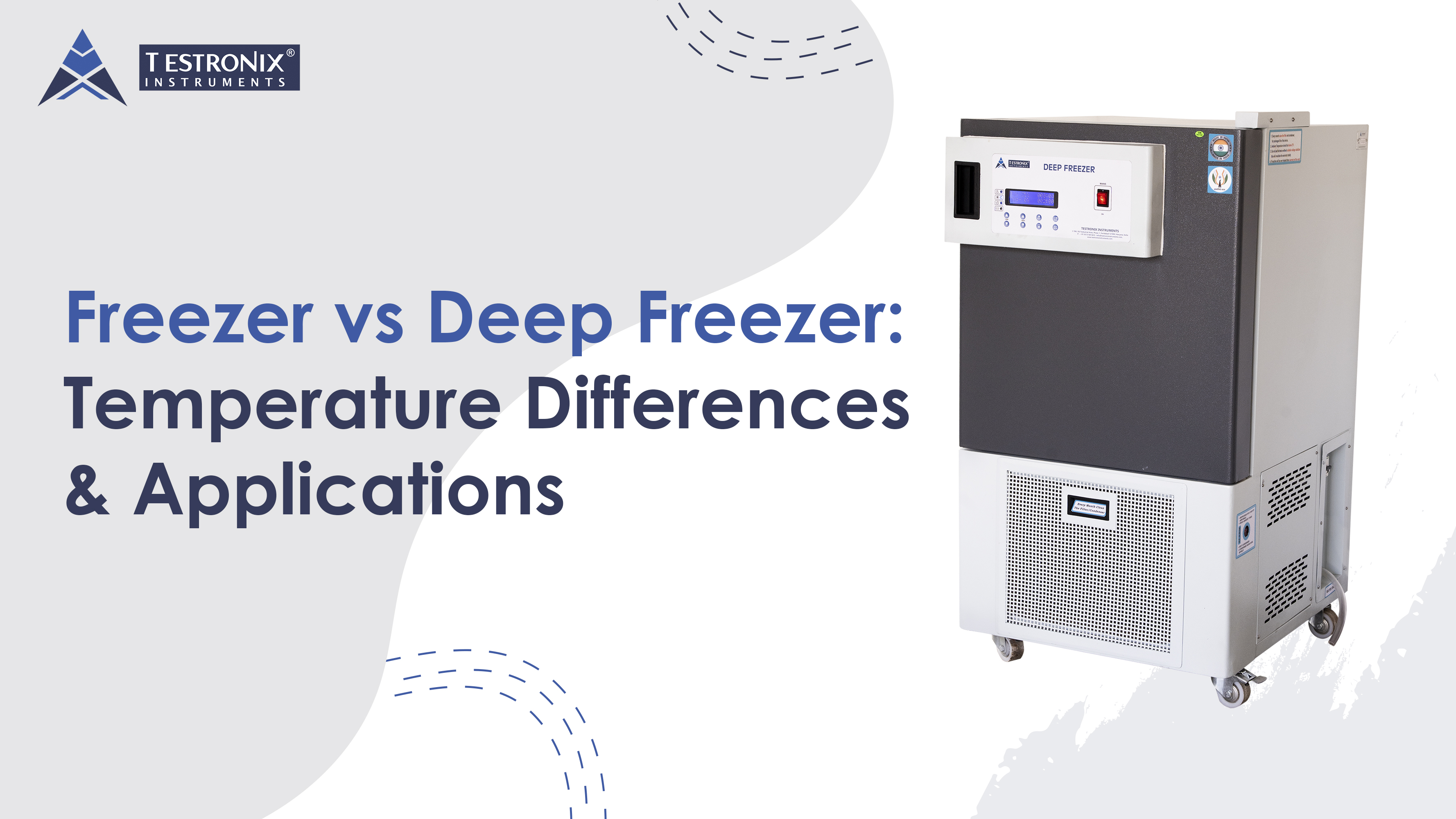
Freezer vs Deep Freezer: A deep freezer operates at dramatically lower temperatures with a more complex refrigeration system and superior insulation. The difference is not just technical; it shapes everything from running costs and equipment size to what you can safely store and for how long.
|
Aspect |
Freezer |
Deep Freezer |
|
Temperature Range |
0°C to -18°C |
-40°C to -86°C or lower |
|
Primary Use |
Household and food service |
Medical, pharmaceutical, scientific |
|
Refrigeration System |
Single-stage vapor compression |
Cascade or dual-stage refrigeration |
|
Insulation |
Standard foam insulation |
Thick walls, vacuum insulation panels |
|
Energy Consumption |
Low to moderate |
High |
|
Size and Form |
Upright or compact chest units |
Large chest or upright lab units |
|
Cost |
Affordable |
Significantly higher |
|
Temperature Precision |
Moderate |
High, with digital monitoring |
|
Typical Contents |
Meat, dairy, frozen meals |
Vaccines, plasma, enzymes, biological samples |
Freezer vs Deep Freezer: The Temperature Difference
A standard freezer maintains temperatures between 0°C and -18°C, a range that is genuinely sufficient for stopping most microbial activity. A deep freezer does not just go a bit colder; it enters an entirely different thermal category typically operating between -40°C and -86°C.
In the range of this temperature, biological processes slow significantly or almost stop altogether; Water freezes; Meat or Dairy products as well as vegetables have no further deterioration (in many instances) after this period. For both residential and commercial food service, this temperature range has been considered to be a safe and reliable standard for many years.
Scientifically, at those temperatures, molecular activity slows to such a degree that even the most fragile biological materials stay structurally intact for years. Proteins hold their shape. RNA does not break apart. Vaccine formulations do not drift in potency.
What sounds like a number on a thermostat actually represents the difference between a sample being viable and completely ruined. Overall, the temperature difference between these two units is not a footnote in the specs. It is the entire reason one of them exists.
Applications of Freezer
For a cold storage environment where just everyday items to be stored at cool temperatures are needed, a normal freezer would be the right equipment. They are also very practical and economical with regard to both their construction and use in the high volumes of daily activity.
Common applications include:
-
Storing meat, poultry, seafood, vegetables and dairy products in homes and restaurants
-
Preserving ready-to-eat meals, bakery goods and pre-portioned ingredients in food production facilities
-
Short-term storage of select pharmaceutical products that require cool but not ultra-low temperatures
-
Ice cream and frozen dessert storage across retail and commercial hospitality settings
-
Bulk food preparation and inventory management in catering operations
-
Grocery and convenience store frozen food sections serving daily consumer demand
Applications of Deep Freezer
A deep freezer applications revolve around long-term stability and ultra-low temperature precision is non-negotiable. These are settings where the products are not replaceable or replicated quickly while allowed to degrade under any circumstances.
Key applications include:
-
Storage of vaccines, biological agents and blood plasma in hospitals and public health facilities
-
Preservation of stem cells, reproductive tissues and embryos in fertility clinics and biobanks
-
Long-term storage of research samples including tissue cultures, enzymes and genetic material in scientific labs
-
Pharmaceutical manufacturing and quality control where active compounds must stay chemically stable over time
-
Food science research requiring sample preservation without any molecular or structural change
-
Industrial storage of reactive or unstable chemical compounds that break down at higher temperatures
-
Forensic and medical examiner facilities where biological evidence must remain intact for extended periods
Conclusion
Simply put, the difference in making your decision to use frozen food service equipment could come down mainly to the difference of what frozen food would be worth to you should it fail. A standard freezer offers the same benefits of reliability and value but may not have as much capability as a large freezer for commercial food service or retail operations.
But when the materials are biologically sensitive, scientifically significant or medically critical, a deep freezer is not a premium upgrade. It is the minimum standard the job demands.
For those looking for cold storage equipment they can genuinely depend on, Testronix Instruments has built a strong reputation as one of the leading manufacturers and suppliers of both freezers and deep freezers. Their units are engineered for consistent temperature performance, built to last in demanding environments and trusted across industries ranging from food manufacturing to pharmaceutical research.
If you are making a cold storage decision that needs to hold up under pressure, get in touch with us or contact us for a quote.