Coated parts fail in the field more often than it is assumed. In such components, a bracket looks fine on the shop floor but after a few months, the coating can blister or rust creep in from the edges. It doesn’t only cost the product but also a stain on the reputation of the vendor.
That is why salt spray testing exists. It gives you a way to check coating quality before the product leaves your plant. In this article we cover what the test is, why coated components need it, how the procedure runs step by step, what ASTM B117 actually requires, how to pick the right equipment, and where the test is used across industries.
What is Salt Spray Test for Coated Components?
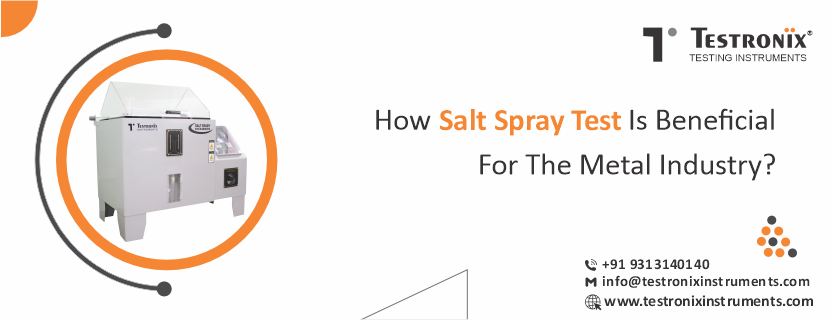
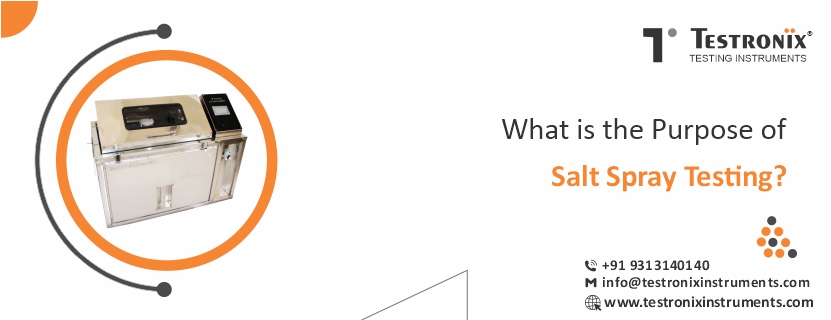
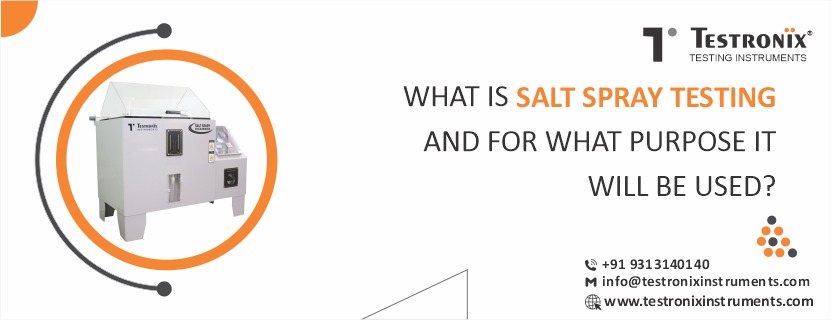
Salt spray testing is an accelerated corrosion test used to determine how well a coating protects against corrosion. Coated test pieces are exposed to a fine salt spray.
The accelerated nature of the testing means that the effects of corrosive environments (such as humid, salty and/or polluted) can be seen within days or weeks. The temperature inside the salt spray chamber will be controlled and a dense salt mist will be produced. The coated component is placed within the chamber and observed. Blistering, white corrosion (in the case of zinc plating) or red corrosion may be visible in scratched/edge areas.
Although this simulation doesn’t perfectly reflect real corrosion in the field, it is extremely reliable and can be used to effectively compare different coatings/different batches of coatings.
Why Salt Spray Testing Is Performed On Coated Components
Coated components may rapidly deteriorate in moist, salty or polluted environments. Salt spray testing is performed on coated components to identify potential issues early. This can save costs in the future.
There are a variety of reasons for poor coatings to be applied. Pre treatments may not be properly completed, the coating applied may be of uneven thickness, cure times may be reduced due to high work loads, or variances in plating bath conditions. These can cause underlying problems in the coating.
It is far more expensive to deal with any warranty claims, rework, recalls or loss of contracts than simply carry out salt spray testing. Many customers, especially in the automotive and defense industries, require corrosion testing results to approve suppliers. Without corrosion test results, orders may not be given.
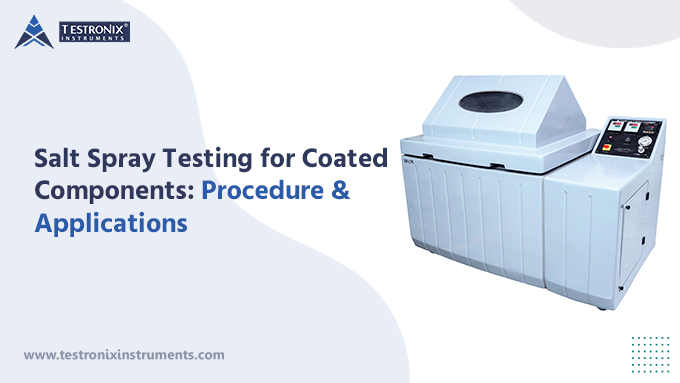
From a quality standpoint, performing regular testing allows trends to be identified. If samples are starting to corrode more quickly within a series of batches, it indicates changes in process. All salt spray testing is performed in a salt spray testing chamber. These chambers are designed to maintain consistent temperature, humidity and mist conditions throughout the testing period.
Procedure for SST on Coated Components
Sample preparation
Ensure samples are clean. Do not touch the sample surface after cleaning. If a scribed panel is being tested, ensure the scribe goes down to the base material using a sharp tool. Often, edges and cut-outs will be sealed with wax/tape to prevent premature corrosion and misleading results.
Salt Solution
Sodium Chloride can be dissolved in deionized/distilled water. It is common to produce a 5% solution. After dissolving, ensure the pH is within a tight range. Ensure that pure salt is used without anti-caking agents and heavy metals as they can influence the behavior of the test.
Chamber Setup
Fill the chamber reservoir. Set the temperature to 35°C. Humidify and heat the air to be sprayed through the nozzle. If this is not performed, the mist will be cooled and inaccurate compared to the standard.
Sample Placement
Place samples in the chamber at the required angle. Typically, samples should be placed between 15 and 30 degrees from vertical. Ensure samples are spaced apart. Samples must not touch each other or drip onto each other. Dripping from one test piece can contaminate another.
Start Testing
Run the chamber. It should be operated continuously for the required time period. This may be 24 hours, 96 hours, 480 hours or over 1000 hours depending on the coating and customer specifications. Minimise opening the door as much as possible. Opening the door will disrupt the mist.
Fallout Collection
Within the chamber, fallout collection devices will collect the falling solution. Measure the amount of solution collected regularly. Ensure pH and salt concentration are within acceptable ranges. If values are moving out of range, adjust before continuing.
Wash, Dry & Inspection
Gently wash samples with clean running water. Allow the samples to dry. Inspect thoroughly. Look for blistering, corrosion, white corrosion, corrosion creep at the scribe line and adhesion failure. Document findings, taking photographs.
ASTM B117 Salt Spray Testing
ASTM B117 is the standard practice for operating salt spray apparatus. It sets the conditions for the chamber, not the pass or fail limits for your coating.
ASTM B117 defines how the test should be conducted correctly but does not define that a coating should last for 500 hours. Pass/fail criteria are determined by the customer, product standard or in-house specification.
Test conditions are fixed. The sodium chloride solution should be a 5% solution. The temperature of the chamber should be 35°C. The pH of the solution collected should be within 6.5-7.2. The rate of solution collection in the fallout collectors should be 1.0-2.0ml/hour for every 80cm 2 of horizontal surface area. Testing length depends on agreement.
However, it should be noted that results from ASTM B117 testing only allow comparisons to be made. The life of a coating in service cannot be accurately predicted. Just because a coating survives 1000hrs of testing, it cannot be guaranteed to last 10 years outside. Consider test results as benchmarks rather than guarantees.
Why Choose Testronix Salt Spray Tester For Coated Material?
A good salt spray test machine provides consistent conditions and is easy to use. Testronix manufactures machines designed to meet this requirement. Testronix salt spray testers ensure consistent testing by maintaining temperature, producing adequate humidity using an air saturator and misting within the chamber using a well-designed spray system. The tanks are designed to withstand continual exposure to salt, meaning they won’t degrade prematurely in long term tests.
In a salt spray test chamber, the reservoir and collector design means samples can be easily managed. Daily checks are quick and simple to perform. Machines are available in various sizes. This allows laboratories with limited space to select a smaller machine and production facilities to install large capacity machines.
If a test chamber is left to run for many weeks, it is important that support can be received quickly to help with calibration and maintenance queries. For laboratories requiring reliable ASTM B117 results, having this support makes a big difference.
Applications of Salt Spray Testing
Salt spray testing is used in many industries wherever coatings on metallic components may be exposed to moisture, salt and/or pollution.
Automotive: Chassis, fixing, braking systems, wheels and underbody brackets may be exposed to road salt and moisture. Regular testing is conducted on painted, zinc plated & e-coated components.
Aerospace/Defence: Structural components and fittings with coatings require proven resistance to corrosion. Test reports are often mandatory.
Electrical/Electronics: Housings, switchgear housings and connectors are tested to ensure coatings resist corrosion in humid or coastal environments.
Construction/Hardware: Galvanized steel, door hardware, hinges, bolts and roof components undergo salt spray testing to confirm durability in outdoor environments.
Marine/Offshore: Components in marine environments are subject to the most extreme conditions. Testing can help determine appropriate coatings that will not fail after just one season.
Appliance/Industrial machinery: Painted panels, powder coated frames and plated fittings are tested to ensure they look good and provide protection.
Coating/Plating Manufacturers: Process validation, comparison of coating chemistries and providing real data to customers can be achieved with salt spray testing.
Conclusion
Salt spray testing provides quick repeatable data on how coatings perform under corrosion. If samples are prepared thoroughly and the chamber is run under ASTM B117 conditions, honest inspection can be performed. This data can be used to improve processes or approve batches.
During the installation or upgrade of your laboratories, you may wish to use apparatus to allow reliable and repeatable tests. Testronix Instruments offer salt spray test chambers for reliable and regular testing. This allows coatings on components to be tested correctly. You can be sure that products will be of a high quality and sustainable.