Aerospace components face extreme weather conditions, where moisture, pressure changes, and fine particles are a constant threat to electronics and critical mechanical housing. Standard laboratory testing ensures these parts won’t fail when subjected to the hard environmental stresses of flight or ground maintenance. In this article, we explore the use of the IPX5 and IPX6 ratings for aerospace ingress testing, the effect of fine dust on jet water exposure, the key differences between the two standards, and how specialized testing chambers test these components.
What is an IPX5 Rating?
An IPX5 rating measures how well an enclosure protects internal components against low-pressure water jets sprayed from any direction. It ensures that equipment exposed to heavy rain, washdown procedures, or ambient moisture remains fully functional without liquid penetrating critical seals.
When people think about dust ingress testing, they usually focus on fine sand or talcum powder chambers under IP5X or IP6X standard definitions. However, real-world aerospace testing frequently combines or sequences water jet exposure with dust chamber testing. Fine particulate residue sitting on a rubber gasket or connector housing can degrade the seal over time. When a low-pressure jet hits that compromised seal during an IPX5 test, water can easily push past the barrier.
This testing matters immensely because crews routinely wash down aircraft equipment on the tarmac. Exterior sensors and housings are contaminated by hydraulic fluid leakage, dirt, and runway dust. If a seal does not resist a direct water jet contaminated with fine particles, moisture gets into the circuit boards, resulting in short circuits, drift of signals or corrosion. The IPX5 test standard ensures that sensitive avionics are not compromised with normal operational cleaning and moderate moisture exposure.
What is the IPX6 Rating?
IPX6 rates an enclosure against high pressure and heavy water jets delivered through a larger nozzle at significantly higher flow rates. It verifies that equipment survives extreme water impact like direct high pressure washdowns or severe stormy weather, without taking on water.
Just like with low-pressure testing, combining dust ingress evaluations with IPX6 water jets tests the ultimate integrity of joint seals. Fine particles lodging in microscopic crevices create micro-gaps. Under high water pressure, those micro-gaps become direct path channels for liquid intrusion. A housing might pass a dry dust test easily, but intense hydraulic force from high pressure water can force settled abrasive dust straight through flexible seals.
In the aerospace sector, this level of testing is critical for externally mounted components. Sensor packages on landing gear, wing-mounted camera systems, and external nav lights experience extreme fluid forces. Rain impacts at taxiing speeds or high-pressure ground washdowns can destroy unrated enclosures. Testing against IPX6 forces engineers to design better structural ribbing, stiffer gaskets, and higher torque fastening layouts that resist both dust wear and high water impact.
IPX5 vs IPX6: What is the Difference?
The main difference between IPX5 and IPX6 comes down to water pressure, flow volume, nozzle size, and the physical force exerted on the test sample. While IPX5 tests resistance against light washdowns, IPX6 tests structural resistance against intense water blasts.
|
Test Parameter |
IPX5 Rating |
IPX6 Rating |
|
Water Pressure |
Low pressure (30 kPa at 3 meters distance) |
High pressure (100 kPa at 3 meters distance) |
|
Water Flow Rate |
12.5 liters per minute |
100 liters per minute |
|
Nozzle Inner Diameter |
6.3 mm |
12.5 mm |
|
Test Duration |
At least 3 minutes |
At least 3 minutes |
|
Core Focus |
Light jets, heavy splash, routine washdowns |
High power jets, heavy seas, intense washdowns |
|
Seal Stress Level |
Moderate surface seal contact |
High mechanical deflection on gaskets |
Why IPX5 and IPX6 Dust Ingress Testing Used for Aerospace Industry
In the aerospace industry, the hardware is exposed to vast changes in altitude and temperature which cause materials to expand and contract all the time. This growth creates opportunities for ambient airborne dust to penetrate small openings around panels, connectors and switches.
When aircraft land on dirt runways or operate in arid environments, fine sand gets into every seam on every surface. Later, when the aircraft is in heavy rain or goes through routine pressure washing, that water gets mixed with trapped dust to form an abrasive paste. Environmental exposures are combined and simulated using standard testing cycles to ensure flight-critical hardware does not prematurely fail.
If an external sensor housing leaks, water mixes with dust residue and creates conductive pathways across internal circuit traces. That leads to false readings in the cockpit or complete loss of sensor telemetry. By subjecting components to both dust chamber environments and rigorous IPX5 or IPX6 jet testing, manufacturers verify that internal electronics remain dry and clean throughout the lifespan of the aircraft.
IPX5 vs IPX6: What to Choose for Ingress Testing
The selection between IPX5 and IPX6 testing depends on the position of the installed component on the aircraft and how much environmental force it will face. Parts inside covered bays need lower protection levels while external systems require maximum ratings.
IPX5 testing is typically adequate for internal avionics, cabin equipment, or cockpit displays. These areas are not directly subjected to atmospheric blasts or high-pressure spray equipment, so the moderate water streams and dust settlement modeling covers realistic risk scenarios. In these applications, the IPX6 design often adds unnecessary weight, heavier seals and higher manufacturing costs without adding any real value.
For landing gear assemblies, wing tips, engine bay sensors, or fuselage-mounted pods, IPX6 is the right choice. These components face high-velocity rain during flight prep, heavy atmospheric pressure changes, and aggressive high-pressure spraydowns by maintenance crews on the ground. Testing to IPX6 ensures the enclosure can physically handle structural pressure without flexing enough to let water or dust inside.
Testronix Dust Test Chamber and Ingress Testing Equipment
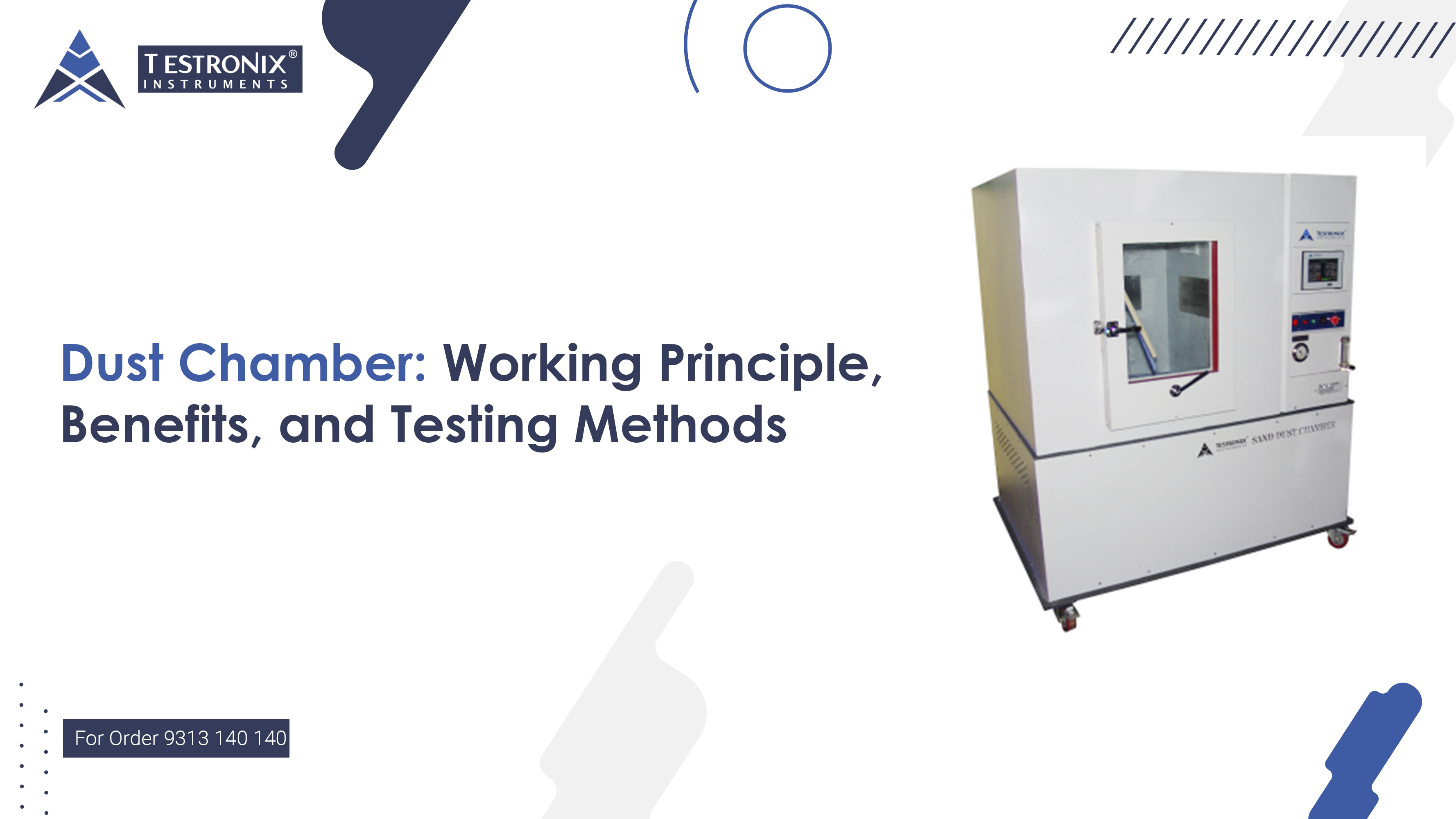
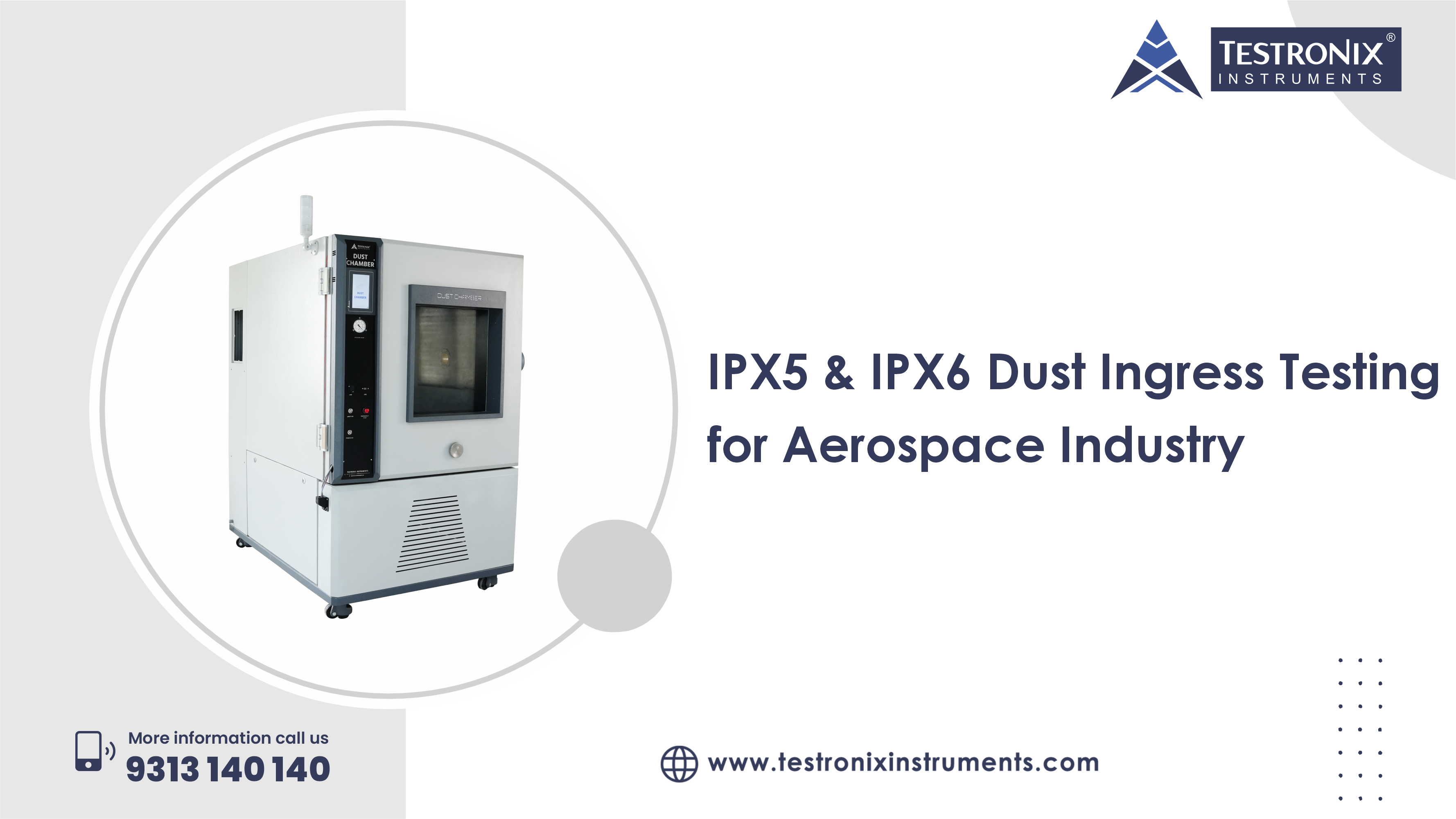
Accurate, repeatable environmental testing requires precise equipment capable of meeting international IEC and MIL-STD specifications. Testronix Instruments builds dedicated test chambers that help aerospace manufacturers simulate harsh dust accumulation alongside water spray routines.
A quality dust test chamber allows lab engineers to control particle concentration, air circulation speed, temperature, and chamber pressure. The Testronix Dust Test Chamber is built specifically to handle talcum powder and fine sand testing, keeping particles suspended uniformly around the test specimen. This creates consistent dust settlement across seal lines before samples undergo water jet evaluations.
Integrating reliable testing equipment into your R&D process catches design flaws early. Using a dust ingress tester helps identify poor gasket materials, improper screw spacing, or housing deflection issues before parts head into full-scale production. Consistent testing hardware yields predictable results, saving thousands in redesign costs later.
Conclusion
In the aerospace industry, the safety of the product is a mandatory requirement, and no parts should fail during environmental qualification testing. The crucial components used for aerospace vehicles must endure harsh real-world environments when tested against fine particulate exposure as well as a water jet standard like IPX5 and IPX6. Today, you have learned what these IP ratings are and how important they are for the industry.
But it’s also important to have proper test parameters, have accurate equipment, and understand it. With a Testronix Instruments dust test chamber, you can be confident that your products meet the most demanding standards and will perform reliably in the field. Get the right instrument for aerospace components testing and ensure your products will meet the IPX5 and IPX6 ratings. Contact us today!