Eliminating harmful microorganisms is a critical challenge in various industries, including healthcare, pharmaceuticals, and laboratories. Contaminated equipment and materials can lead to infections, compromised research, and safety hazards.
The solution to this problem lies in the autoclave—a high-pressure steam sterilizer that effectively eliminates bacteria, viruses, and spores. This discussion will explore the working principle, components, advantages, disadvantages, and applications of autoclaves.
What is Autoclave?
An Autoclave is a specialized device that utilizes high-pressure steam to eliminate harmful bacteria, fungi, and spores from materials placed within a sealed pressure chamber. The items are exposed to a high temperature for a particular given period.
The humidity in the steam effectively conveys heat to the materials to break down the protein composition of the bacteria and spores. One of the most important examples of an autoclave is a medical steam sterilizer which is used in hospitals to disinfect surgical tools, scientific glass equipment, and biomedical waste.
How Does an Autoclave Work?
An autoclave works by using high-pressure steam at high temperatures to kill bacteria, viruses, and other microorganisms by breaking down their proteins. It works like a closed chamber to prevent air from escaping while continuously increasing temperature and pressure. Temperature, time, and steam quality are the three crucial factors to guarantee effective steam sterilization in an autoclave. To fulfill these requirements there are three stages in the autoclave process:
Step 1. Conditioning Phase
During the first phase of the sterilization cycle air obstructs sterilization and must be eliminated from the chamber, this cycle is known as Conditioning. In active air extraction steam sterilizers by using a vacuum system the air can be eliminated from the chamber using a set of steam flushes and pressure pulses.
Step 2. Exposure Phase
After the air is eliminated, the sterilizer drain is shut down and the steam is continuously coming into the chamber, constantly increasing the temperature and pressure inside to a predefined threshold. The cycle is introduced into the exposure stage and materials are held at the sterilization temperature for the stable amount of time needed to sterilize them.
Step 3. Exhaust Phase
During the last stage of the cycle, the sterilizer drain is unsealed and the stem is eliminated reducing the pressure of the container and permitting the materials in the load to dry. High-quality steam is necessary for efficient autoclave sterilization. The accurate sterilization stem should contain 97% vapor and 3% liquid moisture.
What is Autoclave Principle?
An Autoclave works on the principle of moist heat sterilization to destroy microbes. The high-temperature and pressurized steam inside a sealed chamber penetrates the materials and destroys all microorganisms. The high pressure itself does not kill the micorbes but it raises the temperature to the boiling point and eventually the sterilization temperature that eliminates the microbes.
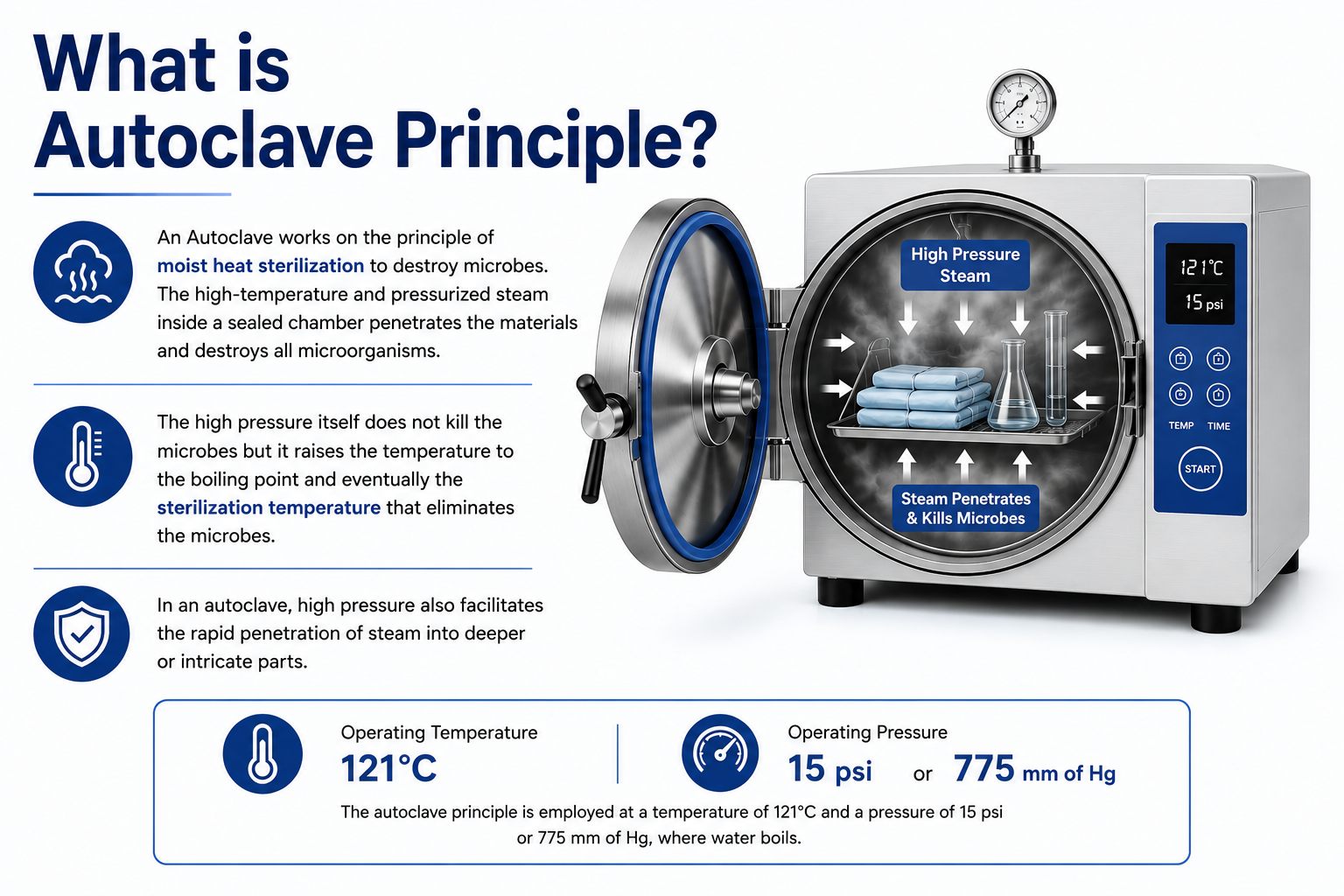
In an autoclave, high pressure also facilitates the rapid penetration of steam into deeper or intricate parts. The autoclave principle is employed at a temperature of 121 degrees Celsius and a pressure of 15 psi or 775 mm of Hg, where water boils.
Autoclave Diagram
A diagram of an autoclave demonstrates the inner working parts which contain an autoclave, a chamber, a heat source, a pressure gauge, and a safety valve. There is also a steam inlet and an exhaust valve, which controls the entry and exit of steam, whereas the drain valve facilitates the removal of condensed water and air. This is a description of the various components and parts of an autoclave:
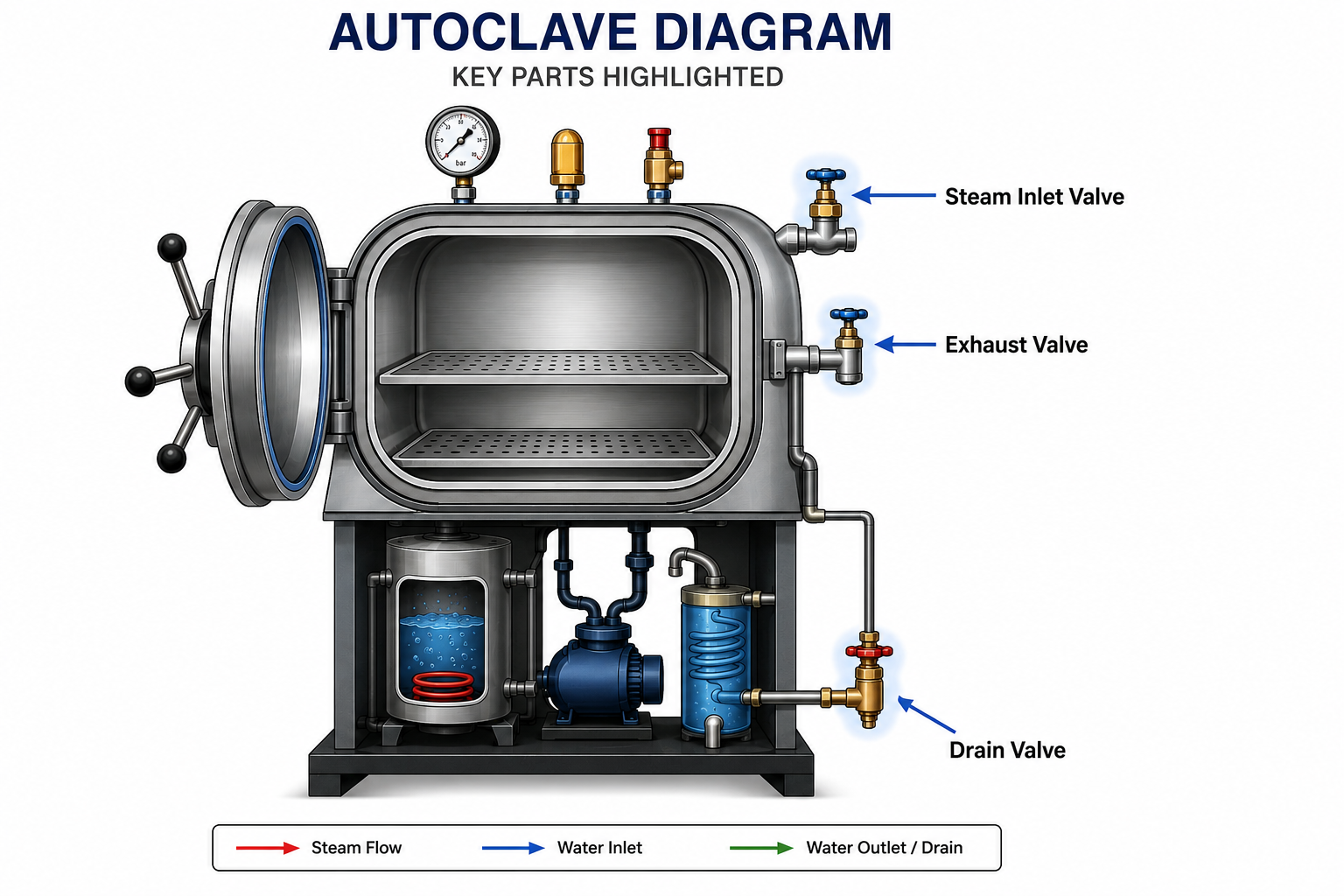
Pressure Chamber: The pressure chamber is the main body of the autoclave. It comprises an inner chamber and an outer jacket.
The inner chamber is made up of Alloy steel and the outer chamber consists of an iron case.
LID/Door: The LID, unplugs the chamber from the external surroundings and closes it to make the ideal temperature and pressure inside the autoclave. It comprises three other parts: Pressure Gauge, Whistle, and Safety Valve.
Steam Generator: A steam generator is available below the chamber. It consists of an electric heating system that warms water to generate steam inside the chamber. Always ensure the generator has the correct level of water to maintain a smooth process and prevent overheating or damage to the autoclave parts.
Vacuum Generator: This eliminates air from the chamber as the existence of any air pockets in the chamber might support the development of any organism and your material will not be disinfected.
Waste-water cooler: Autoclaves are furnished with a waste-water cooler that cools the wastewater such as air, steam, and condensate before it moves into the draining pipes. It restricts damage to draining pipes that can take place by extremely heated water.
Autoclave Temperature and Pressure
The effectiveness of an autoclave depends on maintaining the correct combination of temperature, pressure, and exposure time. Higher temperatures generally require shorter sterilization times while lower temperatures require longer exposure. Materials that cannot tolerate steam are often sterilized using a hot air oven which relies on dry heat instead of pressurized steam.
Proper steam penetration and removal of trapped air are essential to ensure complete sterilization. All these are connected with the maintenance of temperature and pressure for a specific time period as mentioned below:
Autoclave Temperature and Pressure:
|
Temperature (°C) |
Pressure |
Holding Time |
Application |
|
115°C |
10 psi (69 kPa) |
30 minutes |
Heat-sensitive culture media and liquids |
|
121°C |
15 psi (103 kPa) |
15–20 minutes |
Standard sterilization of laboratory media, glassware, surgical instruments, and microbiological waste |
|
126°C |
20 psi (138 kPa) |
10 minutes |
Faster sterilization of laboratory equipment |
|
134°C |
30 psi (207 kPa) |
3–5 minutes |
Flash sterilization of surgical instruments and hospital equipment |
What is Autoclave Sterilization?
Autoclave sterilization is an effective method to eliminate bacteria, viruses, fungi, and spores using high-pressure steam. The steam reaches high temperatures that destroy microbial proteins and decontaminate the items. Autoclave sterilization guarantees in-depth insertion for efficient cleaning, making tools secure and sterile for use in healthcare, research, and industrial facilities.
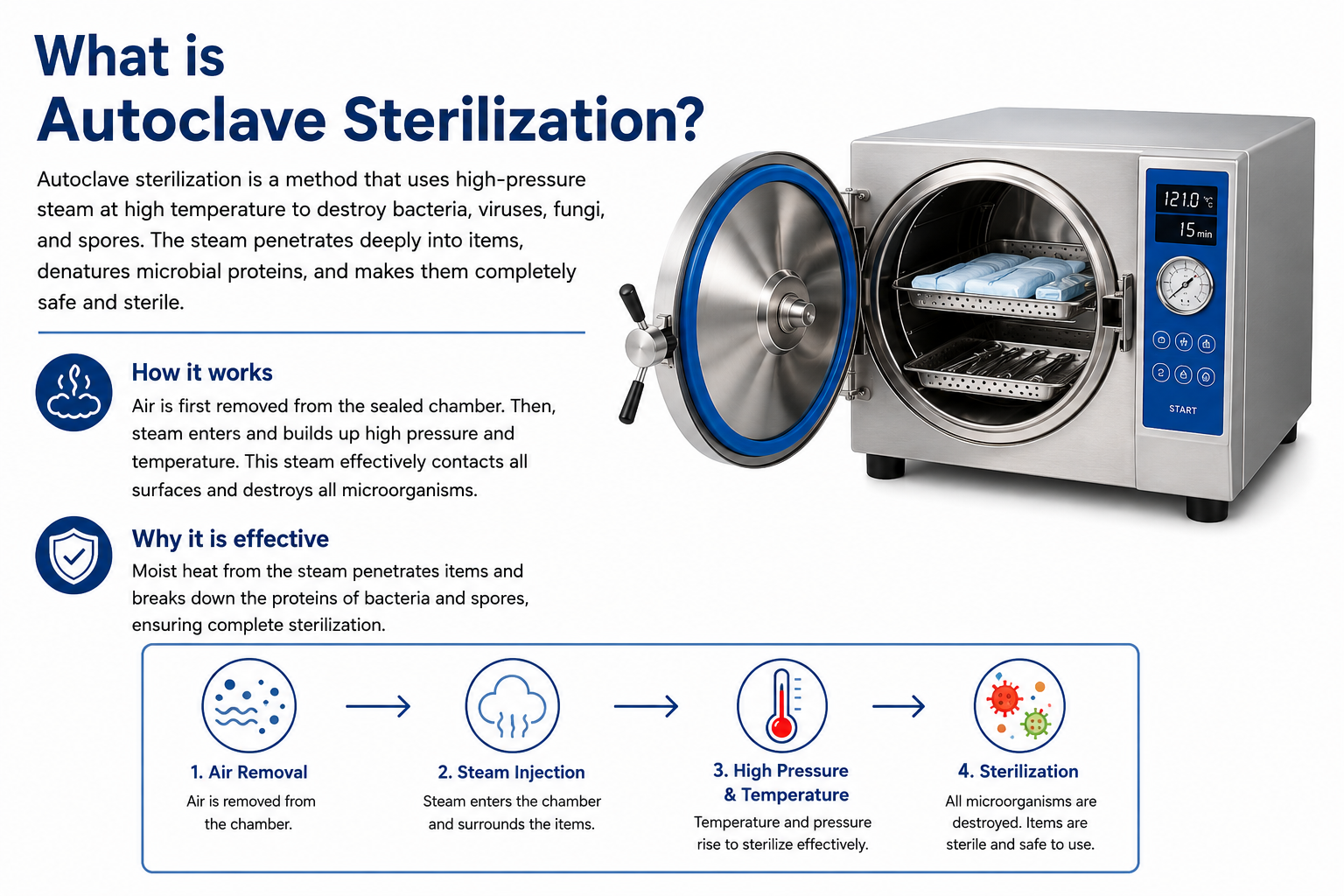
The sterilization process begins with removing all air inside a sealed chamber as air acts as an insulator and does not allow the steam to touch the items. When air is ventilated, the steam traps inside increase the pressure and temperature eventually. This high-temperature and high-pressure steam destroys all bacteria, viruses, fungi, and other microbes and makes the item contamination-free.
There is an immense role of humidity in autoclave sterilization. Humidity in the steam effectively transmits heat to the materials to break down the protein composition of the bacteria and spores. One of the most important examples of an autoclave is a medical steam sterilizer which is used in hospitals to disinfect surgical tools, scientific glass equipment, and biomedical waste.
What Are Autoclave Uses?
An autoclave is used to eliminate bacteria, viruses, fungi, and highly resistant bacterial spores using high-temperature and pressurized steam. Autoclaves are widely used in hospitals, microbiology, research laboratories, pharmaceutical and biotechnology industries, and healthcare facilities for sterilizing surgical instruments.
-
In Manufacturing: Autoclaves are designed to disinfect specific biological waste as well as packaging, instruments, and labware in the manufacturing industry.
-
Biomedical Industry: Biomedical wastes that might include bacteria, viruses, and other biological substances are advised to be deactivated through autoclaving before disposal.
-
Medical Industry: In medical laboratories, autoclaves are utilized to disinfect medical instruments, glassware, surgical tools, and healthcare waste.
-
Food Industry: Autoclaves in the food industry are used for sterilizing canned foods, pasteurizing dairy products, decontaminating packaging, and extending shelf life by eliminating harmful bacteria, spores, and microorganisms through high-pressure steam.
Similarly, autoclaves are used for the sterilization of culture media, autoclavable containers, plastic tubes, and pipette tips.
Advantages and Disadvantages of an Autoclave
Advantages of Autoclave
Effective Sterilization
An autoclave ensures effective sterilization by utilizing a high-pressure steam to remove bacteria, viruses, and spores. This method ensures proper cleaning, making it perfect for medical, laboratory, and industrial areas.
Unlike conventional disinfectants, autoclaving enters the materials closely, ensuring security, consistency, and compliance with the sterilization standards for sustainable equipment and tools.
Time-saving
Autoclaves are usually faster, as compared to the other other sterilization methods. Autoclaves permit fast completion time of the instruments and equipment.
Security
Autoclaves are made with security features to avoid accidents and ensure the proper handling of sterilized materials.
Cost-Efficient
An autoclave is cost-efficient as it sterilizes reusable medical and laboratory equipment, reducing the need for disposable items. It minimizes waste, lowers long-term supply costs, and ensures compliance with sterilization standards.
Its durability, energy efficiency, and ability to handle large loads make it a cost-effective investment for various industries.
Large Capacity
Autoclaves have a large capacity because of their wide chambers, enabling large-scale sterilization of medical equipment, laboratory tools, and industrial materials. They contain multiple trays or racks, enhancing reliability.
High-pressure steam guarantees thorough sterilization, making them perfect for hospitals, research labs, and manufacturing, minimizing compression time for disinfected materials.
Disadvantages of Autoclave
Here are the key disadvantages of an autoclave that are described below:
Heat and Moisture Sensitivity
Heat and moisture sensitivity is a disadvantage of an autoclave because certain materials cannot withstand the high temperatures and steam used in the sterilization process. Items like plastics, electronic components, and heat-sensitive medical instruments may warp, melt, or degrade. Additionally, moisture-sensitive materials can absorb steam, leading to damage or reduced effectiveness.
Damage to Instruments
Damage to instruments is a disadvantage of an autoclave because the high-pressure steam and extreme heat can degrade delicate materials. Heat-sensitive instruments, plastics, and electronic components may warp, crack, or lose functionality. Frequent autoclaving can also cause corrosion or dulling of metal tools, reducing their lifespan and effectiveness.
Safety Risks for Operators
Autoclaves operate at high pressure and temperature, posing risks such as burns, scalds, and steam exposure. Improper handling, sudden pressure releases, or malfunctioning safety mechanisms can cause injuries. Additionally, mishandling contaminated materials increases biohazard risks. Proper training and strict safety protocols are essential to mitigate these hazards.
Corrosion and Combustion of Lubricants
Corrosion and combustion of lubricants are disadvantages of an autoclave due to the extreme conditions inside. High-pressure steam and elevated temperatures can cause metal components to corrode over time, especially if improper materials or water quality are used.
Additionally, certain lubricants may degrade, oxidize, or even combust under intense heat, leading to equipment malfunction, contamination, or increased maintenance needs. Proper material selection and lubricant compatibility are essential to minimize these risks.