ASTM standards have a very important role in material testing and product manufacturing. Suppose a metal bar is visually appealing and has an appropriate purpose. However, under stress (commonly tensile stress), the elongation and/or total failure of the bar could exceed expectations. Engineers and manufacturers work hard to remove some of those ambiguities and uncertainties; therefore, establishing quality control specifications and proper testing is a must to ensure the product works as expected.
That is where tensile testing comes in along with the internationally followed standards. It gives a clearer picture of how a material behaves when force is applied. Still, there is another problem. If different people test materials in different ways, the results stop making sense. One report says the material is strong; another says it is not. That confusion can lead to wrong decisions.
So instead of leaving testing methods in a puzzle, standards are used to keep everything consistent and as per requirements. ASTM E8 is one of those standards that has been around for a long time and is widely followed in the industry. In the next few sections, we will walk through what it actually means in practice, not just theory.
What is ASTM E8 in Tensile Testing?
ASTM E8 is the standard test method for tension testing of metallic materials, published and maintained by ASTM International. It defines precisely how a tensile test must be conducted on metals so that results are consistent, repeatable and comparable regardless of where the test happens or who runs it.
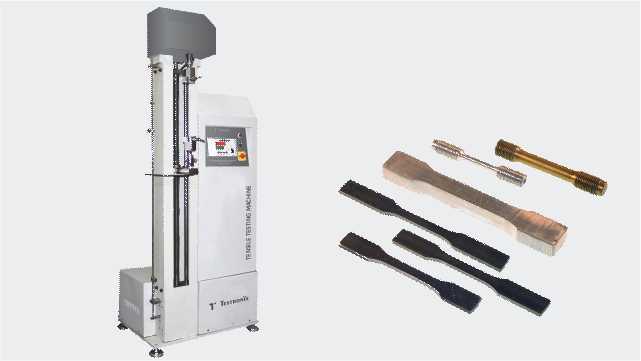
The ASTM E8 method involves taking precisely machined pieces of metal, placing them in a testing machine with grips on either end and pulling them apart at a controlled speed until they break. As they are being pulled apart, the testing machine measures how much force is being applied to the specimens and how much they are stretching.
From that data, engineers extract the key mechanical properties of the material including yield strength, ultimate tensile strength, elongation and reduction in area. ASTM E8 governs every part of this process, from the shape and size of the specimen to the speed of the test to the way results are calculated and reported. Nothing is left to interpretation.
How Does ASTM E8 Work: Stepwise Procedure
ASTM E8 follows a clear and sequential procedure designed to remove variability at every stage of the test.
-
The first step is specimen preparation. The metal is machined into a specific shape with tightly controlled dimensions. Whether the specimen is flat or round depends on the form of the material being tested but in either case the geometry must match what the standard prescribes. A poorly machined specimen will produce unreliable results which is why this step is treated with the same seriousness as the test itself.
-
Once the specimen is ready, the operator measures and records the gauge length and cross sectional area before any load is applied. These baseline numbers are what make later calculations like elongation and area reduction possible. So they have to be accurate.
-
Next, the specimen is loaded into the grips of the testing machine. Alignment matters enormously here. If the specimen is even slightly off axis, it experiences bending forces in addition to the intended tensile force and that throws off the entire test. Good equipment and proper technique at this stage protect the validity of everything that follows.
-
Before the test starts, the operator sets the crosshead speed within the range ASTM E8 allows. The appropriate speed depends on whether the material has a pronounced yield point and the standard gives clear guidance on how to make that call.
-
With setup complete, the machine begins pulling. It applies a steadily increasing tensile load while continuously recording force and extension. The yield point or yield strength, the peak load and the fracture point are all captured automatically.
After fracture, the two broken halves of the specimen are reassembled and measured again. The final gauge length and the minimum cross section at the fracture zone are recorded and these post fracture measurements go into calculating percent elongation and percent reduction in area.
Everything is then compiled into a test report that follows the documentation requirements of the standard, creating a complete and traceable record of the behavior of materials.
What Are ASTM E8 Specimen Size and Dimensions?
ASTM E8 specifies multiple specimen geometries to accommodate different product forms. Flat specimens are used for sheets and plates while round specimens are used for bars, rods and other solid cross sections. The dimensions for the most commonly used specimen types are outlined below.
|
Specimen Type |
Gauge Length |
Width |
Gauge Diameter |
|
Flat Standard |
50 mm |
12.5 mm |
Not applicable |
|
Flat Sub-size |
25 mm |
6 mm |
Not applicable |
|
Round Standard |
50 mm |
Not applicable |
12.5 mm |
|
Round Small |
25 mm |
Not applicable |
6.25 mm |
|
Round Micro |
10 mm |
Not applicable |
2.5 mm |
The gauge length is the section of the specimen where deformation is actually measured. So it is the most consequential dimension in this chart. The standard also specifies grip section lengths and the radius of the transition zone between the grip area and the gauge section to ensure that fracture happens in the gauge section and not at the grips.
Which Materials are Tested Under ASTM E8 Standard?
ASTM E8 applies to metallic materials broadly which is part of what makes it so widely used across industries.
-
Carbon steels and structural steels are among the most frequently tested materials under this standard.
-
Stainless steels are tested across food processing, medical and chemical equipment applications where corrosion resistance and mechanical strength must both be verified.
-
Aluminum and its alloys are tested heavily in aerospace and packaging industries where weight and strength are both critical variables.
-
Copper alloys appear in electrical and plumbing applications.
-
Titanium alloys are tested for medical implants and aerospace components that must perform reliably under demanding conditions.
-
Nickel-based superalloys are used in jet engines and high temperature industrial equipment. They are tested under ASTM E8 because of their mechanical properties at the material qualification stage.
If a metal is going through testing (tensile or compressive), it becomes very obvious that it should be tested under ASTM E8 standards. It makes sure that the manufactured product will sustain in extreme conditions irrespective of the regions.
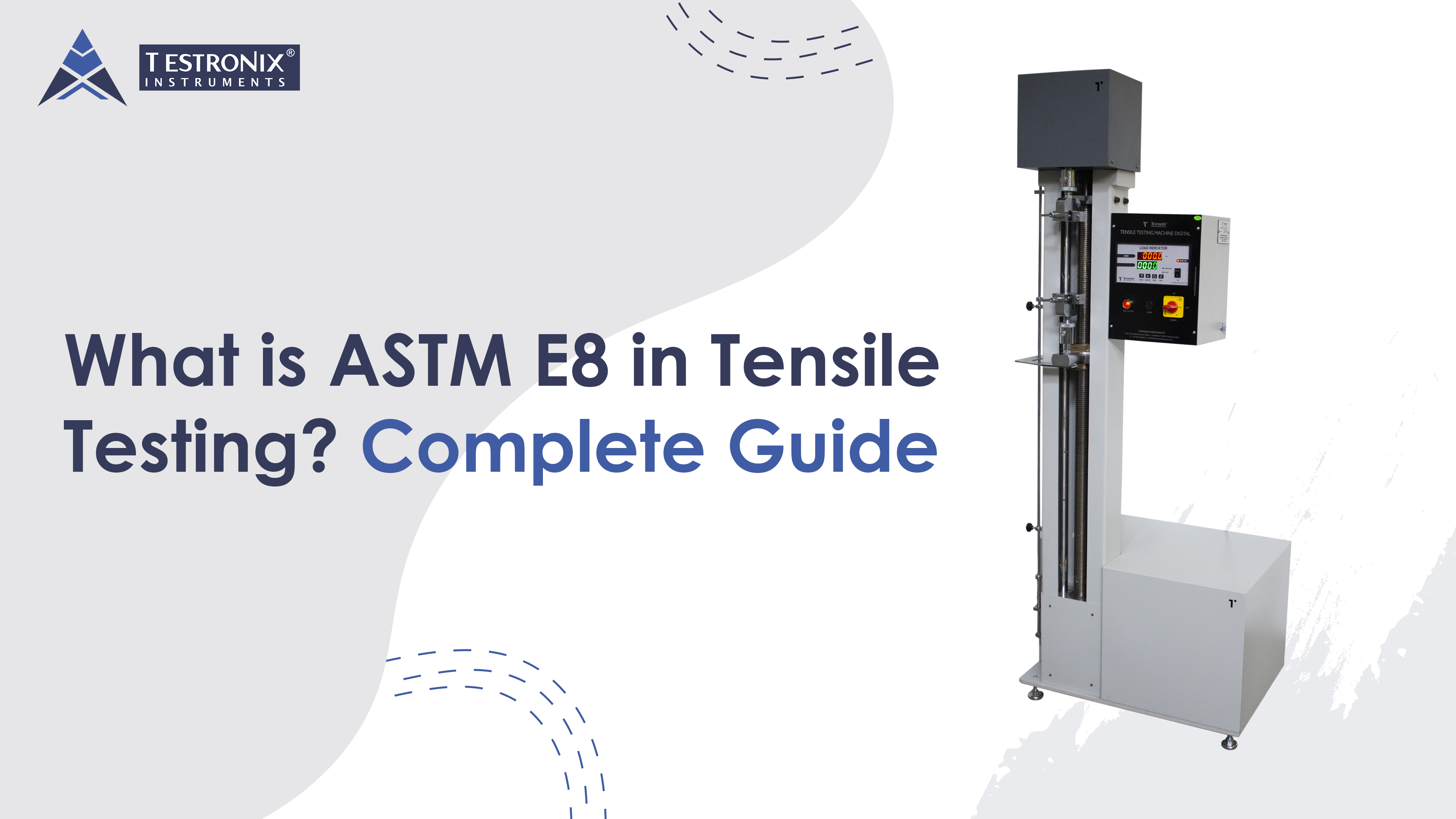
Testronix Tensile Tester: Fully Compliant With ASTM E8 Standard
Compliance with ASTM E8 is not just about having a machine that applies tensile force. It requires accurate load measurement, controlled crosshead speed and proper gripping. These combined prevent slippage and misalignment and software that calculates and reports every required parameter correctly.
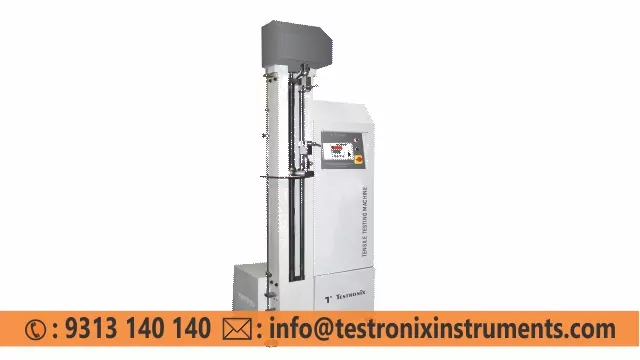
Testronix tensile testers are built to meet all of those requirements. The load cells deliver accurate force readings across the full measurement range and the crosshead speed control keeps the test within the rate limits the standard prescribes. The grip systems are engineered to hold specimens firmly and in alignment, eliminating one of the most common sources of test error.
The integrated software handles all calculations automatically including yield strength, ultimate tensile strength, elongation and area reduction. It also generates reports formatted specifically for compliance documentation.
Conclusion
ASTM E8 exists because materials need to be proven, not assumed. The ASTM E8 standard fixes a messy testing process, making sure all your data is clear, trustworthy and comparable. Every single ASTM E8 SOP related to the testing, from sample size to the final report, exists just to guarantee that consistency.
If your lab requires tensile testing equipment that meets this standard without compromise, consider Testronix Instruments. Contact us today to find the right testing solution for your specific material and compliance requirements.