Different industries utilize adhesive tapes, ranging from the automobile industry to construction to the primary industry. The ability of these tapes to adhere strongly to their substrates dictates the overall effectiveness of these products. Manufacturers and quality control personnel must ensure that their tapes meet the same specifications and performance levels. Each product may convert through the same production process; quality assurance tests must be performed on all adhesive tapes using standard methods.
The ASTM D-3330 Peeling Adhesion Test is one of the most used standards worldwide for evaluating PSA tape's peel strength. This test allows QA/QC professionals to evaluate PSA tapes' bonding performance in a controlled testing environment.
What is the ASTM D3330 standard?
The ASTM D3330 test is used to measure the strength of adhesive tapes that stick to surfaces. It enables manufacturers to test their products in terms of adhesion and resistance to the peeling of adhesive tapes used for packaging, electrical, or surgical purposes. The standard allows users to evaluate various types of adhesive tape (categories A through F) at either a 90° or 180° peel angle.
Why is ASTM D3330 Used for Adhesive Tapes
ASTM D3330 is important for adhesive tapes, as it defines six test methods (A-F) to evaluate the peel adhesion strength of tape to substrates with the same type of roller and dwell time in constant testing environments.
This standard enables the user to ensure product quality controls and reliable performance. The results provide an accurate basis for the development of future tape products, enabling accurate comparisons of tapes with each other.
Important Clauses of ASTM D3330
ASTM D 3330 comprises several clauses that are essential in ensuring that the peel adhesion test is performed correctly and consistently: testing conditions, sample preparation, test methods, data recording, and reporting requirements.
-
Test Methods (A–F)
The standard contains six specific test methods from A to F. Each is designed for different types of pressure-sensitive tapes and applications. These methods differ in peel angle, substrate and tape removal direction to comprehensively study various adhesive products.
-
Peel Angle Requirements
Depending on the method applied, the test peel angle as per ASTM D3330 is normally 180 or 90. This is a fixed angle that guarantees that the peeling force that is obtained is similar even when using different tests or laboratories.
-
Peel Rate / Test Speed
The peeling velocity is specified as a constant, normally 300 mm/min, unless otherwise stated, since the peel strength drastically changes with any alteration in the test rate.
-
Substrate Preparation
The test shall be made using cleaned stainless-steel panels or other surfaces as specified. The substrate shall be free from dust, oil, or contaminants so repeatable adhesion can be attained without the variable of surface inconsistencies affecting the results.
-
Application Procedure of Tapes
ASTM D3330 features a systematic guideline with a standardized roller for applying the tape evenly onto the panel. This guarantees uniform pressure, removing the variability of human factors that could impact adhesion strength.
ASTM D3330 Test Method: Step-wise Procedure
Conditioning, preparation of the specimen, dwelling, peeling, data collection, calculation etc are the essential steps that are taken under the ASTM D3330 test to assure precision in the peel adhesion test. The following are the detailed steps:
-
Tempering
Conditioning controls the atmosphere in which the tape and test panel are kept before testing. Samples are temperature-controlled and humidity-controlled for a specified time. This process controls the adhesive, minimizes variations and enables repetitive, consistent peel strength measurements.
-
Specimen Preparation
Specimen preparation involves cutting the tape to the required width and length as defined in the standard. The edges should be clean and straight. Proper preparation ensures that every sample of tape is uniform and that the test will be fair and accurate, thus easy to compare from one sample to another.
-
Tape Implementation
The tape is applied to the test panel smoothly, with no wrinkles and using a standardized roller. It applies even pressure to ensure proper bonding to the surface for accurate and repeatable peel strength measurements.
-
Dwelling
Dwell time is defined as the waiting period after the tape is applied to the panel. This allows the adhesive to settle and bond consistently with the surface. Comparisons are made with a normal dwell time in order to ensure fairness and prevent any variations when determining results on peel strength.
-
Mounting the Specimen
The specimen is then fastened by holding the free end of the tape in the grip of the tester, although the panel is attached in position. Adequate alignment is to be taken into consideration in ensuring that the right peel angle is retained, which allows the tape to peel off with the right force measurements.
-
Peeling and Data Collection
During peeling, the machine pulls the tape at a constant speed and angle specified in ASTM D3330. The tester measures the force required to peel the tape. Data is recorded continuously, showing variations of the peel strength across the entire length of the tape.
-
Calculations and Reporting
Recording is followed by averaging the recorded peel force, a procedure that calculates the adhesion strength. All results should include the values of peel force, test conditions, width of tape, type of failure, and observations. The reports should be clearly stated to facilitate easy understanding, comparison, and usage for quality evaluation.
Testronix Peel Tester: Equipment Used for ASTM D3330 Test
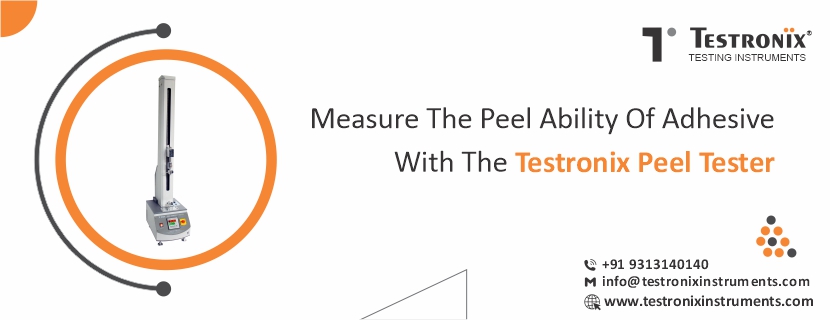
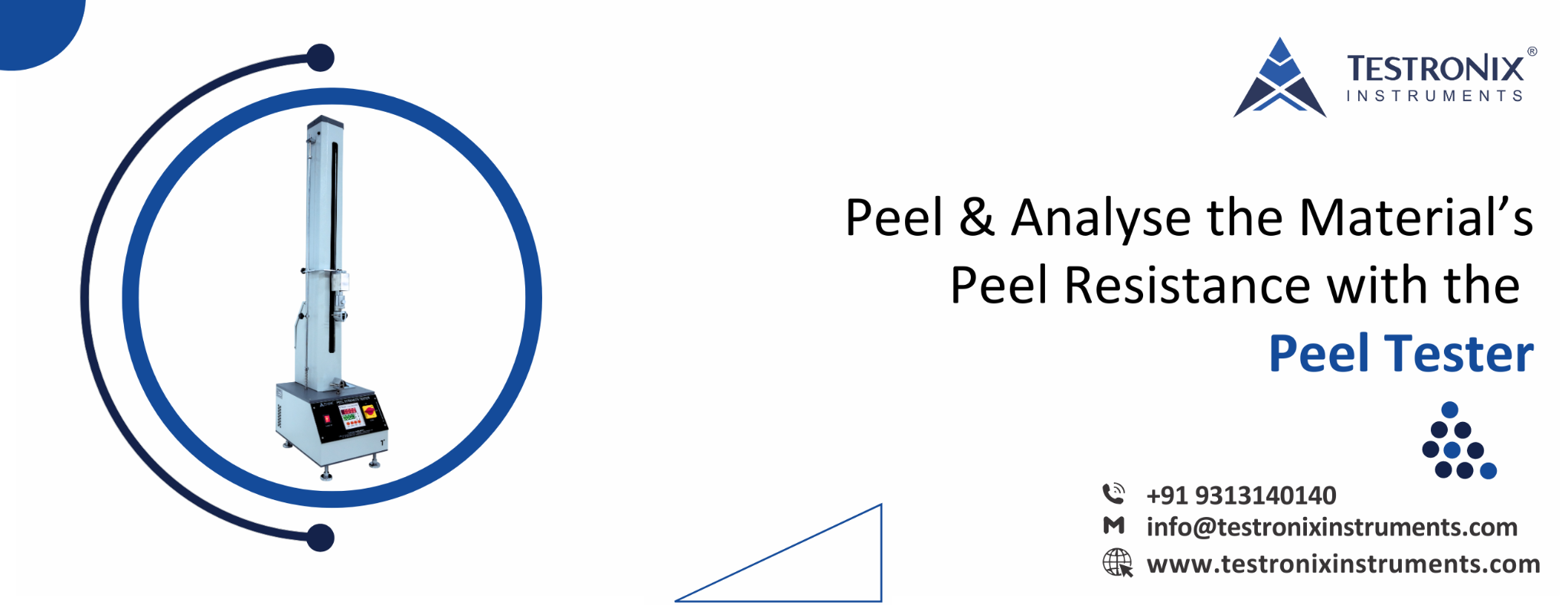
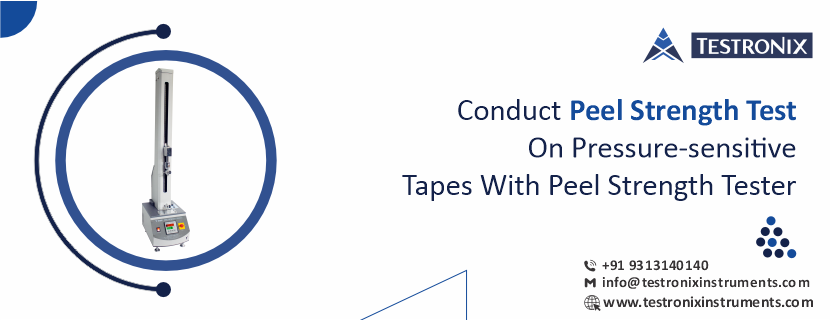
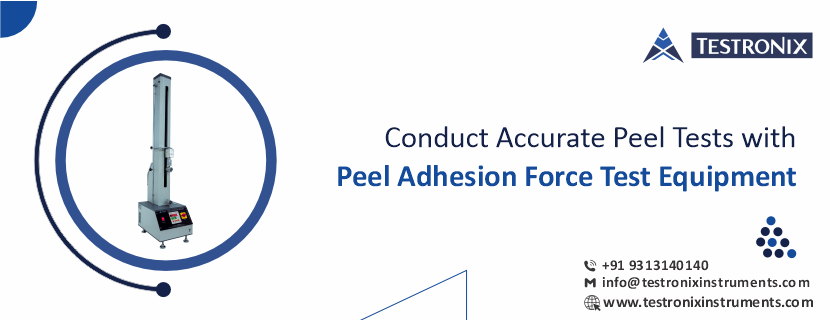
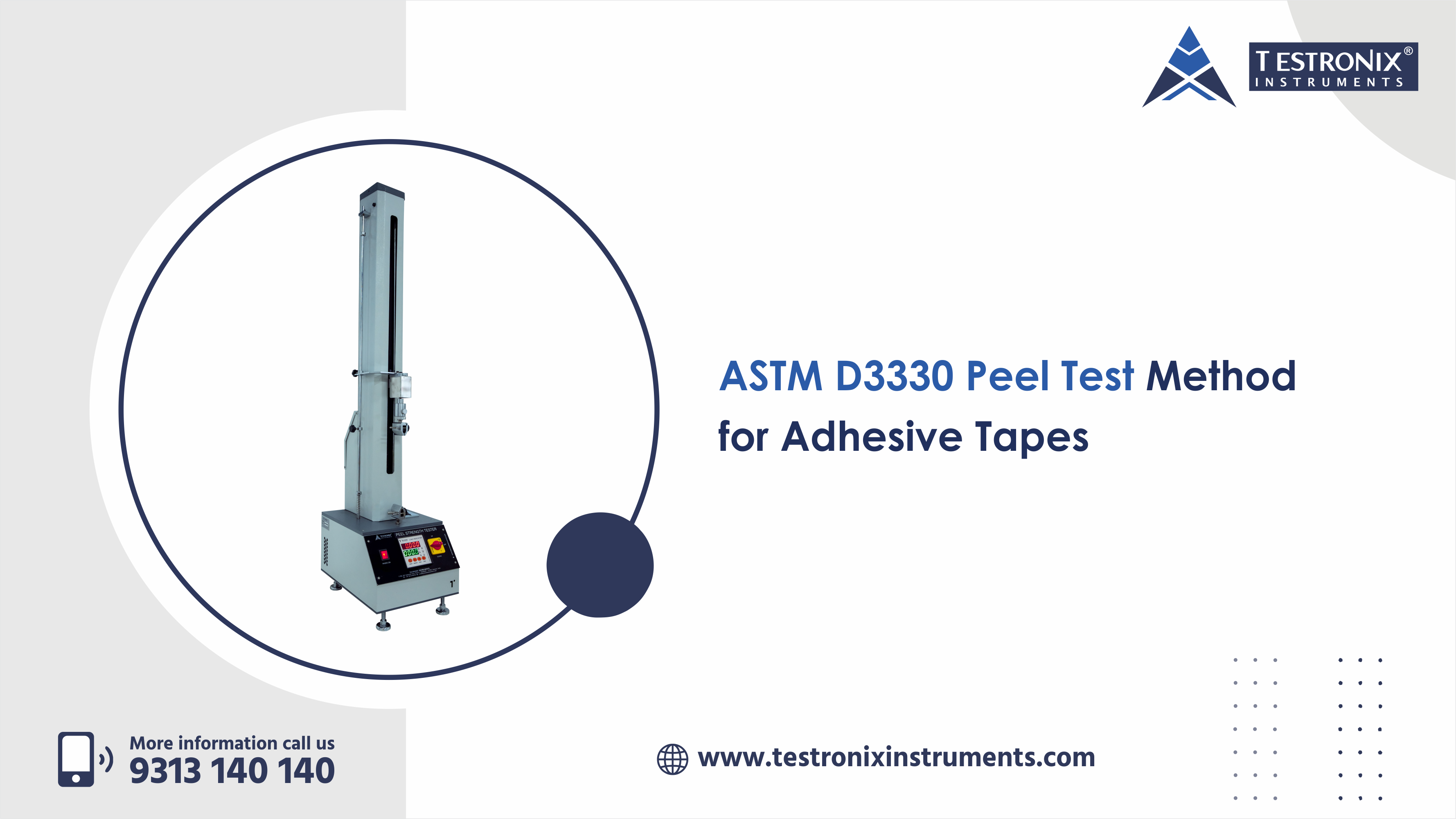
Peel strength tester is advanced equipment for conducting peel adhesion tests based on ASTM D3330 standards. It works by applying a specific amount of force to pull the tape away from the surface it's stuck to while measuring how strong the bond is. Peel strength testers have high-precision load cells, adjustable grips, a stable support system for the test sample, and either a digital display or software to capture test results. Using a peel strength tester will help maintain consistent test results, accuracy of the test results, and compliance with international testing standards.
Testronix Instrument is among the top manufacturers and suppliers of peel strength testers in India and serves globally. The Testronix Peel Strength Tester follows ASTM D3330 Peel Strength standards by using modern technology like digital force measurement, controlled force application and a strong design. Different industries rely upon Testronix for accurate test equipment that has proven durability and accuracy in a wide variety of applications, including adhesives, textiles, and automotive manufacturing.
Applications of ASTM D3330 Standard
There are several applications for ASTM D3330 standards such as quality control, product development, packaging, electronics, automotive, and medical. Here are the applications described in detail:
-
Quality Control
Quality control relies on this ASTM D3330 to ensure every tape roll manufactured has the required adhesion strength. To ensure consistency, detect defects, and maintain performance standards in batches, manufacturers test samples. Such tests will prevent failures of packages, sealing or assemblies and provide consistent, good-quality adhesives to customers with every purchase.
-
Product Development
ASTM D3330 assists in product development by comparing various adhesive formulations, backing materials, and coating methods. R&D teams utilize the data on peel adhesion for optimization regarding tack, strength, and durability of bonds. Standard testing narrows down the road to innovation and improves performance, ultimately having manufacturers create better tapes for a particular application.
-
Packaging
Packaging industries use ASTM D3330 to ensure tapes provide strong, reliable adhesion for carton sealing, labeling, and protective packaging. It verifies that tapes can withstand shipping stress, temperature changes, and long storage periods. It also supports medical and sterile packaging in terms of providing secure and contamination-free seals to protect product integrity.
-
Electronics
In electronics, ASTM D 3330 is considered indispensable in the assessment of tapes designed for mounting, insulation, masking, and device assembly applications. These tapes are expected to face especially harsh conditions involving heat, pressure, and even vibration. This test will ensure that adhesion remains consistent to keep components secure, the circuits well-protected, and the devices durable over time without experiencing any adhesive failure.
-
Automotive
The automotive industry relies on ASTM D3330 to evaluate tapes for bonding trims, securing wires, masking surfaces while painting, and attaching interior or exterior components. As a vehicle is being subjected to heat, vibration, moisture, and movement, the peel adhesion test ensures that the tape will act safely and constantly, performing to support durability and manufacturing efficiency in equal measure.
-
Medical
Biomedical applications demand tapes that exhibit safe, skin-friendly, and reliable adhesion. ASTM D 3330 helps validate the adhesion characteristics of surgical tapes, bandages, diagnostic patches, and medical device assembly tapes to ensure they retain adhesion in movement, moisture, and extended wear without causing trauma. The test supports product safety, patient comfort, and regulatory compliance in healthcare.
Conclusion
The standard for testing the peel adhesiveness of pressure-sensitive adhesive tapes is ASTM D3330, as well as other standards. This standard ensures that manufacturers provide reliable tape performances for a wide variety of manufacturing industries and applications, which include the Testronix Peel Tester to monitor adhesive performance. Using ASTM D 3330 enables tape manufacturers to meet and exceed customers’ performance expectations.