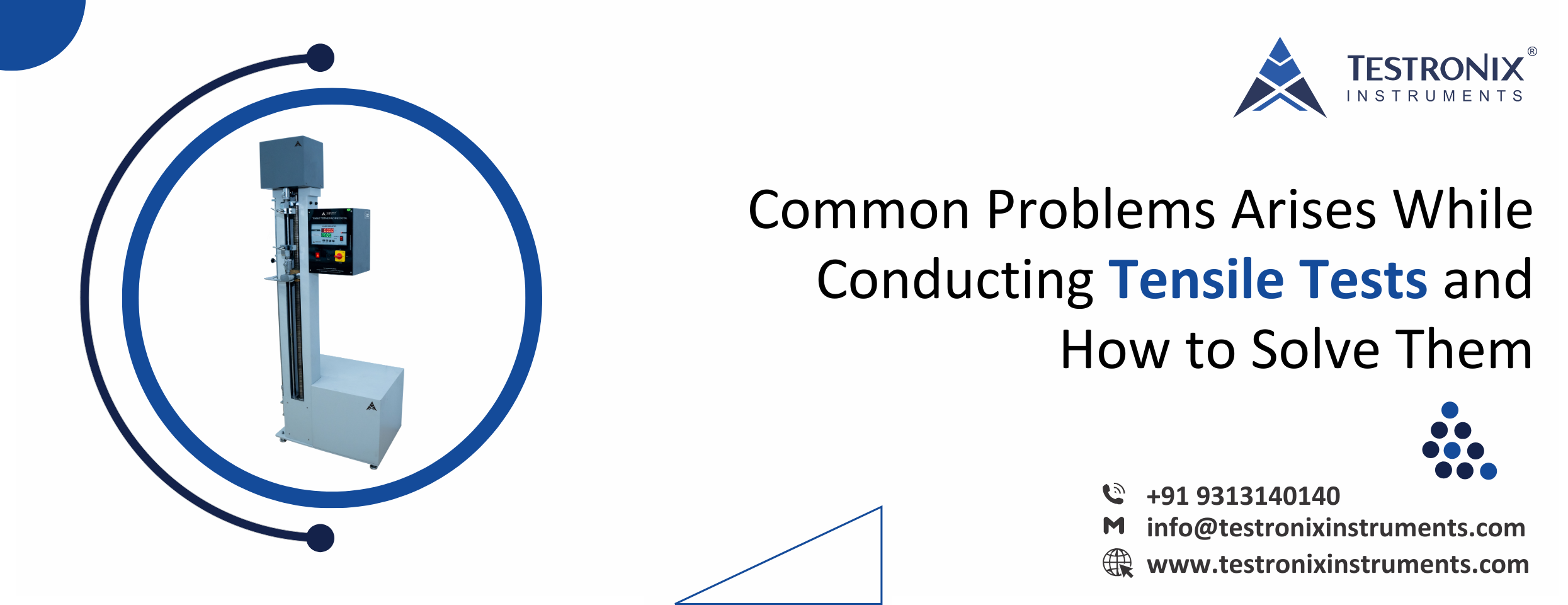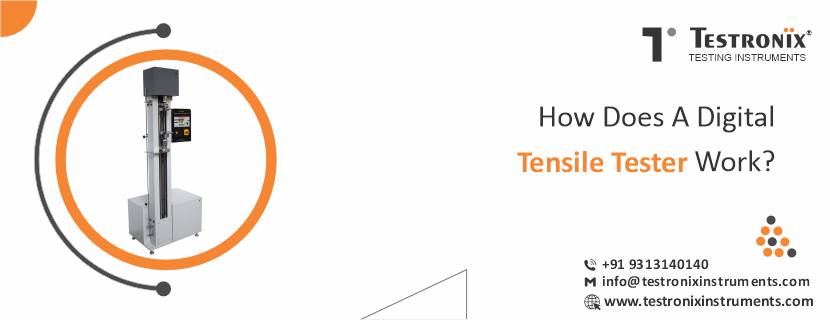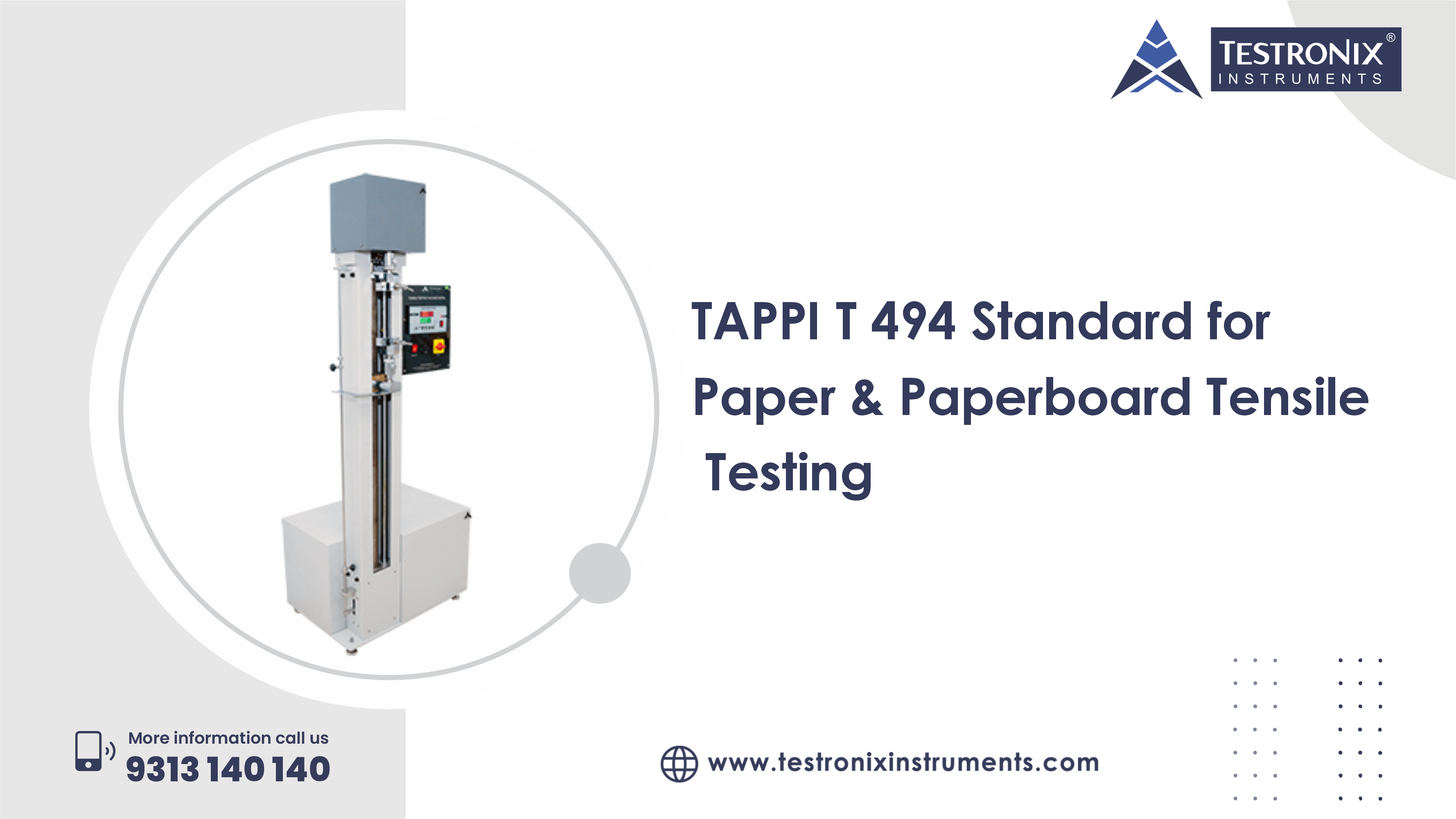
Tensile strength is a measure of how difficult it is to break paper by pulling on it. This has a direct effect on the strength and life of the package, printed product, label, or corrugated box. To get reliable and precise results, all industries follow TAPPI T494, a standard method created by TAPPI, for testing with a machine that pulls at a steady rate.
How Paper & Paperboard Tensile Testing is Done
Paper and paperboard tensile testing is performed using a tensile testing machine that applies a controlled pulling force to a test specimen until it breaks.
The TAPPI 494 tensile test is a method for measuring the tensile properties of paper and paperboard. It is similar in procedure to ASTM D828, with some minor variations in suggested grip geometry and test speed.
TESTING PROCEDURE:-
-
Prepare the test specimens as per the specifications detailed in the test method: temperature of specimen to be tested, dimensions required (width, thickness, and length), and the method of preparation of the specimen.
-
Slide the grips with the necessary grip separation and fit the specimen into the grips. Before loading, position the specimen with the direction of the load, and there should be no loose ends. A jig can prove useful in this.
-
Load each grip surface before conducting tests, as the load influences the testing results. Conduct trials to find the optimum grip loading for the test material by using pneumatic grips with adjustable pressure. This allows for easier, more repeatable testing.
-
Load the specimen at the rate of load increase per second indicated in the test specifications.
-
Continue the test until the specimen fails; during this time, make sure the specimen does not move in the grips or fail at the clamping area of the specimen.
What is TAPPI 494 Standard
The TAPPI T 494 test provides a universal standard for evaluating the tensile properties of paper and paperboard. The major properties measured with this procedure include tensile strength, stretch, tensile energy absorption, and tensile modulus. To conduct the test, a constant rate of elongation device is used in the evaluation of the paper’s response to stress. Hence, this provides a method of ensuring uniform quality control during the production of packaging or printed products.
Procedure for TAPPI 494 Standard
Apparatus calibration, setup & clamping, testing, data collection, and reporting are some of the steps and procedures of the TAPPI 494 Standard; however, sample preparation and conditioning are essential.
Sample Preparation & Conditioning
Condition pieces according to TAPPI T 402 at standard temperature and humidity conditions so that they reach moisture equilibrium. Assess the condition of sheets for any defects, wrinkles, or creases. Make test strips (typically 15 mm or 25.4 mm; cut for clean, equal edges).
Apparatus Calibration
The CRE tensile tester must have proper alignment, and the clamps must be in the same plane. Verify parallel clamp alignment and load cell accuracy against the established speed setting. Conduct a routine calibration check/recalibration at frequent enough intervals to achieve reliable force measurements and consistently similar results from tests performed.
Setup & Clamping
Place your specimen between the opposing jaws of the tester carefully to achieve even tension (there must be no slack) in line with the separating jaws on each of the two jaws. When the strip is placed, ensure that it is centered, tight and firmly in place so that it does not slip during loading forces.
Testing
Move the tester at a constant pace till the specimen breaks or is stretched to maximum length. No jerking or slipping of the grips is to occur anywhere throughout the process. This is to make sure that the highest values of the elongation and the highest values of the load are correctly determined.
Data Collection
Record the maximum force at break as the tensile strength, and measure the elongation percentage at failure. Use the load-elongation curve to calculate tensile energy absorption. Ensure the data is captured digitally with accuracy for proper analysis and documentation.
Reporting
Complete the calculation of tensile strengths, elongations, and TEA averages for MD and CD separately. Display average measurements in standard units (kN/m or lbf/in). Measurements at all points should be clear, consistent, and done according to established protocol.
TAPPI 494 Standard SOPs
The TAPPI 494 – Tensile Breaking Properties of Paper and Paperboard (Constant Rate of Elongation) is divided into several clearly defined sections that help make tests consistent and repeatable. The identifying number associated with each section may differ from year to year due to changes in methodology.
However, the TAPPI T494 standard generally has twelve to fifteen major divisions that describe the entire testing procedure.
-
Scope: Outlines how to determine if a method may be used to measure tensile breaking behavior of paper and paperboard with CRE tensile testing machines.
-
Summary of Method: Describes how to elongate a sample at a constant rate until the sample breaks while measuring the tensile force and elongation.
-
Significance of use: Explains why tensile properties are a practical way of evaluating the strength, durability, and performance of paper- and paperboard-based products.
-
Apparatus: Required equipment includes a tensile tester capable of CRE with load cell accuracy; jaw alignment is required, gauge length is required, and an acquisition system for data.
-
Sampling: Describes how to select appropriate samples from a roll of paper or sheets for reliable results in tensile tests.
-
Test Specimen: Describes each specimen's required dimensions, edge quality, quantity of specimens from each direction, and preparation methods to be used for consistent tensile evaluations.
-
Conditioning: To test the specimens, they have to be conditioned to a standardized temperature and relative humidity so that when the specimen is tested, the moisture is not going to be affected or move.
-
Calibration & Verification: Accurate measurements are guaranteed through a repeatable, routine calibration of the load cell, speed setting, jaw separation, and alignment.
-
Procedure: Steps that outline the setting of the span, clamping your specimen, applying tension, and continuing to conduct testing until the specimen breaks.
-
Calculation: Offers a variety of formulas to determine tensile strength, tensile index, percentage elongation, and amount of tensile energy absorbed.
-
Report: Specifies how reports will be formatted such as averaging, units of measure, machine direction, cross direction, and the number of samples that were being tested.
-
Safety Precautions: Provides precautionary information about equipment handling results, such as the correct method to clamp different equipment and the way to avoid injuring a worker during testing.
Advantages of TAPPI 494 Standard
TAPPI 494 describes several advantages, such as comprehensive data acquisition, high accuracy & consistency, industry standardization, quality control (QC), and versatility.
Here is the detailed description of each advantage in detail:
-
Comprehensive Data Acquisition
TAPPI T 494 allows for four different tensile property tests that include tensile strength, stretch, tensile energy absorption (TEA), and stiffness to be done using just one test sample. The advantage of performing one test versus four separate ones is improved operational efficiency. Therefore, this approach reduces the time required to conduct tensile tests and enhances our understanding of the material's behavior under tensile loading conditions.
-
High Accuracy and Consistency
The TAPPI T 494 method uses a constant rate of extension (CRE) test system to apply strain in a consistent manner throughout the test procedure. The use of this method provides better precision, increased reproducibility, and a greater rate of return between the test systems rather than older constant-rate load test systems.
-
Industry Standardization
Standardizing tests within the TAPPI T494 Test Method provides manufacturers and labs with the same testing method for paper and paperboard. The standardization of tests gives the manufacturer, converter, and commercial printer reliable products and comparable values for the tensile strength of the products.
-
Quality Control (QC)
Another valuable instrument to be used in quality control is the TAPPI T494 Test Method, which may be implemented to determine weak bonds between fibers, variability in fibers, or manufacturing defects. The TAPPI T494 test procedure is a guarantee that the packaging material saved in paper-like bags and cartons, as well as corrugated board, behaves as anticipated under the pressure of handling, stacking, and transportation.
-
Versatility
This test is useful in most kinds of materials, including lightweight papers, heavy paperboards, and coated sheets, and in chemically treated products. Due to its flexibility, the TAPPI T494 can be used in regular testing, the development of new products, or in checking the performance of a product in various fields.
Applications of Tensile Testing
Tensile tests are an important type of quality assurance (QA) and research & development (R&D) test used by the aircraft, automotive, construction, and medical device/technology/systems industries to evaluate the material properties of various types of materials, such as tensile strength, elasticity, and length.
-
Quality Control in Manufacturing
Tensile testing identifies the presence or absence of the properties of both the raw materials and the final products in terms of strength and durability that meet stipulated requirements. Tensile testing is applicable in the manufacturing industry by ensuring reliability, regulatory compliance, and quality standards are upheld by detecting defects, discrepancies, and weak bonds before marketing.
-
Automotive & Aerospace Safety
Tensile testing is employed in various industries, including some NASA-run sectors and by major automobile manufacturers, to ensure the safety and reliability of seatbelts, fasteners, engine parts, structural beams, and fuselage components. They are powerful enough to sustain passenger safety in the event of extreme mechanical loads.
-
Construction Engineering
Tensile tests assess construction materials, such as steel rebar, suspension cables, bolts & fasteners, to determine their load-bearing ability and how much they elongate when they are subjected to a load, so that buildings, bridges, and other infrastructure projects can remain structurally sound and safe for many years to come.
-
Medical Device Development
Before these materials are used in the human body, tensile tests are conducted on them to determine their strength and flexibility in their application in the manufacturing of surgical sutures, staples, catheters, and implantable devices. This testing ensures that the materials will not fail to function in the human body or cause breakage, stretching, or other issues that could compromise patient safety.
-
Material Development and Selection
Tensile testing can be used by researchers to benchmark the mechanical properties of different classes of material, such as metal, polymer, composite, and alloy materials. The result of tensile tests is regularly used by engineers in either selecting an appropriate material to utilize in a specific application or in the development of a new formulation with enhanced strength, flexibility, or survival.
Conclusion
Tensile breaking properties of paper and paperboard using the TAPPI 494 standard are evaluated by a constant-rate-of-elongation (CRE) testing method of elongation.
It defines a specific procedure of carrying out repeatable tests, resulting in standardized products, successful quality control initiatives, and adherence to global standards.
Testronix Instruments compliance with the TAPPI T 494 standard ultimately helps businesses upgrade the accuracy of testing by manufacturers, labs, and quality assurance individuals, and eventually boosts the overall reliability of products as they are utilized in the market.