In the manufacturing industry, product dependability is essential. To demonstrate to consumers that products such as electronics, auto parts, and packaged foods are capable of being utilized for their intended purpose in the actual environment. Hence, the products must satisfy the necessary utilization requirements prior to being sold.
The most frequently utilized technique for measuring your product's performance and longevity is via a method known as vibration testing. Vibration tests use simulated conditions that simulate the effects of vibration on your product as a result of being transported, stored, and used by the consumer to ensure the products arrive at their intended destination in a safe, functional, and defect-free condition.
What is a Vibration Test?
A vibration test is a controlled process used to evaluate how a product or structure responds to vibrating forces that simulate real-world conditions. During the test, equipment is exposed to specific frequencies, amplitudes and directions of vibration to identify weaknesses, predict potential failures, and ensure durability. This form of testing can be used to ensure that the product is in a condition to survive transportation, operation, and environmental pressures. Hence, it is very crucial to industries like automotive, aerospace, electronics and manufacturing.
This test is able to design and develop new products safely; the vibration test must happen at multiple points in the life cycle of a product. The vibration test uses equipment that creates vibration forces; therefore, this type of testing will allow for the determination of weak points in the design phase, as well as allow for verification of the durability, reliability, and performance of the finished product before it goes to market.
How Does It Work?
In the manufacturing process, a vibration test works by simulating real-world environments, such as transport and use, by creating constrained vibrations on a table to simulate those conditions. A controller sets the parameters of the vibration like frequency, amplitude and direction while a shaker produces the actual movement. The response of the product to stress is measured using sensors so that engineers can find design weaknesses and confirm that the product is durable enough for release onto the market.
Vibration Testing Procedure in the Manufacturing Industry
Vibration testing procedures involve several steps, such as preparing samples and test equipment, configuring the vibration table, executing & monitoring the test, and evaluating and documenting results.
Here are the steps described in detail:
-
Preparing Samples and Test Equipment
Before conducting vibration tests on a product, sampling for product integrity is required. The product should be properly secured to the testing table before being sampled. All vibration test sensors, fixtures, and equipment used to perform vibration tests must be calibrated and verified to provide accurate measurements, as well as to protect the tester's safety during the test and the test's reliability.
-
Setting up the Vibration Table
Engineers set the frequency, amplitude, acceleration, and length of time a test will be conducted to established standards. Adjustments are made to the machine setup to simulate the actual transportation or operating conditions. So the actual vibration profile will match the stresses experienced by the product.
-
Test Execution and Monitoring
Once the vibration table has been powered up, the product is subjected to a range of natural frequency-controlled oscillations. During the current testing phase of the device, technicians are constantly monitoring the sensor and motion readings via test equipment. They will use the sensor and accelerometer readings to evaluate device performance and to identify any abnormal conditions developing within the test apparatus, as well as to ensure that the vibration table continues to operate within an acceptable range without deviation or safety complications.
-
Assessing and Recording Outcomes
After testing a product, it is inspected for any physical damage, functional problems, or structural weakness. Engineers use this information, in conjunction with the complete test report, which contains observations, data logs and reasons for failure, to improve design quality and verify that the product meets applicable industry standards.
Applications of Vibration Testing in Industries
Industries that utilize vibration testing include aerospace, automotive, electronics, and energy. The main uses are to validate the design, provide quality assurance, and maintain the equipment, which includes finding the weakest point of the product and simulating what happens during transport and how it will function out in the field.
The following are the key applications explained in detail:
-
Aircraft Industry
Aerospace vibration testing provides manufacturers with the means of confirming that parts (i.e., engines, navigation aids, etc.), structural integrity, and onboard electronics will withstand an aircraft's extreme environment. It can be high-frequency vibration, turbulence, and repeated acceleration and deceleration during takeoff and landing. Vibration testing provides manufacturers with the ability to validate that their products meet applicable Federal Aviation Administration (FAA) performance and reliability requirements.
-
Automotive Industry
Vibration testing in the automotive industry is done on parts like dashboards, engines, suspensions, batteries and electric systems. It replicates road vibrations, resonance of the engine, and transportation conditions to find out weak spots with the intention of limiting noise problems and enhancing durability. The testing will ensure the vehicle stays reliable, safe, and comfortable over its operational lifespan and varied driving environment.
-
Electronics Industry
When it comes to electronics, one of the tests performed on electronic devices is to determine how resilient they are to being moved or shaken around during shipping, assembly, and use. The vibration tests are used to determine if any parts within the electronic device have been installed incorrectly, have been weakened due to improper soldering procedures, or have failed because of a poor connection. Each of these issues can lead to either performance problems or failure of the device in use (field failure).
-
Design Validation
Several mechanical shocks can occur during usage and transportation cycles, known as vibration testing. In development, these mechanical impacts are simulated through vibration testing so that designers can determine whether their product will withstand the hydraulic and physical stresses of these cycles and how it will respond to them. Some examples of items identified by vibration testing include design errors, weak connections, and resonance problems.
-
Quality Assurance
A vibration test is a process that ensures every batch of manufactured goods meets the determined specification for durability and functionality. In order to ensure uniformity, each batch of products is tested against preset control vibration profiles to find out if there are any potential problems/failures (i.e., problems such as loose parts or items that don't work). This provides a way to provide better product reliability and reduce the number of complaints from customers, as well as show compliance with all applicable industry regulations and safety standards.
-
Maintenance and Reliability Assessment
Vibration testing detects such problems in their initial stages when it comes to maintenance applications, such as wear, misalignment, imbalance, or component failure. Vibration monitoring also allows a technician to anticipate equipment failures that may occur, and any preventive maintenance can be scheduled. This will reduce the downtime of the equipment, enhance the safety of the personnel using the equipment, and improve machine performance in heavy industrial settings.
Vibration Tester: A Testronix Equipment for Vibration Testing
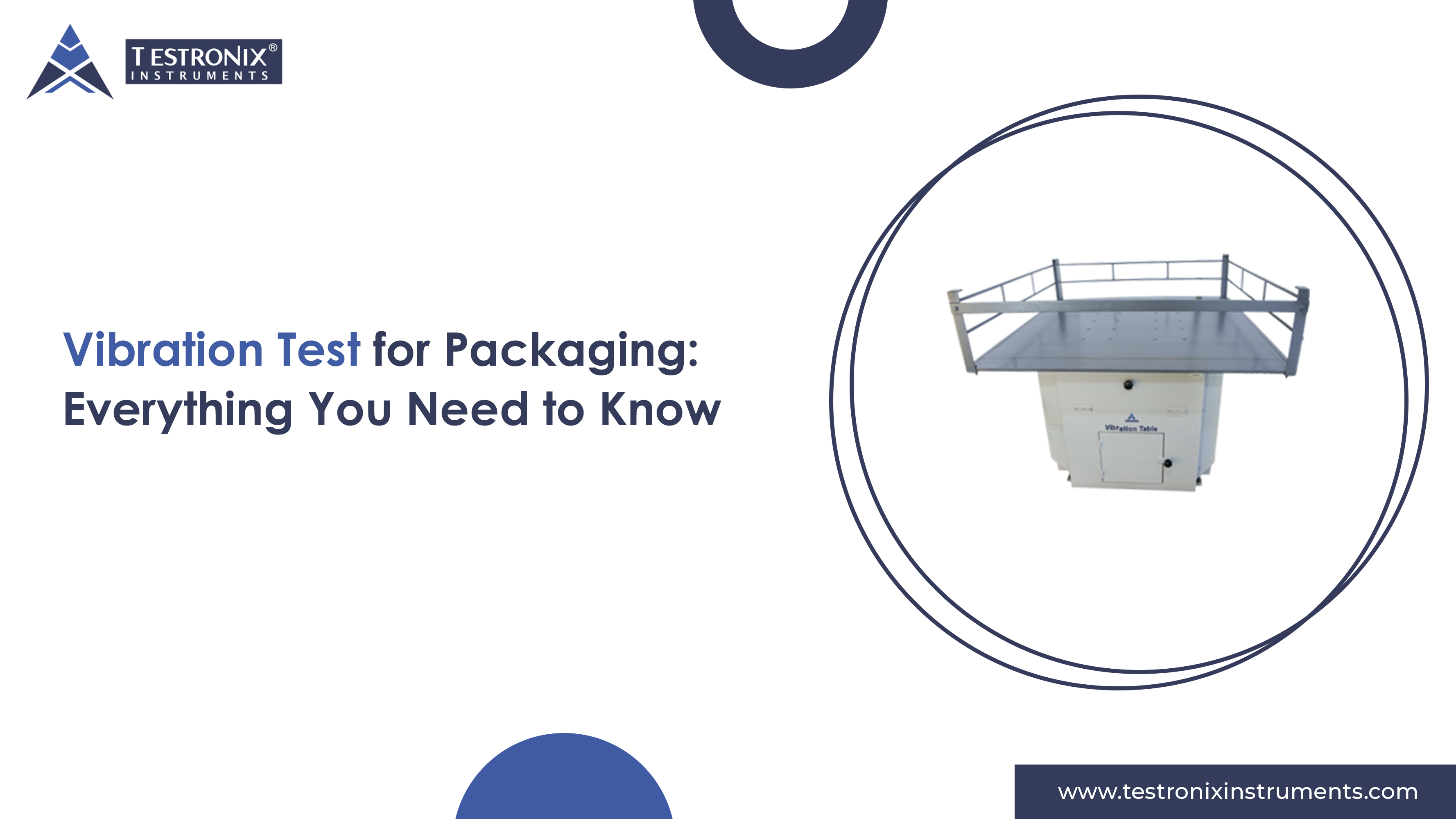
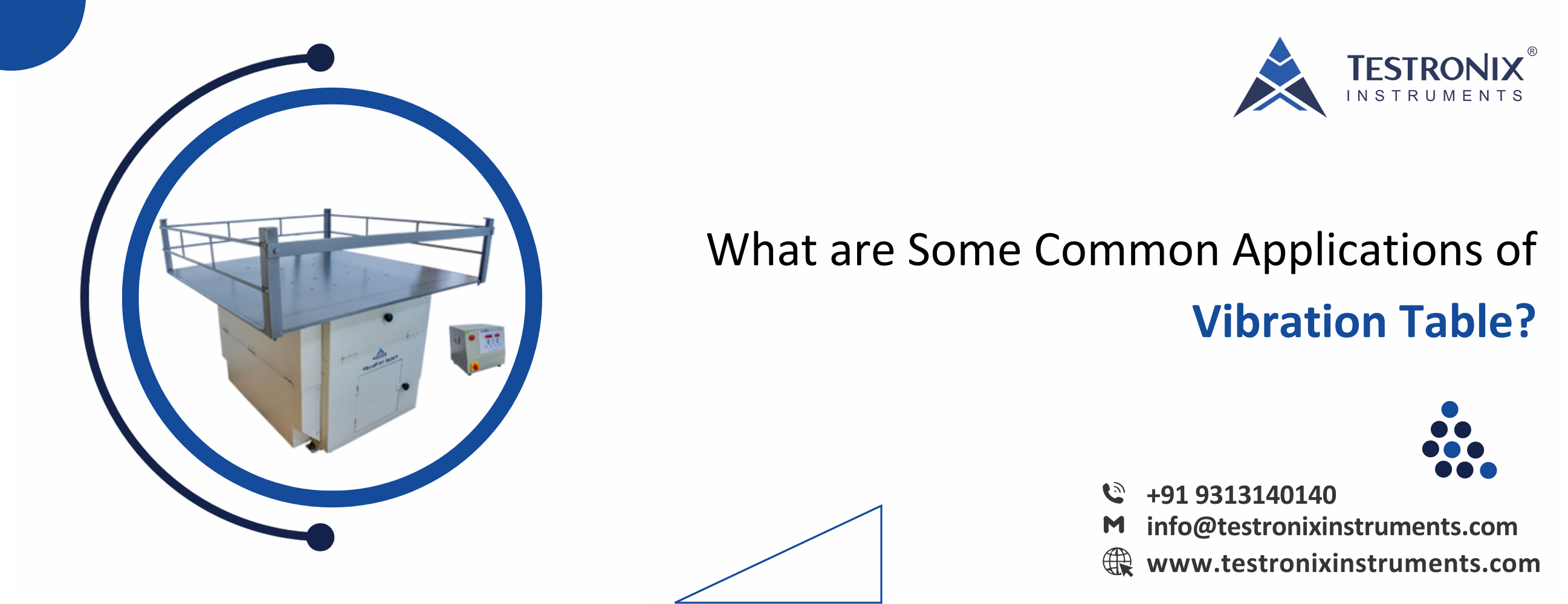
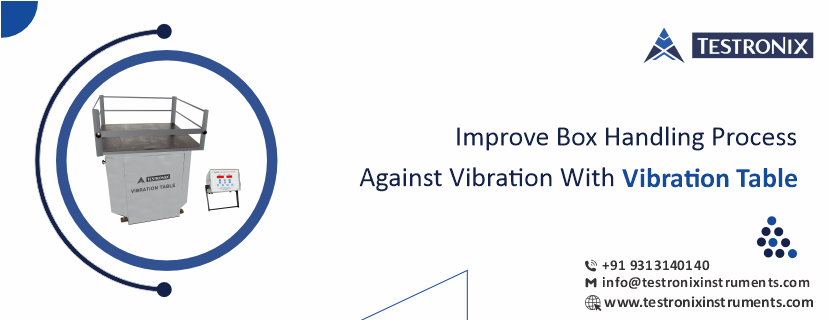
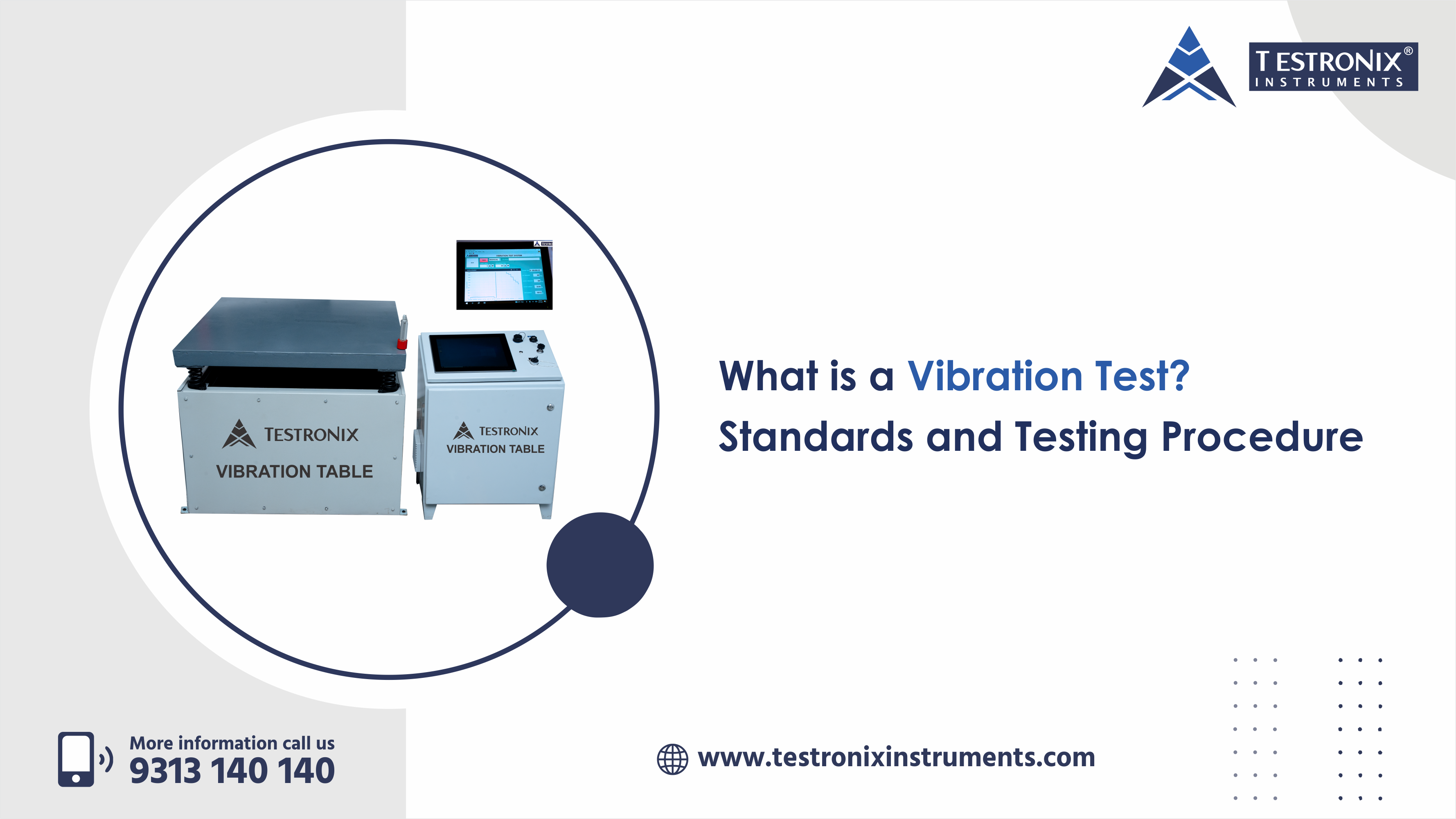
The vibration tester devices produced by Testronix are engineered to replicate the conditions associated with transportation and handling accurately and precisely. This allows manufacturers to identify structural and functional defects during the earliest possible stage. Testronix offers both controlled sine waves and random vibration tests, enabling manufacturers to identify potential defects much sooner than previously possible. With their compliance with both ASTM and ISO international standards, the vibration testers will provide manufacturers with dependable results every time.
Testronix vibration testers can be used to perform testing on packaging, electronic components, automotive products, and consumer goods. The vibration testers deliver efficient results, even in the most demanding manufacturing situations, and provide a level of reliability.
A vibration test has also become an important method for confirming that products are durable, safe, and perform well in all industries. By using global vibration testing standards and advanced vibration test equipment like the Testronix Vibration Testing Equipment, manufacturers can guarantee that each item provided to a customer is in perfect working order.