Pharmaceutical engineering is a discipline that emphasizes material integrity as well as accuracy and cleanliness. As all the equipment used to manufacture drugs must be kept clean and highly regulated, even the most minute amount of contamination can create a safety hazard for drug users. Thus, corrosion presents one of the greatest risks to pharmaceutical Best Management Practices (BMP) in terms of infrastructure.
Pharmaceutical engineers must understand the different types of corrosion found within the industry to prevent product contamination and maintain long-term reliability of machinery within pharmaceutical facilities. In this article, you will learn about the different kinds of corrosion in the pharmaceutical industry and the application of testing equipment to tackle the corrosion effectively.
What is Corrosion and How Does It Work?
Corrosion is a naturally occurring electrochemical process that causes the metal to deteriorate due to reactive interactions with the environment surrounding it. Essentially, corrosion occurs when a metal combines with oxygen, moisture, acid, or salt. When this process happens, metallic materials oxidize and lose integrity as they corrode.
Corrosion is far more than surface corrosion of metal. It may also lead to contamination of products, reduce equipment serviceability, establish increased operating and maintenance expenses and compromise regulations. The possible corrosion increases exponentially due to chemical nature of the pharmaceutical manufacturing process and also because moisture exists.
The common causes of corrosion in the pharmaceutical industry are:
-
Cleaning agents that are used during cleaning procedures
-
Chemical-based materials that are either acidic or basic are used in processing
-
Moisture from steam during the sterilization cycle
-
Saline solutions or other reactive materials are used as wash or rinse solutions
The corrosion process includes an anode (electrons lost), a cathode (electrons gained), and an electrolyte (something that forms a path through which the electrons travel between the anode and cathode). Therefore, the presence of anode, cathode, and electrolyte in metals affects the metals when the electrons have to be corroded and hence, the metals will start corroding.
If corrosion is not mitigated during the production of pharmaceuticals and pharmaceutical products, it can create pitting on the surface of equipment, cracking, contamination of the products produced, and equipment failure. All of these issues can lead to non-compliance with good manufacturing practices.
Corrosion Types in Pharmaceutical Manufacturing
Pharmaceutical Manufacturing Facilities utilize stainless steel materials for their tanks, pipes, and methyl ester reactors where product is stored or processed. Below are eight types of corrosion that occur in the pharmaceutical industry:
|
Corrosion Type |
Typical Location |
Why It Occurs |
|
Uniform Corrosion |
Exposed metal surfaces |
Continuous exposure to moisture |
|
Pitting Corrosion |
Stainless steel surfaces |
Localized pits caused by chlorine ions or saline solutions |
|
Crevice Corrosion |
Gaskets, flanges, and welded joints |
Trapped liquid and oxygen depletion |
|
Galvanic Corrosion |
Contact areas between different metals |
Electrochemical reaction between two dissimilar metals |
|
Stress Corrosion Cracking (SCC) |
Pressure vessels, reactors, and stressed components |
Tensile stress and aggressive chemicals |
|
Intergranular Corrosion |
Grain boundaries of stainless steel |
Improper heat treatment |
|
Microbially Induced Corrosion (MIC) |
Water storage and purification systems |
Biofilm formation from microbial activity |
|
Erosion Corrosion |
High-velocity pipelines and fluid transfer lines |
Mechanical wear from fast fluid flow |
1. Uniform Corrosion
Uniform corrosion can occur on the entire exposed surface of a given metal and is the most common and predictable type of corrosion. Uniform corrosion occurs in the pharmaceutical industry as a result of either extended exposure to moisture or an extremely low pH chemical vapor.
While uniform corrosion is usually less hazardous to the equipment than localized corrosion, both types of corrosion will eventually weaken the metal surface.
2. Pitting Corrosion
Pitting corrosion is another highly destructive form of corrosion that occurs in pharmaceutical engineering because, although pitting corrosion forms small receptacles (or pits) in the exposed surface of the metal, they are not readily apparent until significant damage has occurred. Pitting corrosion is usually associated with stainless steel products exposed to chlorides (sauna cleaning products) or saline solutions.
In addition to posing contamination risks associated with microbiological growth within the pits, the presence of pitting will also exacerbate the presence of heavily degraded product surfaces.
3. Crevice Corrosion
Crevice corrosion occurs in small, confined environments or crevices (joints, gaskets, and flanges) found on most pharmaceutical processing equipment. Due to the way that most pharmaceutical processing equipment is configured or constructed (welded joints, seals), moisture/chemicals often collect within these joints and/or crevices.
When moisture/chemicals become trapped within the crevice, they become deficient in oxygen, increasing the likelihood of localized corrosion. Crevice corrosion is especially prevalent in CIP systems.
4. Galvanic Corrosion
In galvanic corrosion, two dissimilar kinds of metals are in electrical contact with an electrolyte in the surrounding area. In the pharmaceutical industry, stainless steel and carbon steel can react to each other in particular applications. In such case, electrochemical action exists where one of the two materials gets corroded at a much faster rate than in the presence of galvanic corrosion.
5. Stress Corrosion Cracking (SCC)
SCC is caused by the combined activity of tensile stress and corrosive/aggressive environments. Stress corrosion cracking especially attacks cocaine reactors and pressure vessels that are subjected to high temperatures and/or pressure. It is a common phenomenon that is known as stress corrosion cracking of stainless steel systems that have been exposed to cleaning agents.
6. Intergranular Corrosion
Intergranular corrosion is a type of corrosion that takes place between the grains of the metals without any appearance of corrosion on the outer surface. It may take place due to inappropriate heat treatment conducted on the stainless steel in the course of processing. Since intergranular corrosion attacks the grain boundaries, it is possible for intergranular corrosion to occur inside stainless steel without any visible signs of damage.
7. Microbially Induced Corrosion (MIC)
Although contamination by microorganisms is extremely uncommon in the majority of pharmaceutical processes, certain environments may experience contamination. MIC can be called the localized corrosion that occurs due to the formation of biofilms in the presence of microorganisms on the surfaces of the metal parts. This is especially with the storage of water and purification.
8. Erosion Corrosion
The flow of fluid causes erosion corrosion, which may increase the rate of wear of metal. The protective oxide layer is prone to damage in a pharmaceutical pipeline which is transporting fluids at high velocity leaving the fresh metal prone to corrosion and eventually shortening the life of the pipeline and leading to more chances of product contamination.
Why Corrosion Control In Pharmaceutical Engineering So Important?
In a pharmaceutical setting, corrosion is a compliance and safety issue, not just a maintenance one. Regulatory agencies such as the FDA and WHO GMP mandate that drug manufacturing systems employ materials that are resistant to corrosion.
If corrosion is not properly controlled, it can result in:
-
Contamination of product
-
Rejection of batch
-
Downtime of the equipment
-
Costly maintenance
-
Regulatory penalties
As such, testing and preventing corrosion are critical elements in providing confidence in the quality of pharmaceutical products.
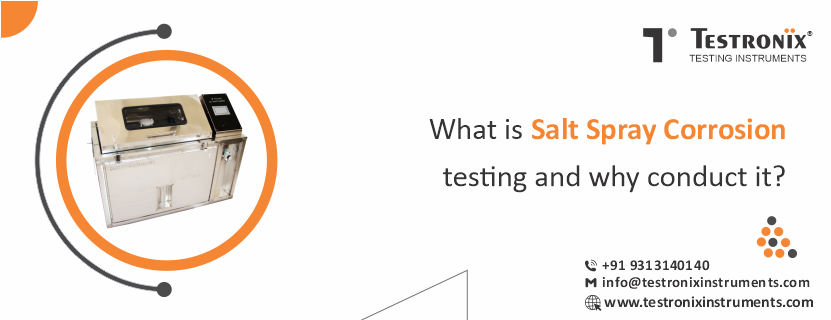
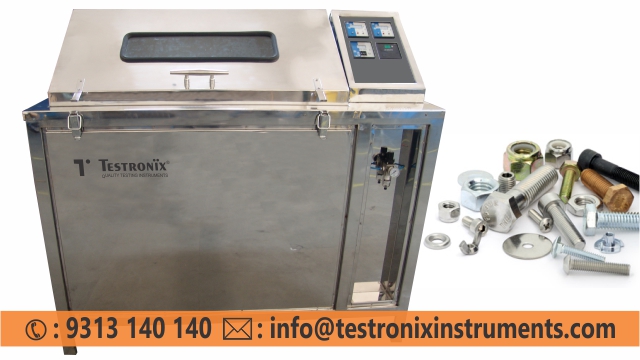
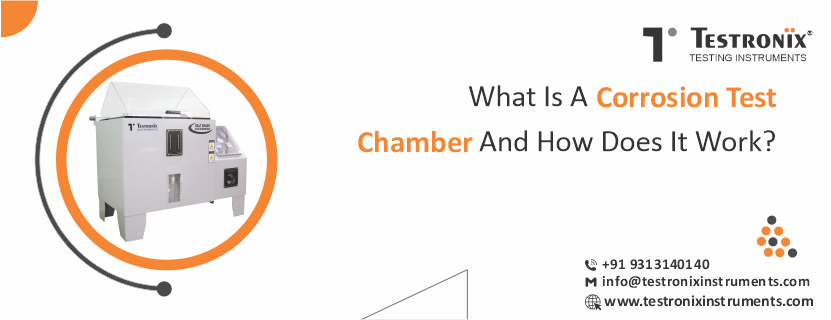
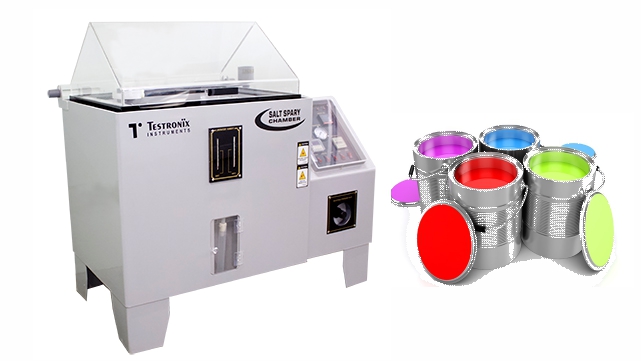
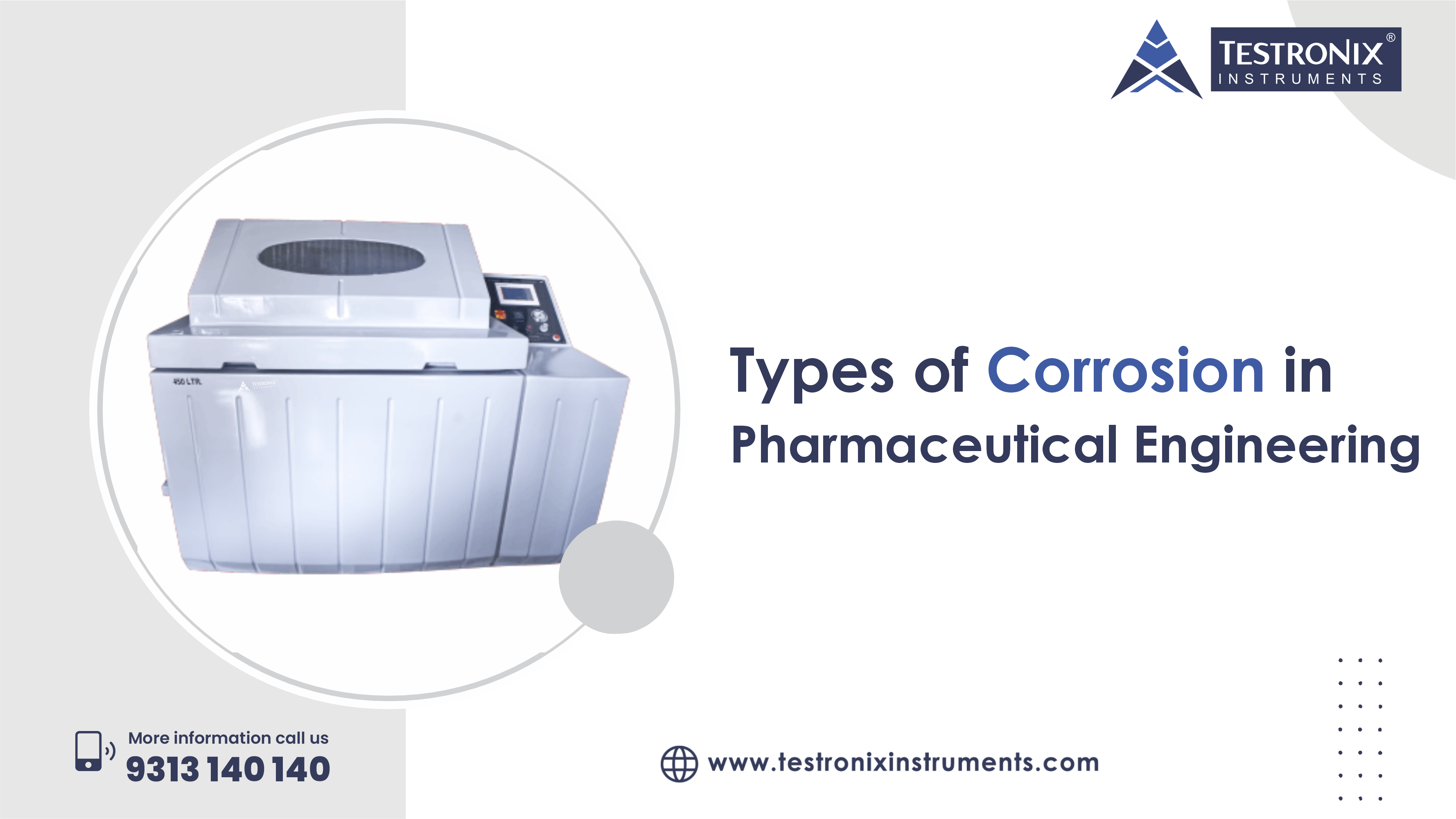
Testronix Salt Spray Chamber: The Ultimate Anti-Corrosion Testing Laboratory
Salt spray testing is one of the most important methods of testing the performance of materials against corrosion. Testronix Salt Spray Chamber has been specifically designed to simulate highly corrosive environments, allowing manufacturers to test the performance of their materials in terms of durability.
- Test the quality and performance level of stainless steel
- Assess the performance of the protective coating
- Compare different grades of a given material
- Improve the lifespan of their equipment
- Mitigate risks and enhance reliability through better identification of corrosion resistance before use
Pharmaceutical firms can minimize their long-term risk by determining the level of corrosion resistance of their materials before installing them. In turn, this will increase operational reliability.
Conclusion
Corrosion has been a major concern in pharmaceutical engineering because of the high level of hygiene and compliance required by the industry. Many different types of corrosion can occur like uniform corrosion, stress cracking, or induced microbial corrosion; each of these types can lead to a decrease in equipment functionality which will ultimately have an impact on product safety.
An investment in the right testing and corrosion prevention strategies will be able to guarantee that the pharmaceutical companies can retain the integrity of their products, extend the life of their equipment, and produce high-quality products.