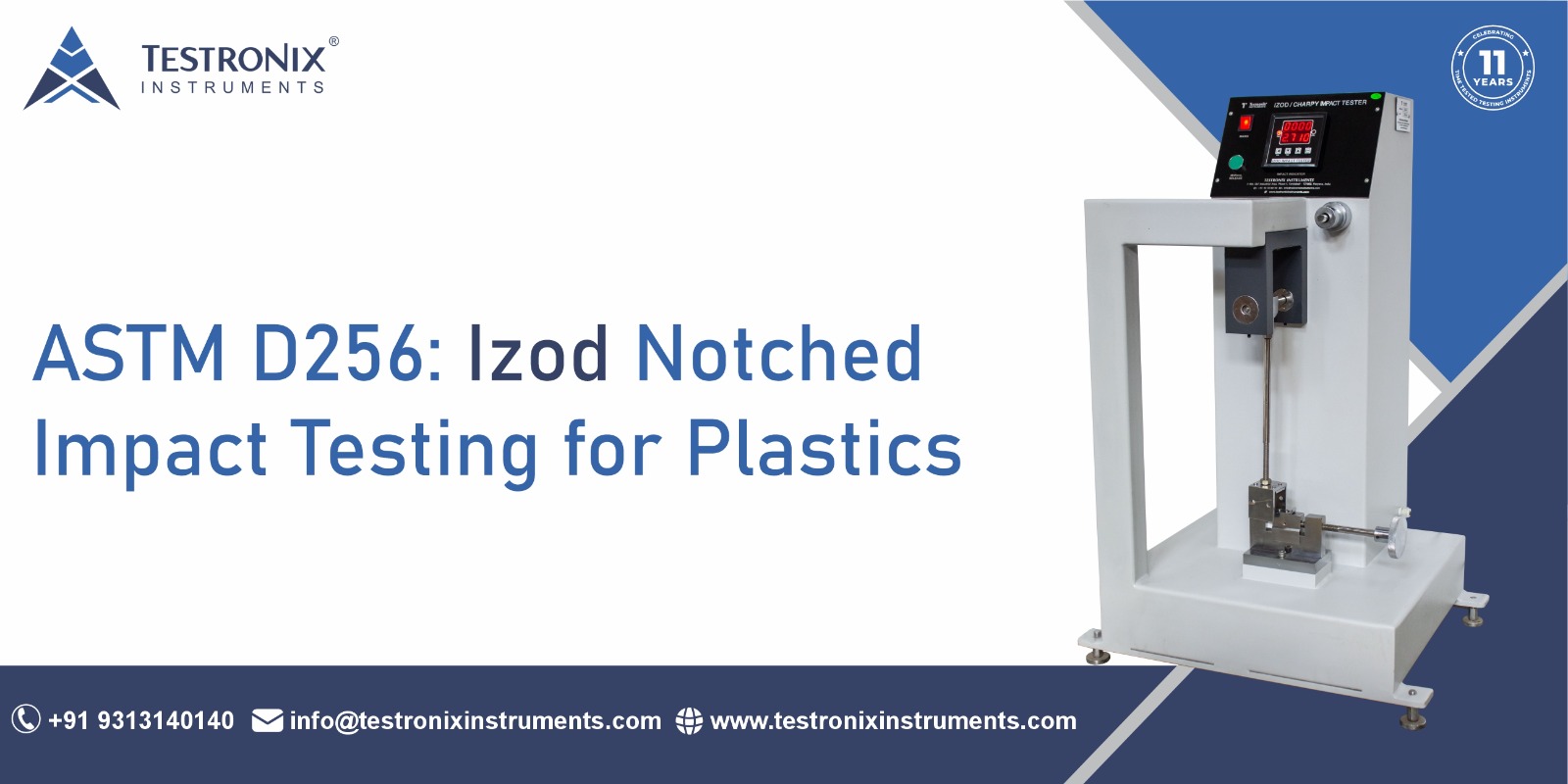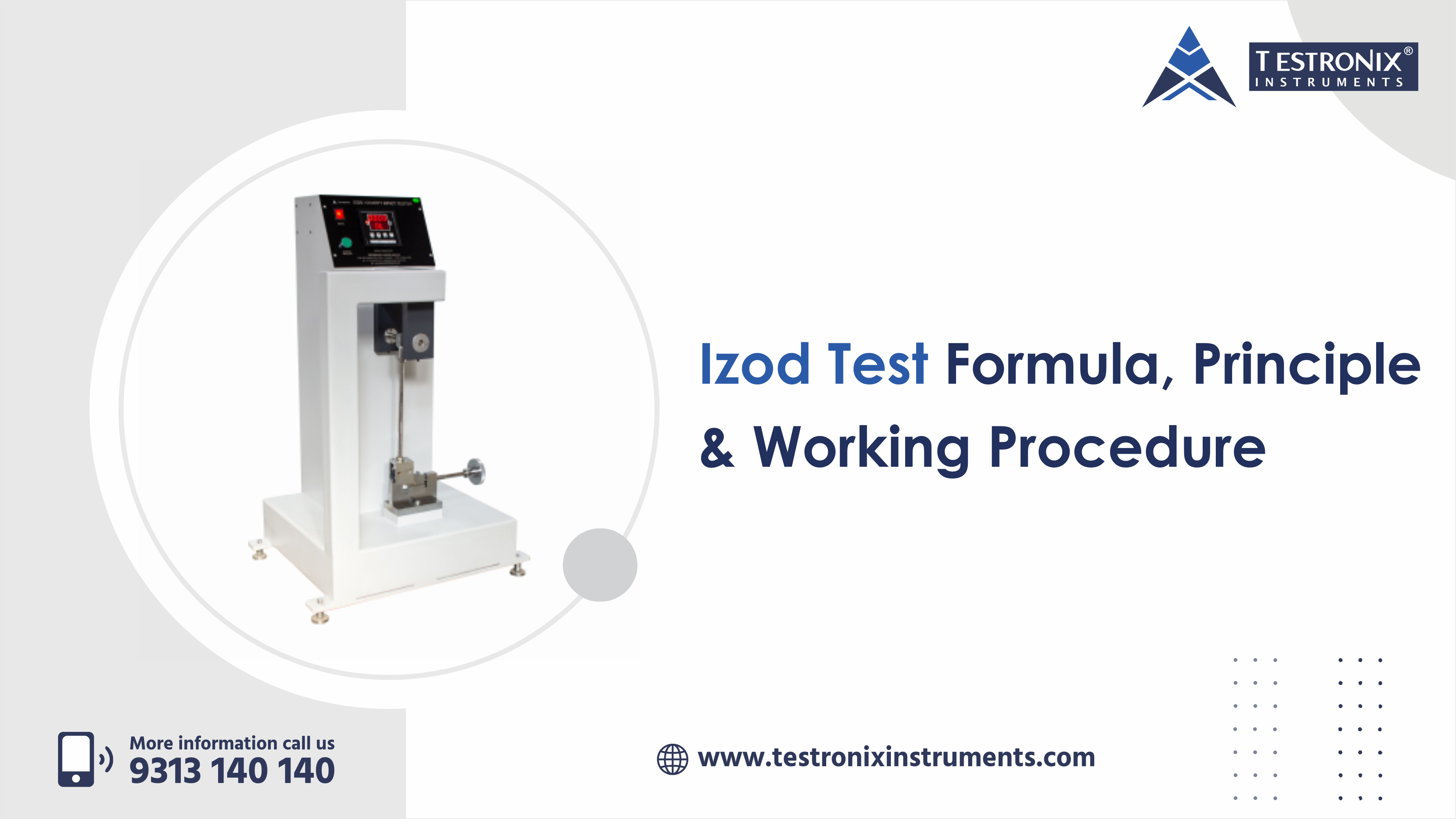
The Izod Impact Test is a standard mechanical test used by manufacturers to assess the toughness or resistance of a material caused by sudden loads or shocks. Although the Izod Impact Test might not give all the information one might require in some of the applications.
It does give useful information on the application of some materials to applications that might experience dynamic loads or shock loads in normal operation. It is especially useful to industries that manufacture products with parts that will be subjected to dynamic loads during operation.
What is the Izod Test?
The Izod test is a standard impact test that measures how much energy a notched specimen absorbs when struck by a pendulum, revealing the material’s toughness under sudden loading conditions. Understanding how much load a material can withstand helps manufacturers select the most appropriate material for your specific application.
The notched IZOD test is now accepted as a standard test on impact resistance, both by the American Society for Testing and Materials (ASTM) and by the International Organization for Standardization (ISO), albeit using a larger piece of material to test.
Why Izod Test Required for the Manufacturing Industry
The Izod Test is required in the manufacturing industry to determine a material's toughness and impact resistance. This will guarantee that a manufactured product is capable of resisting unexpected shocks that occur during its real use. This way, the manufacturer gets a chance to select materials, designs, and quality in production to prevent product failures, product recalls, and damage to its reputation.
Izod Test Formula with Explanation
The Izod Test uses the formula of Energy absorbed divided by Cross-sectional Area at Notch to calculate the impact strength of a given material. The amount of energy absorbed is determined from the height to which the pendulum swings after impacting the specimen.
Izod Test Formula:-
Impact Strength = Energy Absorbed (J) / Cross-sectional Area at Notch (m² or mm²)
Energy Absorbed (Joules)
-
This is the amount of energy absorbed by the test specimen during fracture.
-
It is calculated as the difference between the initial energy of the pendulum before impact and the remaining energy after breaking the specimen.
-
The value or energy absorbed is directly obtained from the Izod testing machine.
Cross-sectional Area at Notch
-
This is the area of the specimen in the notch section where the fracture occurs.
-
It is calculated using
Area = Width * Thickness at notch
Izod Test Working Principle
The Izod test is based on the concept of the pendulum impact approach in identifying the capacity of a material to absorb energy. The pendulum will fracture when it is turned down and hits a notched specimen in a vertical orientation. Hence, the amount of energy wasted by the pendulum is a measure of the impact strength (toughness) of the material being tested.
Izod Test Working Procedure: Step-by-Step
The Izod Test consists of the following steps: specimen preparation, Izod test machine setup, specimen mounting, zeroing the indicator, pendulum release, recording energy, and calculating impact strength.
Here are the steps described below:
Preparing a Notched Specimen
As specified by ASTM or ISO, the test specimen should be prepared to those specific standard sizes (according to those specifications). For example, it is necessary to machine out either a V- or U-shaped notch in the test specimen with a specific depth and angle so that during impact, the notch serves as a Stress Concentrator and permits the Fracture to occur in a controlled manner.
Machine setup
Before carrying out the Izod Impact Tests, one must perform a validation on the Izod impact testing machine to ensure that it is in proper operation. The strength of the material chosen should be based on the strength of the pendulum hammer. Machine check-up should include checking machine supports, anvils, and clamps to make sure that the machine will measure energy and will be consistent in producing the results of a test.
Specimen Mounting
Mounting a specimen refers to mounting the specimen vertically in the machine's vice/clamp with the notched side of the specimen facing towards the impact edge of the pendulum. It is important to tighten the specimen sufficiently so that it does not rotate or slip during the time of impact.
Zero the Indicator
Setting the energy indicator or digital display to zero before releasing the pendulum will allow the machine to register the energy absorbed by the specimen during fracture. This will also eliminate any recorded energy associated with previous tests.
Pendulum Release
Pendulums are moved to a predetermined location before being released, which allows for a complete swinging motion. During this time, complete free movement occurs in the pendulum, which, upon reaching maximum height, strikes the sample at its notch. The very rapid energy transfer when hitting a sample causes the sample to fracture very quickly due to the extremely rapid loading of Energy (High Strain Rate).
Record Energy
Once the sample has fractured, the pendulum continues moving downward along its momentary path of movement. An energy measurement, equal to the difference between the pendulum's original height and that of the pendulum after impact, will automatically be displayed on the machine.
Calculate Impact Strength
To determine an Izod impact strength, a measurement of the recorded quantity of the absorbed energy divided by the cross-section of the notch is made. The Izod impact strength reflects a material's impact resistance to a single quick strike; therefore, the Izod impact strength is provided in a standard energy/area unit.
Applications of the Izod Test in Different Industries
The Izod test consists of beneficial tests for various industries such as: Automotive, Aerospace, Construction, Consumer goods, Electronics, and Packaging.
Automotive
The Izod Test is utilized to assess the ability of plastic bumpers, dashboards, and interior components to absorb sudden impact energies that are applied to them. Hence, indicating how well these parts resist cracking from an accident or a piece of debris on the roadway. This procedure improves the overall crashworthiness of the vehicle and enhances passenger safety.
Aerospace
The Izod test is applied in the aerospace industry to assist in confirming the application of lightweight composite materials that exist in the frameworks of an aeroplane. The Izod test guarantees that the composite materials will not break under impulsive impact, vibration, or extreme working conditions. Hence, the plane will not lose its strength and safety in flight.
Construction
Impact resistance is measured using a test to determine how well PVC Pipe & Construction Materials (window frames, etc.) can withstand the impact of unintended accidents such as tool drops and/or dynamic loadings associated with site activities. The materials must not crack or break suddenly after the impact.
Consumer Goods
The Izod test is used by manufacturers of consumer products, including helmet shells, appliance casings, and sporting gear, to determine the effectiveness of the products in terms of resistance to drops and impact. Through the Izod test, manufacturers are able to ensure that their products will be durable to normal abuse and therefore offer the user safety and durability.
Electronics
In electronics, the Izod test is used to determine the toughness of the casings and protective movies/screens of a product. This is done by evaluating how well a product will withstand accidental dropping/impacting that can occur during regular use. Thus, minimizing possible internal damage resulting from these circumstances and enhancing the reliability of the product, in turn, provides better overall customer satisfaction.
Packaging
The Izod impact test will determine how much impact force a package material, like a corrugated board or box, will withstand without being damaged. This means that the packaging can absorb shocks to any items inside of it during shipping, handling, and stacking while preventing damage from falls.
Conclusion
The Izod Impact test gives an idea about the strength and toughness of a material subjected to a sudden load or impact. The test can enable manufacturers to decide and choose appropriate materials that will be safe to work with and will work as intended by their usage. This ultimately enhances the overall performance of their product in the market.