Countless products fail not because of poor design or weak materials but due to hidden problems like moisture. From corroded circuit boards to warped packaging and degraded pharmaceuticals, humidity-related damage quietly costs industries billions of dollars annually. More than that, for many manufacturers, humidity testing still gets pushed to the back of the line.
This article is about changing that thinking. This article examines the true nature of humidity testing, explains its importance in your quality control process, and illustrates the implementation of effective testing practices in a real-world production setting.
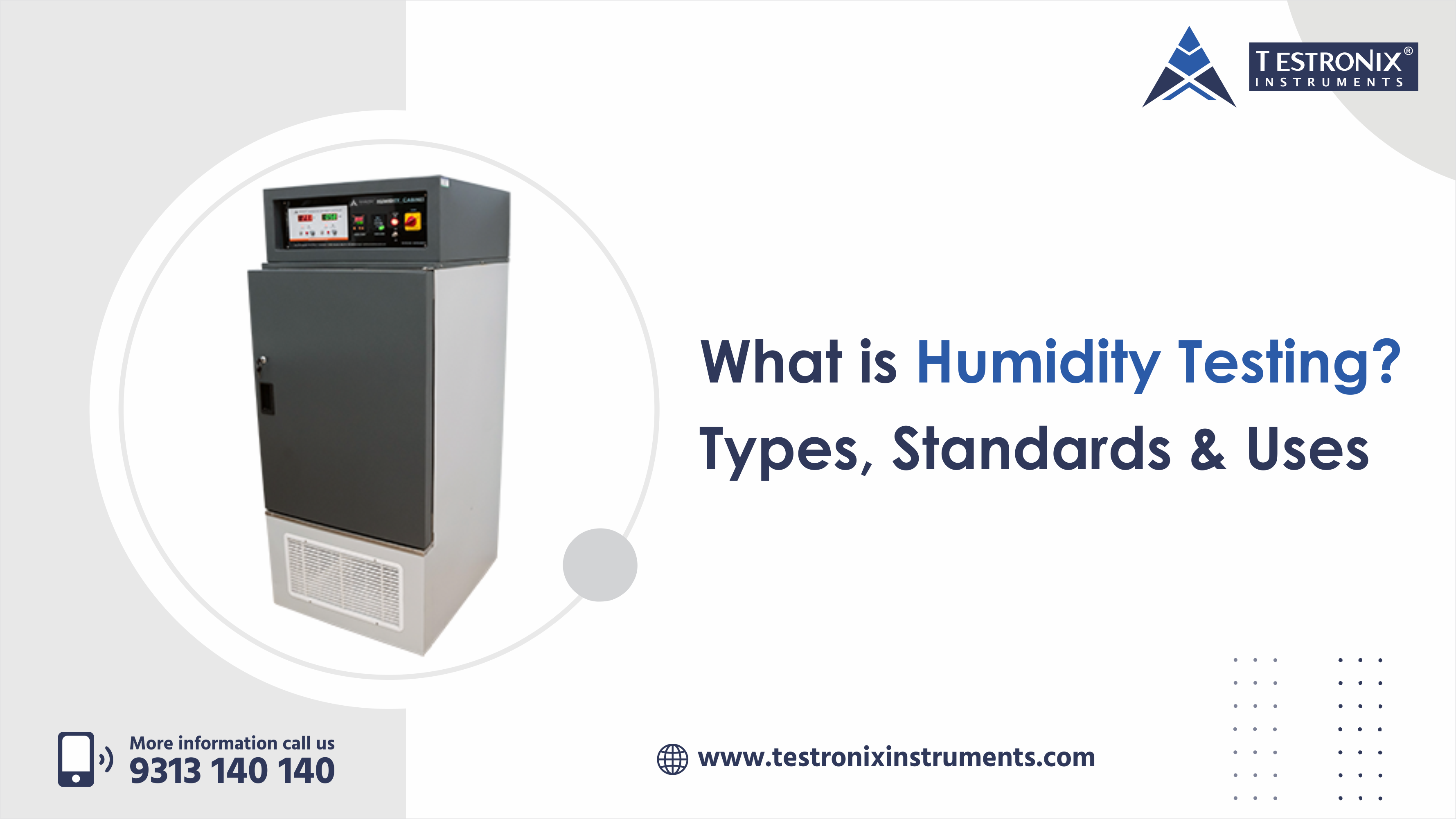
What Is Humidity Testing?
Humidity testing is a controlled laboratory process in which products, materials, or components are exposed to specific levels of relative humidity (RH) over defined time periods and temperature conditions to evaluate how they respond to moisture-laden environments. Primarily, the test will mimic the actual atmospheric environment a product would undergo when in storage, transportation or when in active use. Through intentionally exposing objects to high or repetitive humidity levels, engineers and quality teams are able to pinpoint areas of weakness in a product even before it is produced, so that it can reach the customer.
Technically, there is a series of internationally accepted standards that govern the humidity testing system such as IEC 60068-2-78 regarding damp heat testing, ASTM D4169 regarding packaging performance and MIL-STD-810 regarding environmental testing. Experiments are usually performed in environmental chambers with the ability to control both temperature and relative humidity at any given time and commonly include 10% RH to 98% RH over a range of temperatures between 10 degree C and above 85 degree C.
The three variants of tests that are most frequently observed during humidity qualification programs are constant damp heat test, cyclic humidity test and heavily accelerated stress test, also called HAST. They all have the purpose of exposing a different type of moisture-related failure type and which one to use is based on the nature of the product, where that product is going to be applied, and what the engineering team is most interested in.
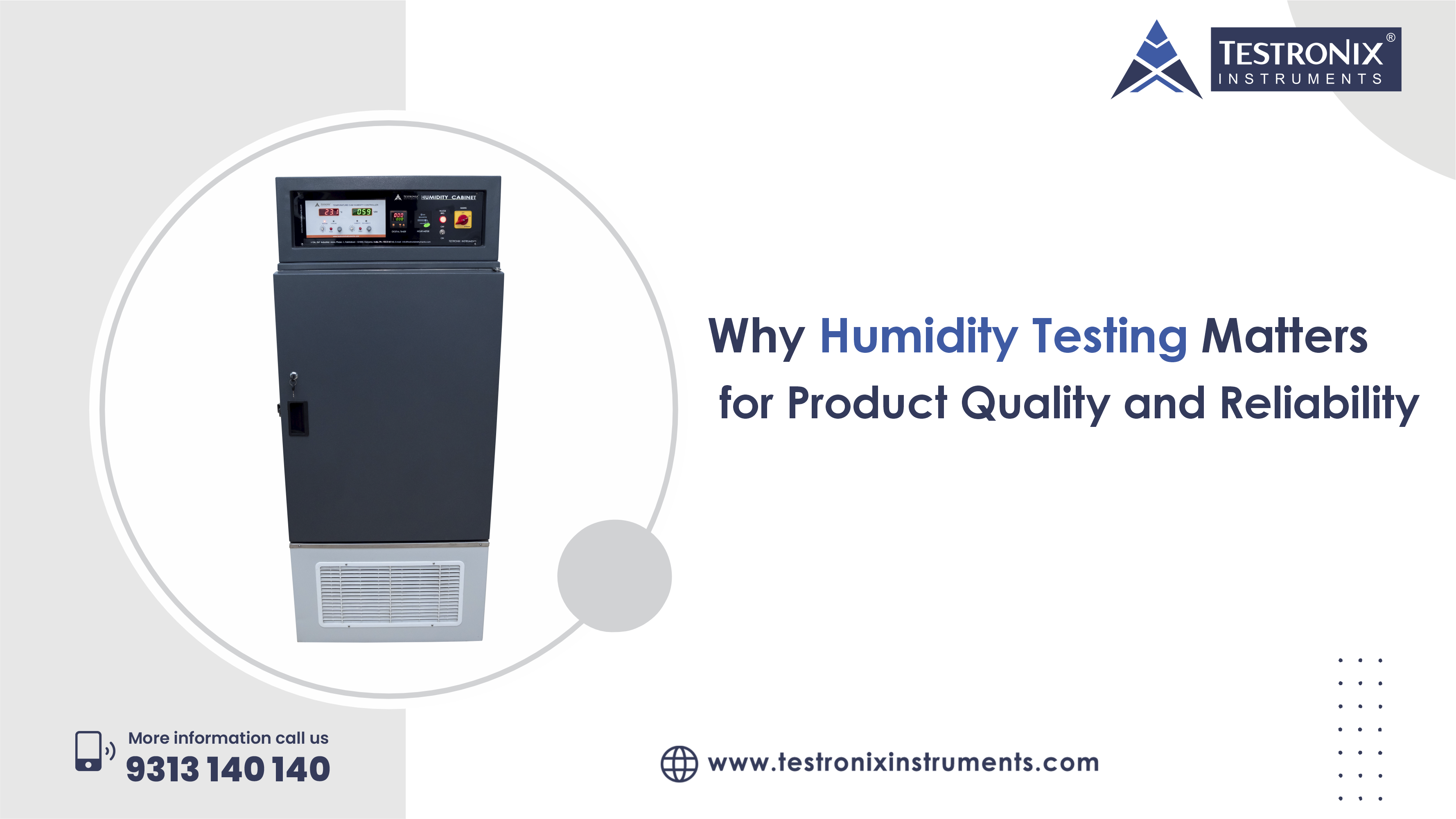
Why Humidity Testing Matters in Product Quality Control
Here the discussion is shifted out of theory and into practice. Humidity does not merely keep things wet. It causes a sequence of chemical, mechanical, and electrical reactions that deteriorate the integrity of products in a manner that is frequently slow, undetected, and disastrous when it comes to its occurrence in the field.
1. Preventing Premature Product Failure in the Field
When a product fails after it has shipped, the warranty cost is usually the smallest part of the problem. What follows is harder to contain. There are investigations, customer escalations, and in regulated industries, the possibility of formal inquiries that consume significant time and resources. For manufacturers operating in medical devices or aerospace, the threshold is even less permissive. A failure in those sectors does not just reflect poorly on the product; it can put people at risk.
2. Protecting Electrical and Electronic Components
The electronics category of products is one of the most humidity sensitive types of products known. The moisture on the circuit board diffuses into the circuit board and corrodes the metal connection between the conductors, splitting them into dendrites and reducing the insulation resistance of the circuit board over time. A machine may perform well in the lab but fail in some weeks in the coastal regions or tropical climates.
Key concerns for electronics during humidity testing include:
-
Corrosion of solder joints and copper traces
-
Delamination of PCB layers due to moisture absorption
-
Condensation on sensitive optical or sensor components
-
Electromigration accelerated by ionic contamination combined with moisture
-
Increased leakage currents leading to circuit malfunction
Humidity testing reveals these vulnerabilities at the design stage, where fixes are inexpensive, rather than in production or post-launch, where they become crises.
3. Ensuring Pharmaceutical and Food Product Integrity
Packaging integrity in humid environments in the case of pharmaceuticals is not a matter of quality but a legal requirement. Tablets, capsules and biologics contain active ingredients that can easily be degraded by moisture to lower their potency or give harmful byproducts. Regulatory bodies including the FDA and ICH mandate stability testing under defined temperature and humidity conditions as part of product approval.
Packaging in the food and beverage industry is working harder than it seems. When the humidity test indicates that a material fails to maintain its barrier integrity prior to the expiry date of the product, it is not merely a packaging issue, but it is a spoilage risk, a compliance risk and a customer trust issue that squarely rests on the manufacturer.
4. Supporting Material and Structural Integrity Testing
Humidity not only affects electronics and consumables. Metals corrode. Polymers swell, warp, or become brittle. Adhesives lose bonding strength. Wood-based materials absorb moisture and dimensionally deform. Composite materials used in automotive and aerospace structures can delaminate under prolonged humidity exposure.
Structural integrity testing under humid conditions helps manufacturers validate:
-
Long-term dimensional stability of molded plastic and rubber components
-
Adhesion strength of bonded assemblies after moisture conditioning
-
Corrosion resistance of surface coatings and plating
-
Fatigue performance of materials exposed to cyclic humidity changes
This kind of testing is especially critical for products sold across diverse global markets where climate conditions vary dramatically between regions.
5. Meeting Regulatory and Industry Standards
Humidity testing is not always optional. Depending on the sector, humidity testing may not be optional at all. Medical, aerospace and electronic markets Regulatory bodies require documented test data within the approval mechanism, and any lapses about the same have real implications, including the inability to access the market promptly or even an import hold and a complete recall of the product. These are not hypothetical risks; these are what the quality and compliance teams have to work with on a daily basis.
What often gets less attention is the procurement angle. Buyers in industrial and institutional markets increasingly treat certified environmental testing as a baseline supplier requirement rather than a differentiator, which means the absence of that documentation can quietly cost manufacturers.
6. Reducing Long-Term Cost of Quality
There is a straightforward economic argument for investing in humidity testing early in the product development cycle. A humidity-related flaw caught during prototype testing might mean a design revision and a few additional test cycles. The same flaw discovered after full production has begun means something much more disruptive, potentially affecting tooling, supply chain commitments, and already-shipped inventory.
Field service costs and warranty exposure compound on top of that, and reputational damage in industrial markets, where word travels within supplier networks, can affect future business in ways that never show up cleanly in a cost analysis but are very real nonetheless.
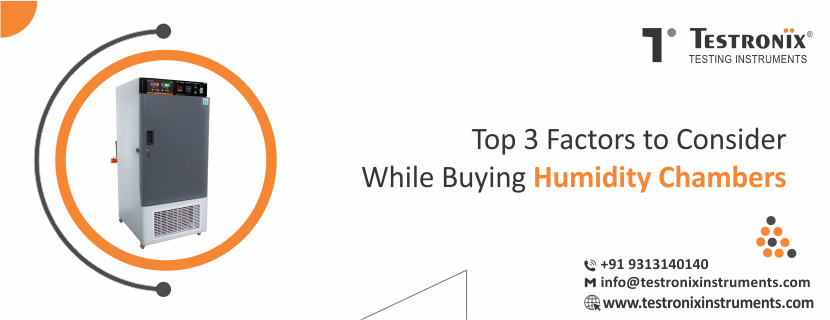
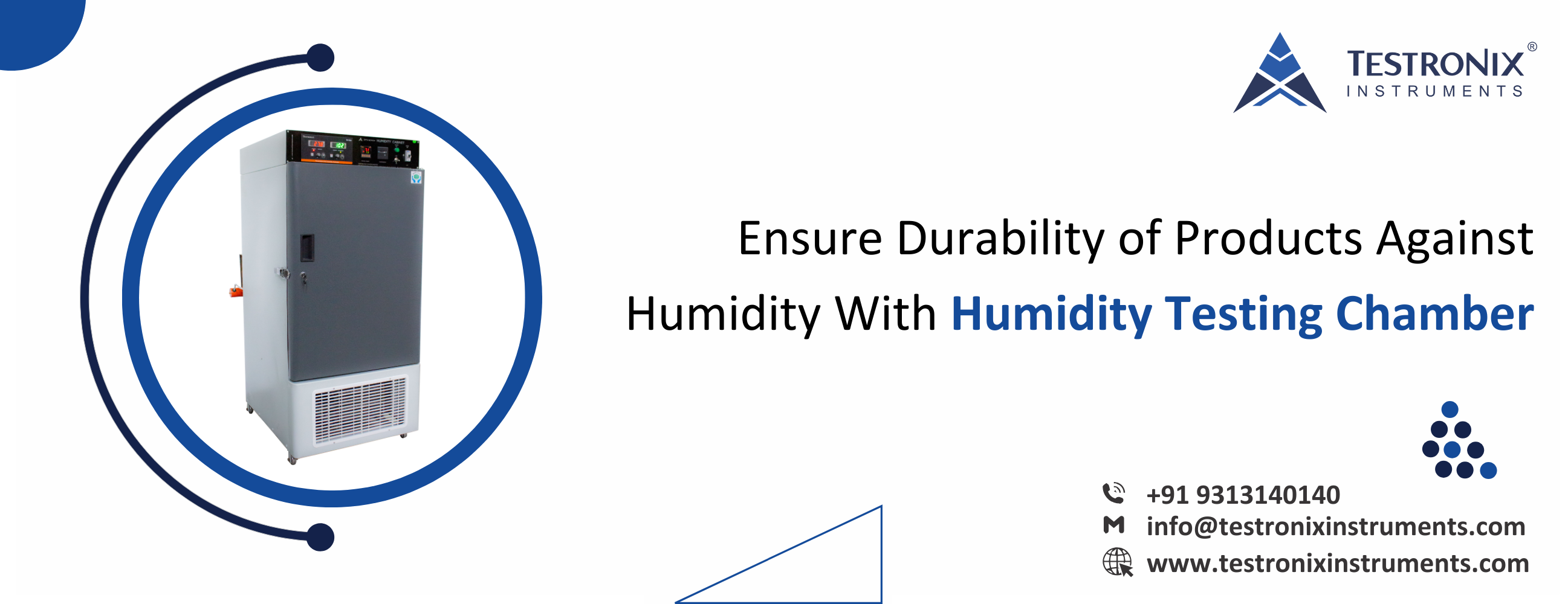
Testronix Humidity Test Chamber: Reliable Equipment for Accurate Results
Having the right environmental test chamber is foundational to getting meaningful results from humidity testing. This is where Testronix Instruments enters the picture with the must have testing equipment for industries.
Testronix humidity test chambers are built around one practical priority: keeping conditions stable and consistent for the entire duration of a test. Temperature and humidity levels hold to their set points without the kind of drift that forces engineers to question whether a result reflects the product or the equipment. The programming interface is also worth mentioning because it configures cyclic test profiles, the kind that replicate actual environmental transitions rather than just holding a fixed condition.
What makes Testronix chambers particularly practical for industrial quality labs is their construction quality combined with accessible calibration and validation support.
Conclusion
Humidity testing is one of the most direct and evidence-based ways to understand how a product will behave in the real world, across real climates, over real periods of time. Regardless of what a manufacturer makes, moisture is a variable that shows up eventually. Sometimes it shows up in the lab, which is where you want to find it.
Getting that right means having a consistent testing process, a standards-based methodology, and equipment that does what it is supposed to do across hundreds of test cycles. That combination does not just improve product quality; it builds the kind of track record that industrial buyers and regulatory bodies respond to.