This highly precise process of sterilization is an essential part of the medical, laboratory and industrial plants. In these processes, microbes may pose risks to health and safety and need to be destroyed. Tools that are extensively used to complete this critical task of sterilization, two popular examples are autoclaves and hot air ovens. Although they both fulfill the main goal to provide a sterile environment, they work in different ways and address various issues.
Autoclaves operate under the high pressure of steam to infiltrate and kill the most resistant pathogens whilst dry heat is also used in hot air ovens to do a full sterilization. The techniques are important in promoting the integrity and safety of various environments, a factor that justifies the importance of proper sterilization in the modern world.
What is Hot Air Oven?
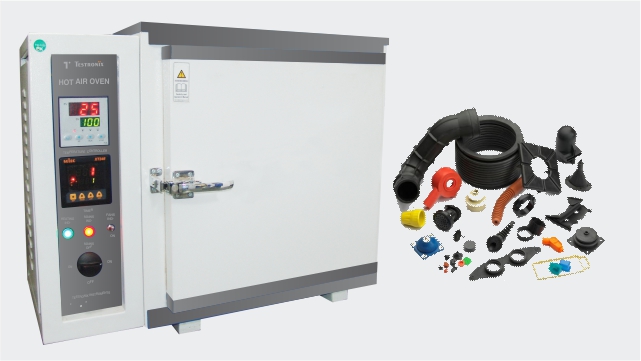
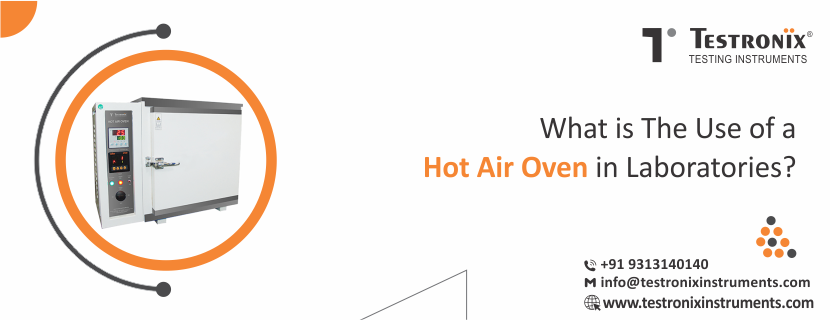
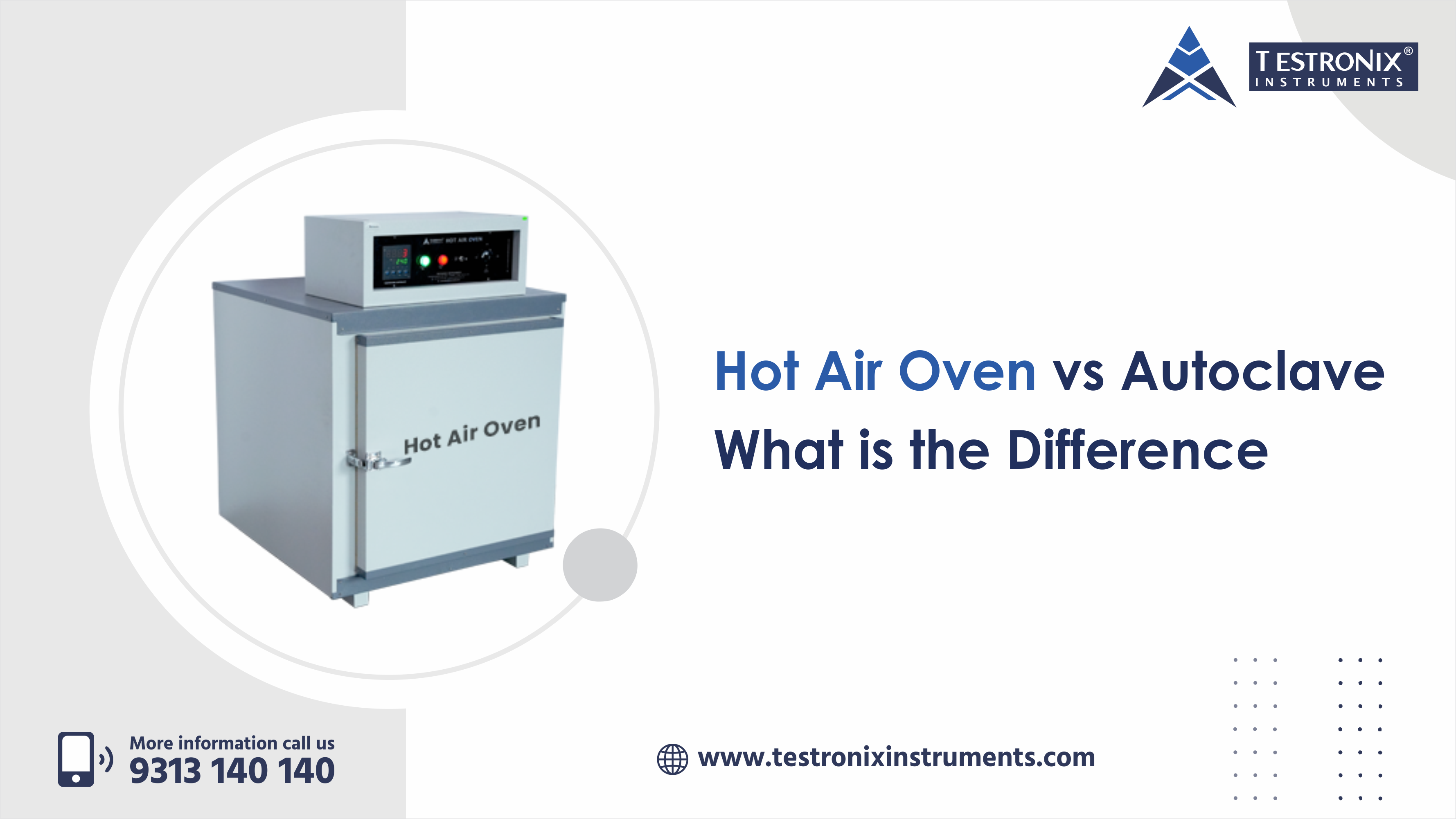
A hot air oven is a high-temperature electrical appliance for dry heat sterilization, drying, and thermal processing of materials. Operating typically between 50°C and 300°C, it is the primary tool for decontaminating materials that are sensitive to moisture but can withstand high, sustained temperatures.
It is a forced convection oven which means it operates on the principle of circulating air to deliver uniform heating to perform the sterilization of the specimen. Hot air ovens are usually used in laboratories to sterilize supplies and instruments.
Related: What is a Hot Air Oven?: Diagram, Uses, Temperature and Time
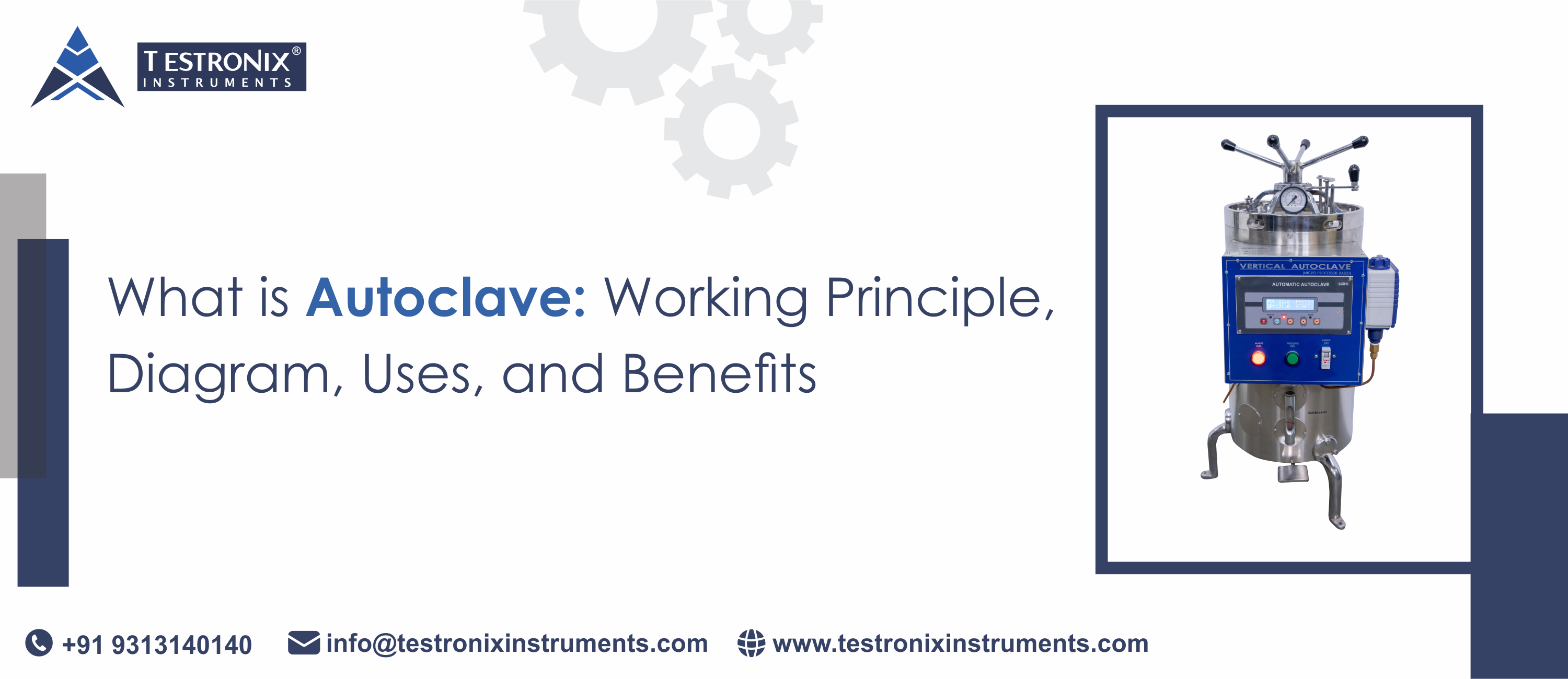
What is Autoclave?
An autoclave is a sealed pressure chamber used to perform sterilization by subjecting equipment to high-pressure saturated steam. In autoclaving, a high temperature with the use of steam in a closed pot or vessel is maintained at very high temperatures usually 121 degrees Celsius or 250 degrees Fahrenheit. It also possesses extremely high pressures of 15 psi or 103 kPa that destroy all the microorganisms like germs, bacteria, spores, etc that destroy the cell membrane.
Related: What is Autoclave: Working Principle, Diagram, Uses, and Benefits
Hot Air Oven vs Autoclave: The Difference
Here is the difference between a Hot Air Oven and an Autoclave, described below in tabular form:
|
Parameters |
Hot Air Oven |
Autoclave |
|
Type of Heat Used |
Dry heat sterilization |
Steam-based moist heat sterilization |
|
Operating Temperature Range |
High temperature between 160°C and 180°C |
Standard temperature around 121°C |
|
Sterilization Duration |
Longer cycles of about 2–3 hours |
Shorter cycles, usually 15–30 minutes |
|
Pressure Requirement |
Operates at normal atmospheric pressure |
Requires high pressure (around 15 psi) |
|
Suitable Materials |
Ideal for glassware, metal tools, and dry powders |
Best for surgical instruments, fabrics, and liquids |
|
Energy Consumption |
Higher energy usage due to extended heating time |
Lower energy usage because of faster cycles |
|
Cost Factor |
Generally more affordable |
Usually more expensive |
|
Common Laboratory Usage |
Used for dry laboratory items |
Used for moist materials like culture media and cloth |
Here are some more major points of differences explained between the Hot Air oven and the Autoclave based on factors such as Principle, Diagram differences, Uses, Sterilization method differences, and application differences.
Working Principle Difference
Hot Air Oven Working Principle: The operating principle of a hot air oven is known as dry heat sterilization, and it applies a combination of convection, conduction, and radiation to transfer heat. Here, forced air circulation is used to move hot air uniformly throughout items, evaporate moisture, and denature microbial proteins to kill microorganisms or dry materials.
Autoclave Working Principle: An autoclave works through the assistance of damp sterilization through the assistance of pressurized steam, saturated steam, which raises the boiling point of water (typically to 121°C or higher). This is done to enable the steam to infiltrate the material and to kill microorganisms by denaturing their vital proteins and hence sterilize it.
Diagram Difference
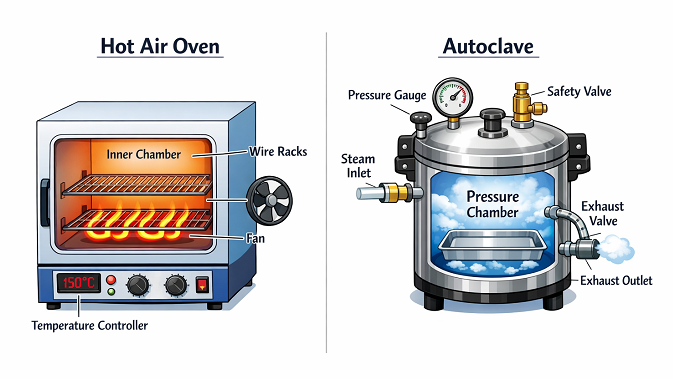
Hot Air Oven Diagram: The basic components of a hot air oven are a basic chamber, heating coils, a fan, and a temperature controller. The diagram of a hot air oven can be found here.
Autoclave Diagram: The autoclave diagram is consists of a pressure chamber that has a steam inlet, a pressure gauge, and an exhaust system that has a safety valve. The autoclave is also known as an autoclave assembly.
Uses Difference
Hot Air Oven Uses: Hot air ovens are used to sterilize, dry, cure, and test items in labs, pharma, and industries that require an inexpensive method of sterilization, drying, curing, and testing. They are essential for maintaining thermal control in research by providing smooth, consistent, and high-precision heat.
Autoclave Uses: In healthcare, labs, food processing, and industry, autoclaves are much more effective in the sterilization of equipment and decontamination of biohazardous waste, as well as the curing of materials, as they can kill the vast majority of microorganisms, including recalcitrant spores, far more effectively than boiling water.
Sterilization Method Differences
Sterilization with Hot Air Oven: Microorganisms can be eliminated through the use of a hot air. If you put something in an oven, the dry heat will slowly spread to the items, which will ultimately result in the destruction of microbes.
Autoclave Sterilization: It involves the use of moist heat in the pressurized form of steam. The steam is effective in faster permeation of materials and thus is an efficient sterilization process.
Applications Difference
Hot Air Oven Applications: The hot air ovens are typically found in microbiological and drug lab facilities, where they sterilize glassware, metal tools, powders, and other heat-resistant substances. It also applies to industries that are very dry and need to be sterilized, like food.
Autoclave Applications: Medical and healthcare and laboratory settings are some of the common places for the autoclave in order to sterilize medical equipment, surgical instruments, culture media, and liquids. Autoclaves are necessary in hospitals and they sterilize surgical equipment and supplies.
Conclusion
Hot air ovens, as well as autoclaves, are important sterilization instruments used in laboratories, medical, and industrial conditions. The decision on the appropriate method is determined by the kind of material, the rate of sterilization required, and the availability of moisture.
Although hot air ovens are suitable when dealing with dry and heat-sensitive products. Autoclaves are faster, more efficient, and more effective at sterilizing a wider variety of products that include surgical tools and culture media.