The testing of materials is an important function in maintaining the strength and reliability of products in different industries. Many materials are found to be failing in service due to improper testing and incorrect analysis during different stages of production. These failures can result in potential risks such as safety, monetary value, and product performance in the long run.
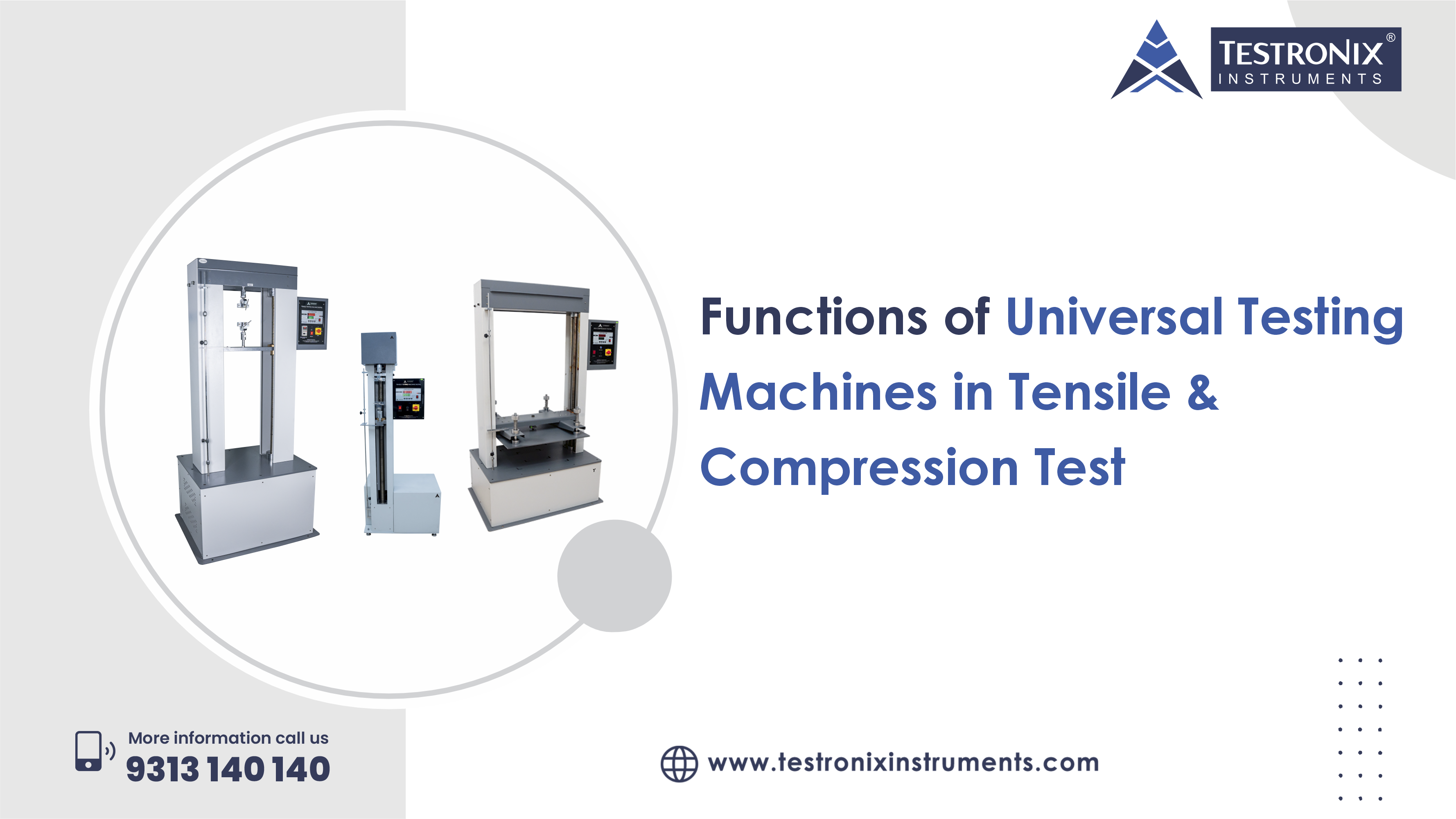
Modern testing techniques and equipment are employed to overcome these challenges in various industries to make sure that particular evaluations are attained. One of the most popular testing machines employed in testing materials is a Universal Testing Machine (UTM). The equipment is useful in measuring the tensile and compressive values of various materials accurately.
The functions of this equipment are important to understand in maintaining quality and performance standards.
What is Universal Testing Machine
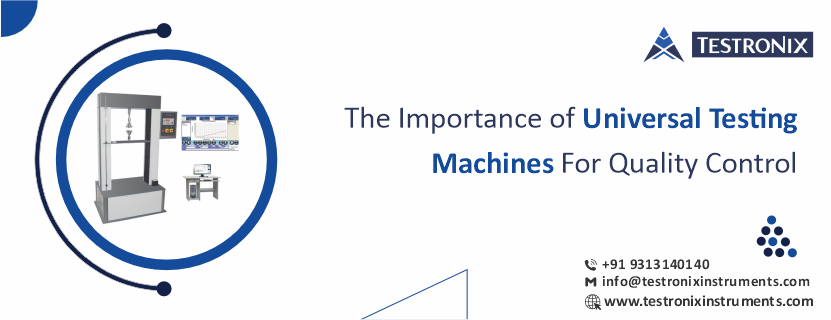
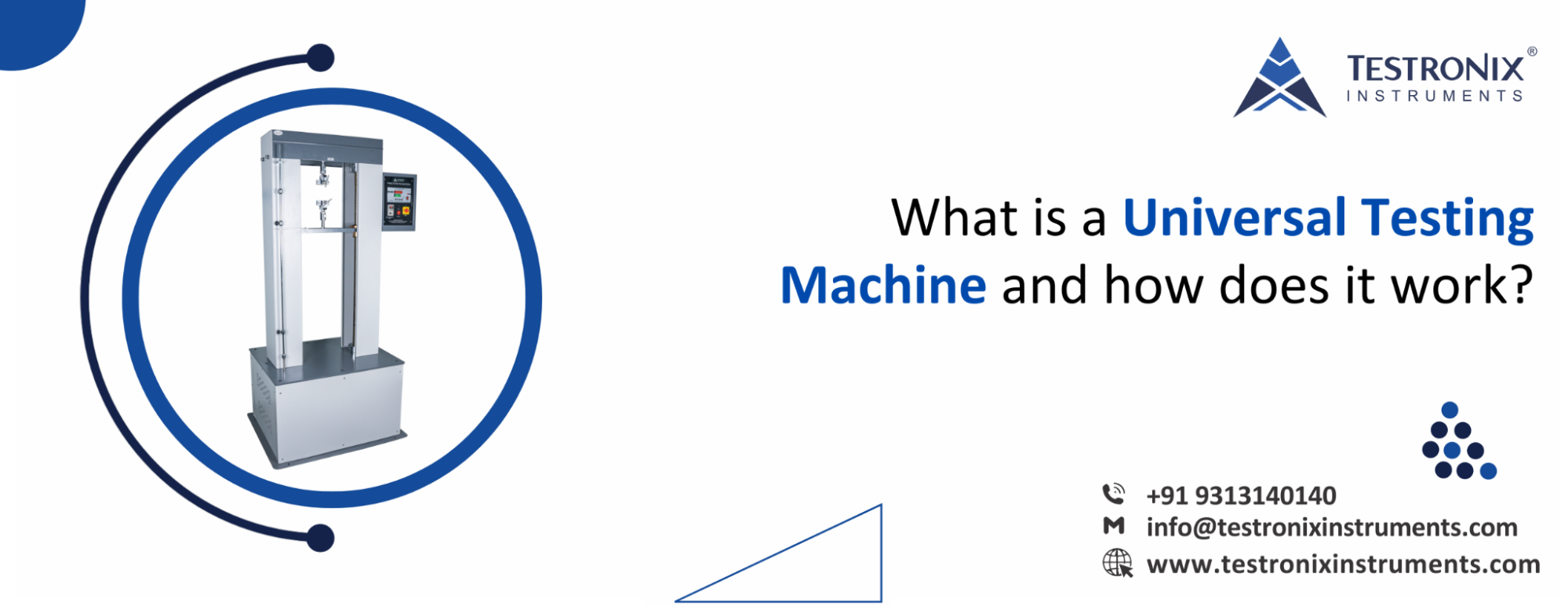
A Universal Testing Machine is laboratory equipment to measure the mechanical properties of materials under various real-world conditions. It helps to understand how the materials behave when they are subjected to any kind of force: tensile, compressive, torque, etc.
A Universal Testing Machine is a machine that is used to carry out tests on different materials to evaluate their strength. A UTM machine can carry out different tests like tensile testing, compression testing, bending testing, and shearing testing. The machine is used to apply a gradual amount of force to the material.
In tensile testing, the material is pulled apart. In compression testing, the material is pressed.
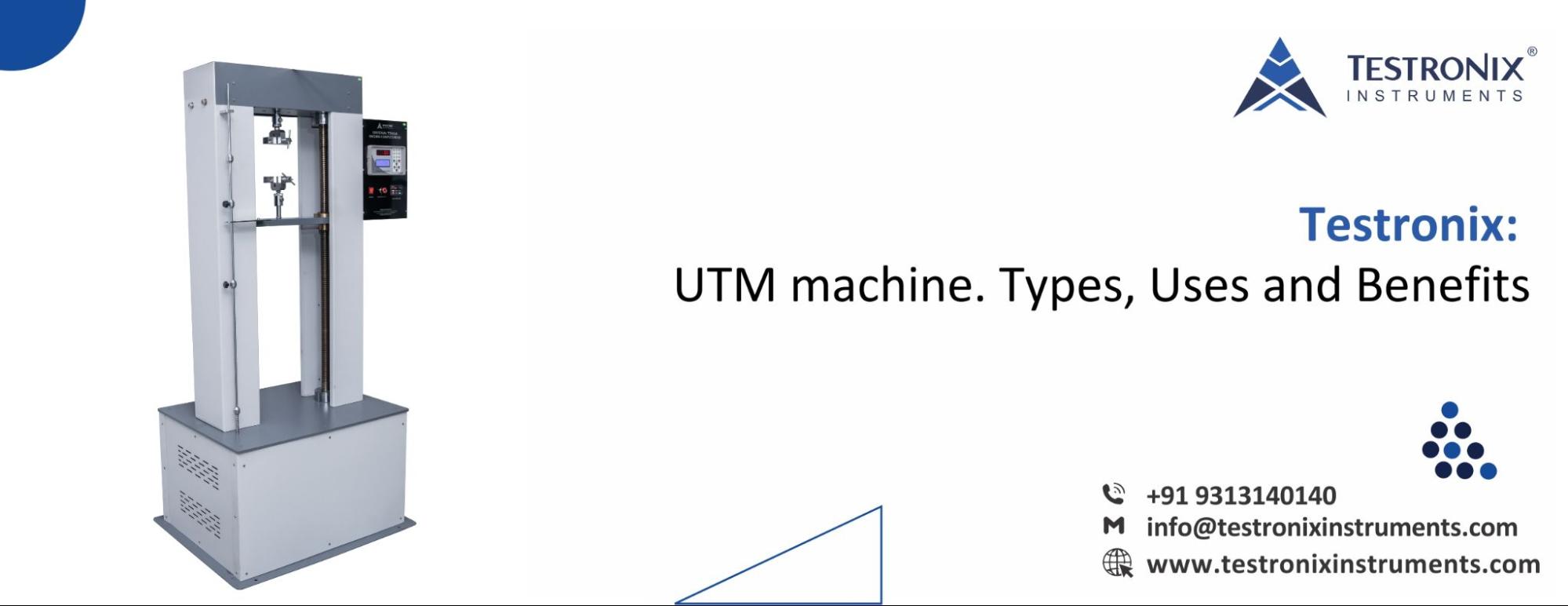
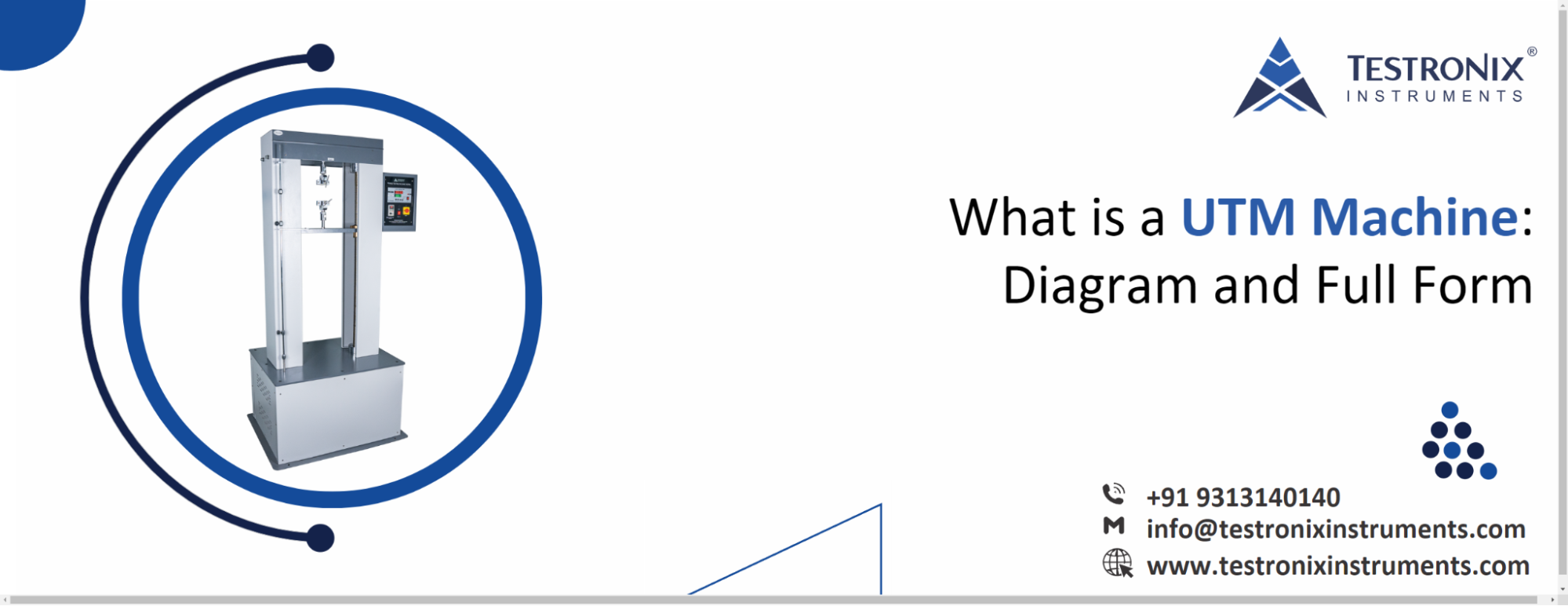
In the meantime, the machine also records the data such as load, elongation, deformation, and displacement. Universal testing machine has different key components, which include a load frame, a crosshead, a load cell, grips, and a control system. The load frame holds the structure. The crosshead moves, enabling the application of force. The load cell ensures accurate measurement of the force.
This overall management allows engineers to understand materials better. Universal Testing Machines have different applications, such as construction, automotive, aerospace, and research. UTMs assist in determining the strength, durability, and elasticity of materials.
This ensures product safety and meets industry standards.
Working Principle of Universal Testing Machine
The working principle of a universal testing machine is based on the controlled application of a monotonically increasing load to a test specimen to characterize its mechanical response. This apparatus is engineered to evaluate material performance under diverse stress states, primarily tension and compression.
The operational mechanism of a Universal Testing Machine involves a motor-driven system that precisely applies the requisite mechanical load via a moving crosshead. The resultant material deformation and applied force are dynamically measured using high-precision sensors and calibrated load cells.
Depending on the type of test that is needed, the specimen is held in standardized grips used in tensile testing or compression plates used in compressive testing. By moving the crosshead, subjecting the specimen to the load, the resulting data, such as the applied load, strain, and displacement are real-time and captured digitally and then analyzed later and compliance checked.
Functions of Universal Testing Machine in Tensile Test
Universal Testing Machine carries out tensile tests by subjecting the material to a given tensile force. This helps to assess how the material will react to the tensile force until it breaks. This procedure helps to determine the strength of the material.
In tensile tests, the sample is placed in the grip of two of the Universal Testing Machine. One grip is used to hold the specimen stationary and the other grip to move upwards and provide tensile force. As the tensile force creeps and the specimen begins to stretch. The universal testing machine monitors the tensile force applied to the specimen and its extension. This process continues until the specimen breaks. All the processes are recorded.
-
The machine is capable of holding the specimen tightly using strong grip ends that do not slip during testing.
-
It is capable of applying tensile forces to the specimen under testing.
-
The load cell is capable of measuring the amount of force applied to the specimen.
-
The tensile testing machine is capable of sensing the elongation of the specimen.
-
The tensile testing machine is capable of identifying the yield strength point, ultimate strength point, and breaking point of the specimen.
-
The tensile testing machine is capable of generating a curve for the specimen.
Functions of Universal Testing Machine in Compression Test
Universal Testing Machine is a machine used to carry out compression testing on materials. The machine is used to apply a compressive force to the materials being tested. The machine is important in determining the behavior of materials when subjected to compression.
When compression testing is being conducted, the material being tested is placed between two plates, which are compression plates on the Universal Testing Machine. The plates are fixed in such a manner that one is stationary, while the other moves downwards to compress the material being tested.
The compression is gradually applied to the materials. As the materials are being compressed, they deform. The machine is able to record the compression being applied to the materials. The testing is conducted to the point where the materials deform completely.
-
The machine securely holds the material in place between two compression plates.
-
It applies a compressive load to the material to simulate real-world conditions.
-
The load cell measures the applied compressive load.
-
Sensors monitor the deformation and displacement of the material under compression.
-
The system calculates the compressive strength and failure point of the material.
-
It also creates data and graphs to analyze the behavior of the material.
Applications of Universal Testing Machine
Universal Testing Machines are versatile instruments used across various industries to evaluate the strength, safety, and quality of materials through diverse testing procedures.
Key Applications
Construction Industry
In the construction industry, Universal Testing Machines are utilized for testing materials such as concrete, steel, and reinforcement bars. This testing is conducted to ensure that the construction materials are capable of bearing load and stress.
Automotive Industry
In the automotive industry, Universal Testing Machines are utilized for testing materials such as metal parts, rubber, and plastic. This testing is conducted to ensure that the materials are capable of bearing load and stress.
Packaging Industry
In the packaging industry, Universal Testing Machines are utilized for testing packaging materials such as films, laminates, and containers. This testing is conducted to ensure that the packaging materials are capable of bearing load and stress.
Textile Industry
In the textile industry, Universal Testing Machines are utilized to determine the strength and elasticity of fabrics and fibers. This helps maintain the quality of the products.
Plastic and Polymer Industry
In the plastic and polymer industry, Universal Testing Machines are utilized to determine the strength of plastic materials. This helps select the right plastic for the right application.
Research and Development Laboratories
Universal Testing Machines are utilized in research and development laboratories for research purposes. This is helpful for scientists to analyze the materials.
The above-mentioned applications of Universal Testing Machines show their significance in the respective industries.
Common Standards Followed by Universal Testing Machines
The Universal Testing Machines are based on internationally accepted standards to ensure accuracy and industry acceptance of test results. These key standards include ASTM E8 / E8M, ASTM D638, ISO 6892-1, ISO 527, ASTM E9, and ISO 604, which define specific testing conditions and methodologies for various materials.
Standardized rules would provide companies with reliable tests that give uniform results that would be accepted internationally. It will also allow material performance to be assessed at any point on the planet.
ASTM E8 / E8M (Tensile Testing of Metals): This standard is used to perform tensile testing on metallic materials like steel and alloys. The standard clearly states the steps to be followed while testing the tensile strength of metallic materials.
ASTM D638 (Tensile Testing of Plastics): This standard is clearly related to plastic materials. The tensile strength, flexibility, and elongation properties of plastic materials are clearly described in this standard.
ISO 6892-1 (Metallic Materials – Tensile Testing): This is an international standard related to tensile testing on metallic materials at room temperature. The tensile testing on metallic materials is clearly described in this standard.
ISO 527 (Plastics Testing Standard): This standard is used in the evaluation of tensile properties of plastic and polymer materials. The standard provides information on how the strength, modulus, and elongation of the materials can be measured.
ASTM E9 (Compression Testing of Materials): This standard is used in the compression testing of materials, especially metals. The standard provides information on how the compression of metals can be measured.
ISO 604 (Compression Testing of Plastics): This standard is used in the compression testing of plastic products. The standard provides information on how the compressive properties of the products can be measured.
Conclusion
Universal Testing Machines are important tools in measuring the strength of the material used in different industries. The machines can be applied in getting accurate outcomes of the strength of materials, particularly when doing tensile and compression tests. This ensures the quality of products, which otherwise might fail during use. The machines help avoid failure, thus making them reliable. By learning about the machines' purposes, different sectors will be able to maintain quality products.
Testronix Instruments is a renowned manufacturer in the Universal Testing Machine industry, known for providing superior quality testing machines with advanced technology. The machines offered by Testronix are accurate and reliable, making them suitable for industries to conduct precise testing operations. The company ensures quality testing with the support of its technically advanced products, making it a renowned name in the industry.