With the increased competition in the manufacturing industry around the world, the ability to ensure the integrity of your packaging is essential for providing safe products through compliance with regulatory agencies and providing good customer experiences.
Any small amount of leakage in packaging is likely to create an opportunity for contamination of the product, spoilage of the product, or shortening of the product’s shelf life. Because manufacturers are dependent on maintaining the same level of quality, they rely on the standardized method for testing packages for leaks, such as ASTM D6653. This ASTM test establishes standard methods for conducting vacuum decay testing to detect the presence of a leak in flexible packages.
What is ASTM D6653 Standard?
The ASTM D6653 Standard test method employs the vacuum method to evaluate the impact of high altitude on package systems. It entails testing the design of a package seal and its resistance to low atmospheric pressure and elevated altitudes (up to about 19,000 feet above sea level).
This test uses a vacuum chamber to recreate the effects of air transport or mountain transit and to assess risks such as packages swirling, leaking, or bursting their seals.
ASTM D6653 Test Procedure for Leak Testing
Scope:
1.1 Products that have been packaged may be transported using different methods (e.g., aircraft, trucks), and during this transportation, pressure differences may occur. These tests provide qualitative results for determining the effects of these pressure differences on the packaged product.
1.2 The SI unit values should be considered the Standard units of measurement; the units of measurement in parentheses are intended for convenience only.
1.3 This document does not cover all possible safety concerns associated with applying this standard. Users shall take the necessary precautions for personal safety and employ safe work practices as well as comply with rules and regulations applicable to their operations before applying any aspect of this standard.
Test Procedure:
-
Sample Placement: The package to be tested must be installed in a vacuum chamber.
-
Vacuum Application: The vacuum chamber is tested at specified levels of vacuum.
-
Stabilization Period: To ensure accurate measurements, the contents of the package must be allowed to stabilize upon the application of the vacuum and provide for a stable environment.
-
Monitoring Pressure Changes: The instrument monitors any variations in pressure over an established duration of time.
-
Leak Detection: If the package leaks, air escapes into the chamber and creates a change in pressure that can be distinguished.
-
Result Analysis: The instrument additionally records and displays whether the package has passed or failed based on defined limits.
Applications of ASTM D6653 in Packaging Industry
ASTM D6653 consists of several applications, such as air freight simulation, medical & pharmaceutical packaging, the food & beverage industry, seal integrity validation, and high-altitude ground shipping.
Here are the applications described below in detail:
-
Freight Simulation
This simulation tests how packaging behaves in an aircraft's hold as the atmospheric pressure drops when the plane is at altitude. The simulation replicates this lower pressure to see if the packages expand, burst, or leak, along with creating safe products during international air shipment.
-
Medical & Pharmaceutical Packaging
By simulating a vacuum, medical manufacturers are able to test to determine that their sterile barrier systems remain intact under vacuum. The process dictates the protection against contamination of kits, blister packs, and pharmaceutical pouches to keep them sterile, compliant, and safe for the patients during storage and distribution processes.
-
Food & Beverage Industry
Vacuum testing enables food producers to test the capacity of their pouches, snack packs, and vacuum-packed foodstuffs to withstand the varying pressures of the interior of the package. The tests also give the manufacturers insights into the possibility of the existence of a liability linked to weak seals or structural collapse because of expansion. Therefore, this might cause spoilage, leakage, and shortening of shelf life during transit and storage.
-
Seal Integrity Validation
Seal integrity testing is a test applied to identify microscopic leaks or loose packaging bonds. Using the vacuum pressure, a manufacturer can detect the air escape points so that the package is airtight and safe and prevents product contamination or moisture intrusion.
-
High-Altitude Ground Shipping
The shipment of products is done through mountainous regions with lower atmospheric pressure, just like products are transported by air. This is because it is important to test the packaging under simulated conditions of high altitude to make sure that the packaging does not swell, burst, or leak. Therefore, the contents do not get lost and remain intact despite the continued variation in pressure with the rise in elevation.
Testronix Leak Tester: Fully Compliant with ASTM D6653
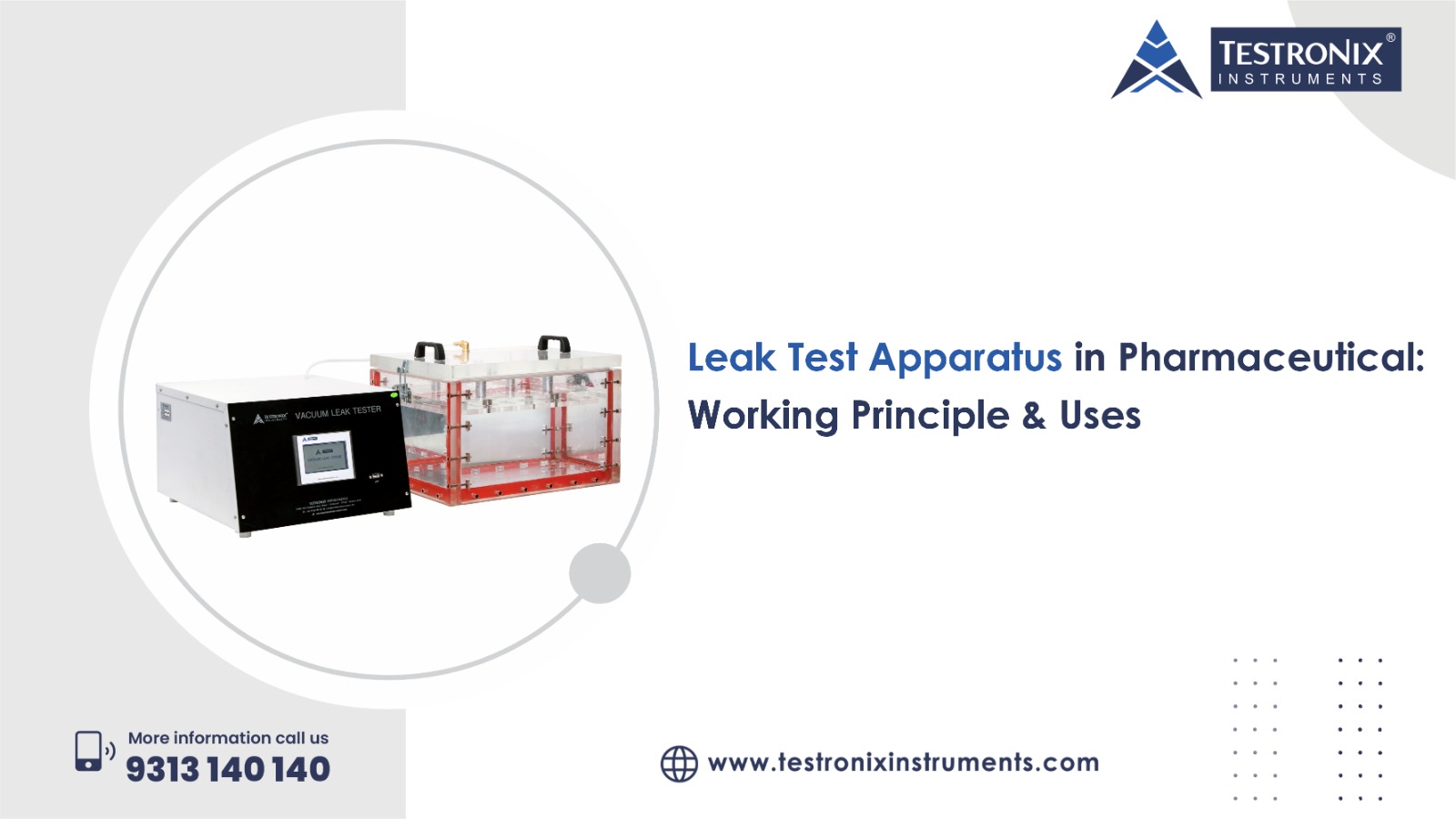
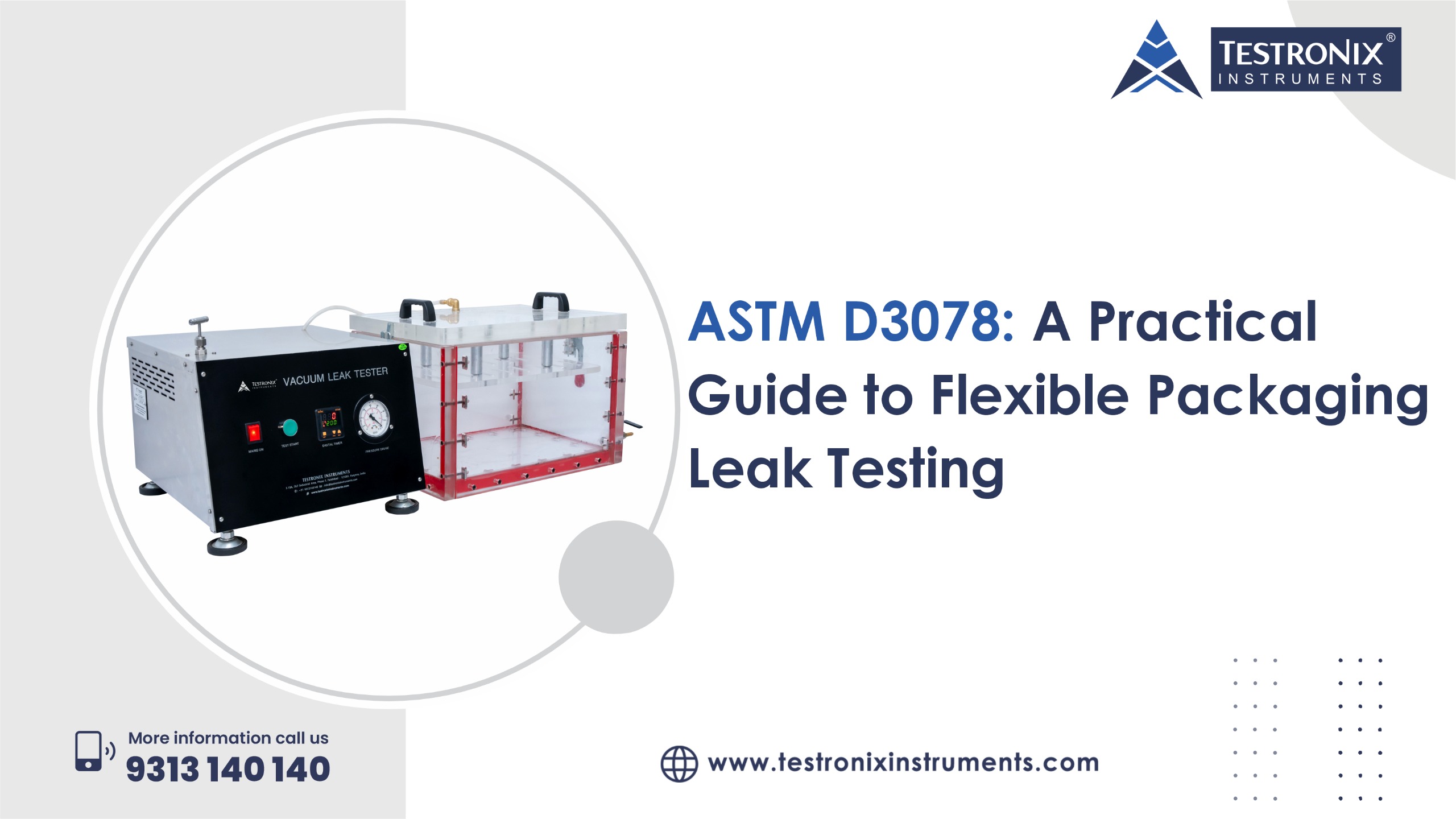
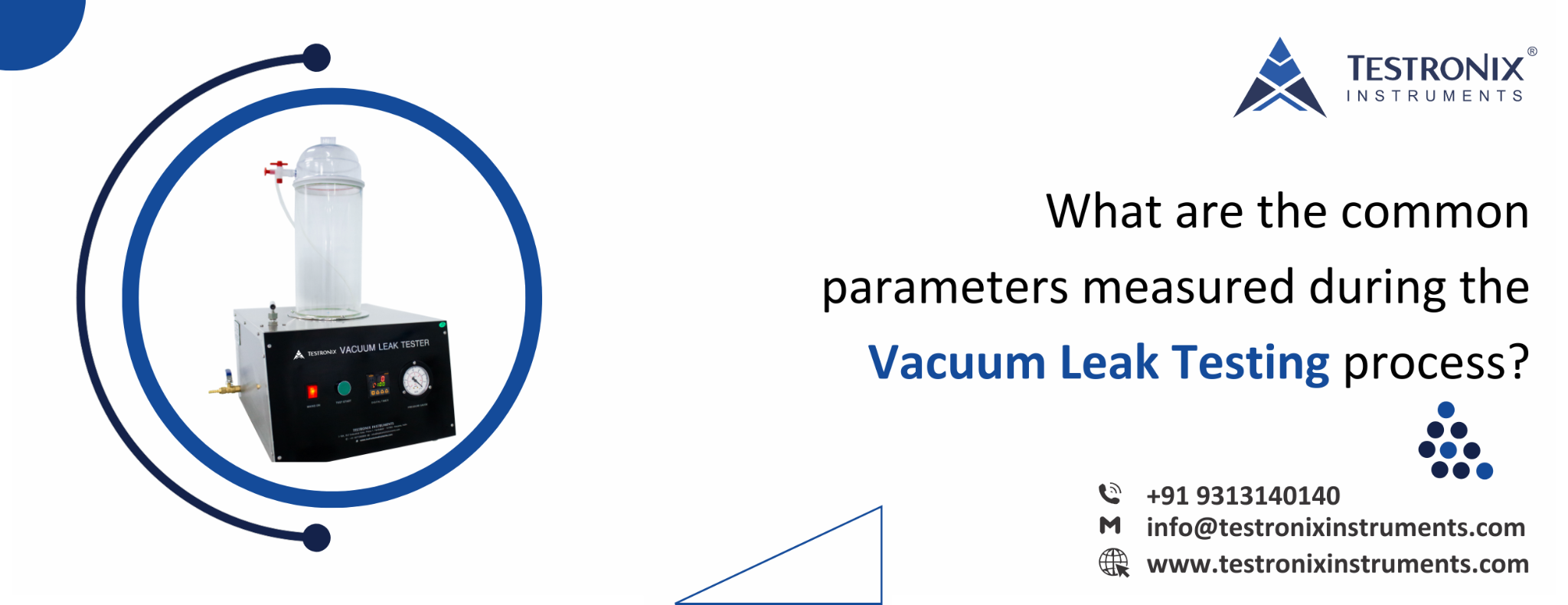
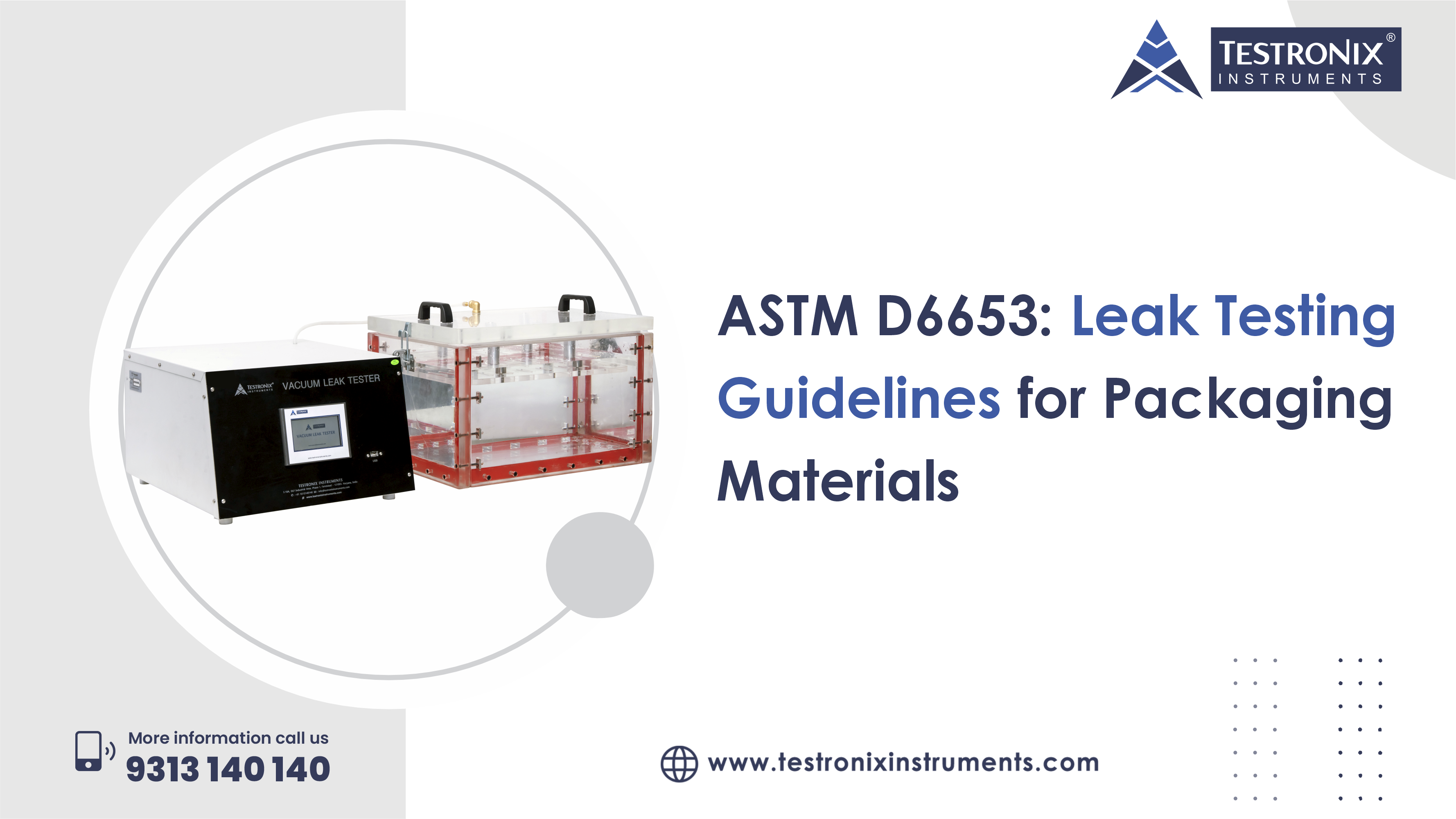
Testronix Instruments provides technologically advanced leak testing that meets ASTM D6653 standards. The company builds vacuum decay leak testers that provide accurate and repeatable results and do not damage flexible packaging materials.
Important features of Testronix Leak Testers include:
-
High-sensitivity vacuum decay technology
-
Easy-to-use digital display
-
Accurate pressure measurement system
-
A strong stainless steel vacuum chamber
-
They can be utilized in both laboratory and production settings
Conclusion
ASTM D6653 is an essential test for flexibility testing through vacuum decay testing of the packaging materials, thus providing manufacturers with actual evidence of whether their product is packed correctly or not.
With Testronix Instruments' ASTM D6653-type devices, companies can use this non-destructive, highly sensitive, and repeatable method of testing their packaged goods to maintain a high quality of their products and to comply with FDA regulations.