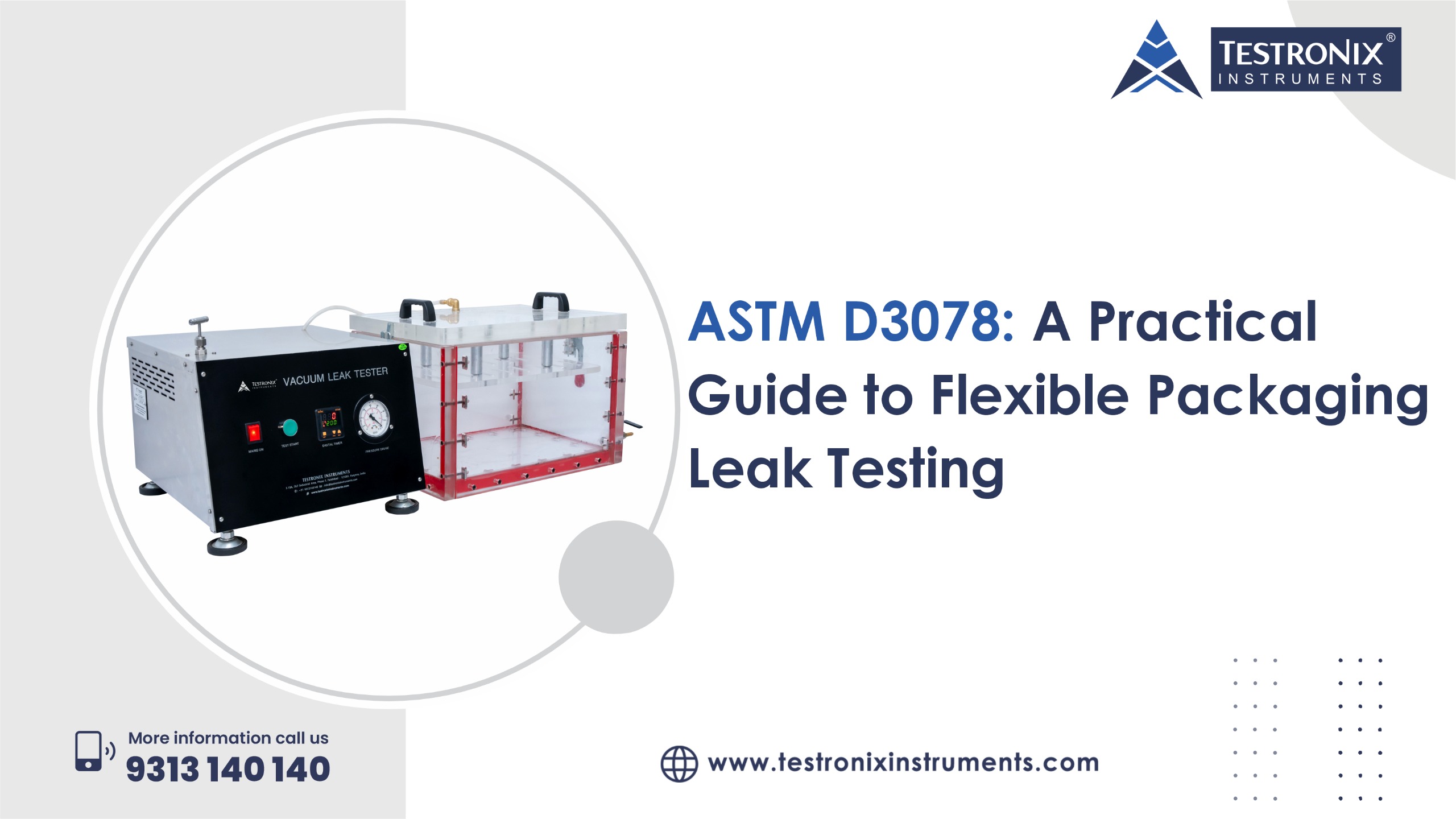
When living in the modern business environment, the packaging needs to be strong, have great seals, and be leak-proof so that your product is safe and secure and able to stay on the shelf as long as you want. Flexible packaging, such as food, pharmaceuticals, consumer goods, and industrial products, should be capable of responding to the forces of both the internal and external forces of the package. Packaging makers and quality laboratories. Therefore, use a standardized test to ascertain the effectiveness of a package; some of them include the ASTM D3078, which is a valid and reliable technique for establishing the presence of leaks in flexible substances.
What is ASTM D3078?
ASTM D3078 is a standard test method developed by ASTM International to identify the availability of gross leaks within flexible packaging materials. This test is known as the “Bubble Emission Test” or “Vacuum Leak Test.” It is used to find large leaks in flexible packaging materials by placing the package in a water bath under vacuum conditions and looking for air bubbles escaping at the leakage sites.
This standard is only applicable to flexible or semi-rigid packages that involve air and are closed to ensure that the content in the package remains intact. It is possible to detect the weakness of the seal or the damage caused by a crack, which helps make sure that the packaged product has not been damaged.
ASTM D3078 Standard Test Method
The ASTM D3078 standard outlines the “Standard Test Method for the determination of leaks in Flexible Packaging by Bubble Emission.” It is a qualitative, visual vacuum test that can be performed for the purpose of detecting leaks in flexible packaging that has been sealed and has an internal headspace of gas.
Key Details and Test Procedures of ASTM D3078:
-
Objective: To identify gross leaks, typically down to 1×10?? atm cm³/s¹, by detecting escaping bubbles in a submerged, vacuum-sealed, transparent chamber.
-
Applicability: The Flexible Countability Test (FCT) can be used for flexible packaging (pouches, bags, and blister packs) that contains a gas in its headspace. It is widely used in the food, pharmaceutical, and medical device industries.
-
Procedure:
-
Submersion: Place the sample in a full chamber of water or any other liquid, which is clear.
-
Vacuum Application: Form a vacuum, which reduces the pressure in the chamber.
-
Observation: Monitor the puffing up or the non-puffing of the package to ascertain whether there is a violation. A continuous stream of bubbles starts to escape inside the package, where there is a breach, in case there is already a breach.
-
Analysis: The location of the bubbles indicates the location of the seal failure or the pinhole.
-
Parameters: Conventional vacuum levels for testing purposes are typically 12.5, 18.5, and 24.5 in Hg. These vacuum levels should be held for at least 30 seconds, respectively.
-
Limitations: Furthermore, this method only detects “gross” (large) leaks. However, it does not provide sufficient sensitivity for detecting microscopic, or “very small,” leaks due to the possibility of the product itself plugging the detection hole.
Standard of Practice (SOPs) for ASTM D3078
To ensure consistent and reliable results, companies must convert the ASTM Standard into Standard Operating Procedures (SOPs) specific to their facilities.
A proper SOP should include:
1.1) The purpose of this test procedure is to determine if there are any gross leaks in containers made from flexible packaging that contain gas in their headspace. The test has a detection limit of 1 × 10?? atm cm³/s (1 × 10?? Pa m³/s), and many times this limit could be even less sensitive, as evidenced by a recent interlaboratory round-robin test (see Section 12).
1.2) There is a possibility that this method cannot identify small leakage problems. This can happen because of the characteristics of the contained product (viscoelasticity of the contained product) or air entrapped in the package. When a vacuum is drawn, the positive pressure within the package may cause the product to close off the small leak. The leak size that is detected depends on the contents in a package, the packaging material, and the test conditions chosen to perform the test.
1.3) The inch-pound unit values listed are the reference standard for this document. Conversion factors shown in parentheses represent an approximate mathematical conversion into SI units and are provided as a reference only. They should not be considered in the evaluation of any items within this document.
1.4) This guideline does not attempt to provide a solution for all safety concerns related to its use. It is up to you to implement adequate safety, health, and environmental measures as well as check if your project falls within government expiring regulations, or otherwise be careful when using this standard.
1.5) International standards are developed based on internationally accepted principles governing the method of standardizing developed in the Decision on Principles for the Development of International Standards, Guides, or Recommendations produced by the World Trade Organization's Technical Barriers to Trade Committee.
How ASTM D3078 is Better than Other Leak Testing Methods
Bubble Emission Testing (ASTM D3078) is an effective method for the fast and visual identification of large leaks in flexible packaging. The vacuum chamber forces a small amount of air out of the container, which can escape through any openings in the container.
Reasons ASTM D3078 Is Ideal for Specific Packaging Applications:
-
Simplicity and Cost-effectiveness: ASTM D3078 is a very inexpensive way to check quality from an equipment perspective. Mass spectrometry or tracer gas methods typically require expensive equipment.
-
Rapid, Visual Feedback: The ability of rapid, visual feedback to rapidly provide information on where a leak has occurred (by showing where there is bubbling) allows the user to implement corrective actions to the packaging machine immediately following detection of a leak.
-
Ideal for Flexible Packaging: The bubble test is designed for testing flexible packages. However, it can also be used for other packing formats that experience greater than "gross" leaks.
-
Safe for Delicate Materials: The vacuum technique uses a vacuum, rather than pressure applied to the contents of the package, making it safer to use with delicate and thin-walled products.
-
High sensitivity to large defects: To detect leaks that can quickly cause spoilage or contamination, the bubble test is very effective.
Advantages of ASTM D3078 in the Packaging Industry
The key advantages of ASTM D3078 in the packaging industry include effective leak detection, quality assurance and safety, cost-effectiveness, simple regulatory compliance, and versatility.
Here are the key advantages described:
-
Effective Leak Detection
Leak detection serves to identify potential leakage concerns in flexible packaging (e.g., pouches and blister packs) through the use of vacuum pressure and air extraction, whereby bubble formation is recorded at compromised sealing areas.
-
Quality Assurance (QA) and safety
Quality Assurance (QA) and Safety are of great importance, as they ensure that pharmaceutical or food product packaging, seals, and closures remain intact so that contamination and spoilage do not occur.
-
Cost-effectiveness and Simple
Simple testing can be done easily by those with very little training and utilizes simple, inexpensive pieces of equipment (vacuum chamber & water), making it an excellent choice for regular, in-house quality control.
-
Regulatory Compliance
The test enables the manufacturers to abide by the food and pharmaceutical laws (FDA, ISO) on packaging, thereby reducing the chances of recalls and liability. Hence, testing is an effective instrument to abide by the existing regulatory standards in the industry.
-
Versatility
Though also useful with flexible headspace packaging, it can also be used with certain rigid types of packaging, which gives it a useful multipurpose aspect that suits a range of products. Therefore, one of the key benefits of ASTM D3078 is flexibility.
Testronix Leak Test Apparatus: The Best Equipment for Leak Testing
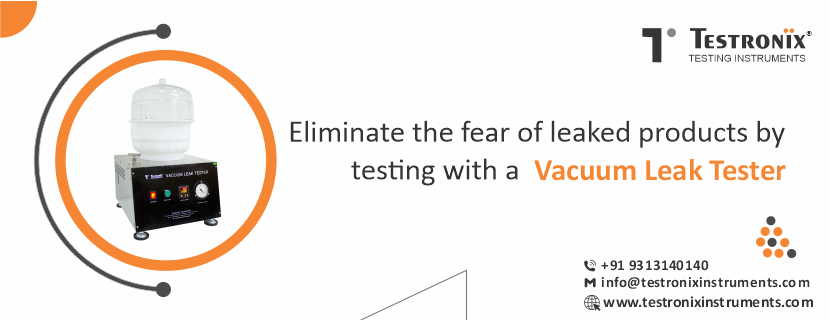
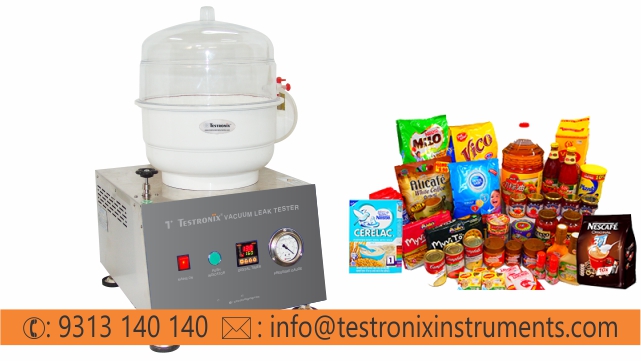
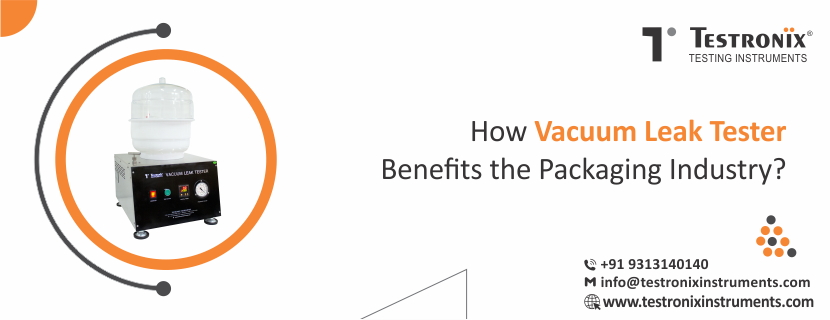
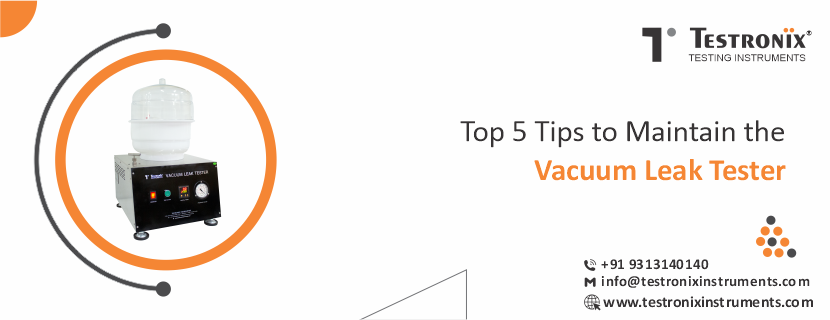
Testronix has developed a leak test apparatus that provides precise, repeatable measurements when determining if a flexible package leaks. The unit has precise pressure control, is made from durable materials, and is easy to operate. Additionally, it meets the requirements of ASTM D3078, allowing for consistency and better quality assurance, and it also provides a safe way to test multiple types of packaging materials.
Conclusion
ASTM D3078 has been widely adopted as an effective, economical, and dependable method for the leak testing of flexible packaging. This is a technique that uses the hydrostatic principle (which is not complicated but highly sensitive). Thus, it can be applied in numerous industries that adopt flexible packaging materials to contain and preserve their products. By applying precise SOPs and quality testing devices like the Testronix Leak Tester, the manufacturers are able to correctly find the leaks, gain more control of the process quality, and reduce the number of failures occurring.