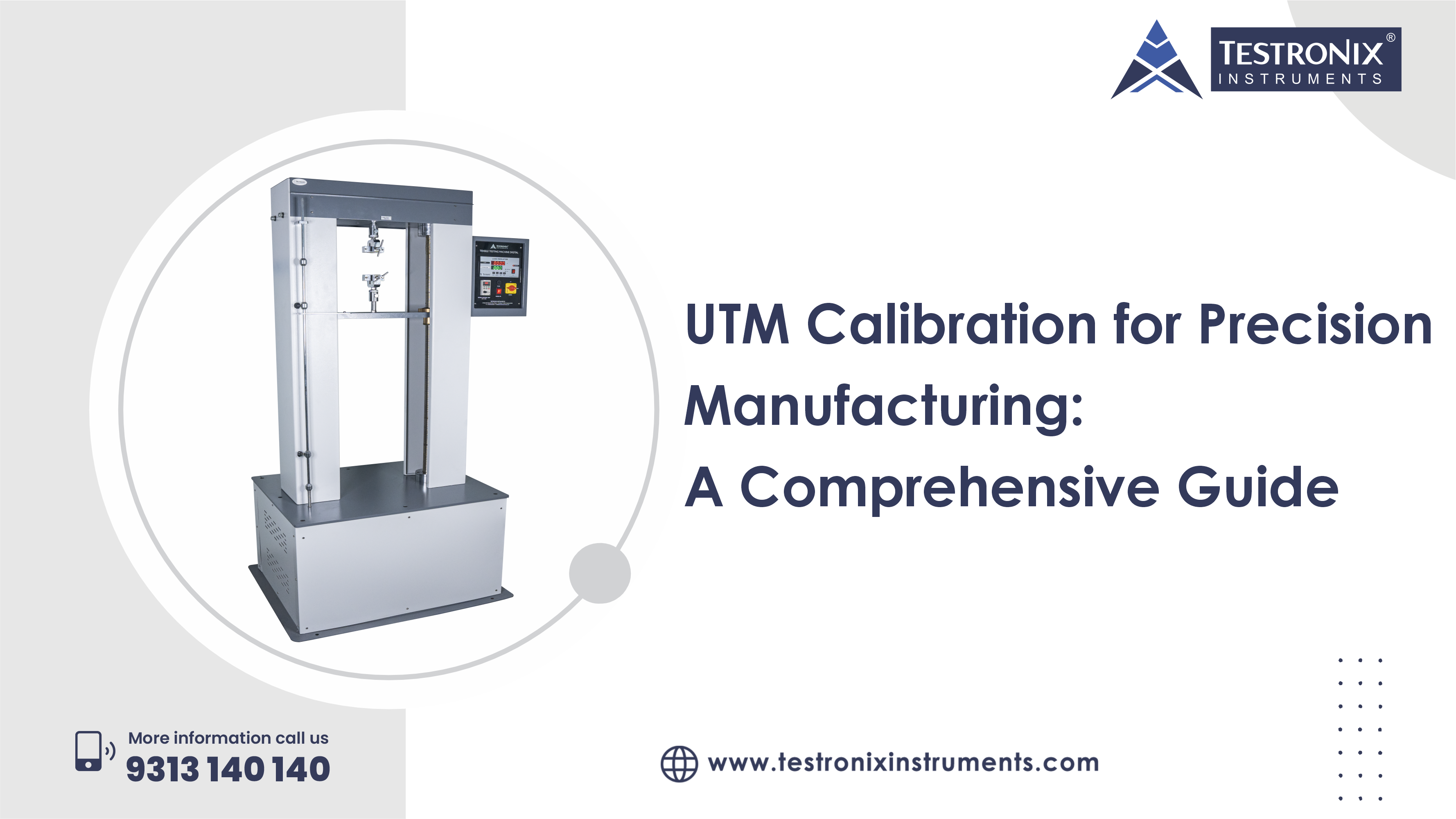
Accuracy is key in precision manufacturing. This means that any form of inaccuracy, no matter how minor, can significantly affect the quality of the product. It is because of this that UTM calibration is significant. The purpose of a Universal Testing Machine is to measure the tensile, compressive, and other properties of materials. When the UTM machine is not calibrated, the measurements may become false. Incorrect measurements can lead to poor quality decisions, which can cause product failures.
Calibration is necessary to calibrate the measurements of the machine to the standard reference values. This makes the measurements accurate and consistent. It is also able to enhance quality control in production. This guide is going to discuss the meaning of calibration, the necessity of its existence, the UTM calibration procedure, and the time of its conduction.
What is Calibration?
Calibration is the formal process of verifying accuracy of equipment by comparing its measurements against a traceable standard of known value. If discrepancies are identified, the equipment is adjusted to align its output with the reference standard, ensuring the integrity and reliability of all subsequent data.
During testing on a Universal Testing Machine, the calibration of the machine primarily entails the test of the load cell, the displacement and the movement of the crosshead.
In an example: Assume a standard value of 100kg is placed on the Universal Testing Machine and the machine shows a value of 98kg, then it means that the machine has errors. Then the machine is made in a way that it shows the correct results i.e. a value of 100kg.
This helps in ensuring accurate results for tests involving tensile and compression. If there are any kinds of errors, even small errors, this may result in wrong conclusions for the quality of products.
Why is Calibration of Equipment Needed?
Calibration is important in maintaining the accuracy and reliability of the readings obtained from the lab equipment. It helps in avoiding any mistakes that might occur during the testing process and impact the quality of the product.
The accuracy of the testing process depends on the accuracy of the machine. Sometimes, the machine might develop small errors over time due to the constant usage of the machine. The small changes in the machine might seem negligible at first, but they might cause huge variations in the results obtained during the testing process.
An example is in the Universal Testing Machine: in case there is any slightest error in measuring the force or the displacement of the material, there may be a different value of tensile or compression strength of the material. Consequently, the calibration of the equipment is relevant when ensuring the quality of the results obtained in the course of testing.
Universal Testing Machine Calibration Procedure: Detailed Guide Summary:
The process of UTM calibration is a step-by-step procedure to test the accuracy of the load, displacement, and machine responses. Calibrating the machine enables it to provide accurate test results.
Step 1: Initial Machine Inspection
The process of UTM calibration begins with an inspection of the machine. It is essential to test the condition of the machine, including the load cell, grip, cable, display, and any other components, to ascertain whether there is any damage to the machine.
Step 2: Warm-Up and Zero Setting
The next step in the process of UTM calibration involves switching on the machine to enable it to function. After switching on the machine, the load cell display should be adjusted to zero. This step is essential in the process of UTM calibration to enable accurate test results.
Step 3: Load Cell Calibration
The process of UTM calibration continues with the use of standard weights or a proving ring, which should be compared with the display reading. The difference should be noted at various points, such as 20%, 40%, 60%, 80%, and 100% of the machine capacity.
Step 4: Crosshead and Displacement Check
The crosshead and extension measurement should be verified. The travel distance should be measured and compared with the scaled value or gauge block. This will ensure that the values for elongation and displacement remain the same.
Step 5: Error Adjustment and Verification
If any error is found during the process, the machine should be adjusted accordingly. The same process of load and displacement checks should be repeated to verify the changes made.
Step 6: Final Documentation
This involves documenting all the results, differences, and corrections. This information may be useful for quality audits and for future reference.
When should a UTM machine be calibrated?
-
A machine of type UTM should be calibrated regularly and whenever there is a possibility of error in measurement. Regular calibration of a machine of type UTM helps in ensuring accurate results.
-
In most cases, machines are calibrated every 6 months or once a year. However, this may vary from industry to industry. Another situation where a machine of type UTM should be calibrated is after it's relocation. The machine may be shifted from one location to another. Relocation of a machine of type UTM may affect the machine's accuracy.
-
A machine of type UTM should also be calibrated after repairs. In most cases, the load cell, machine, and grip of a machine of type UTM are replaced. The replacement of any of the machine's parts may affect the machine's accuracy.
-
Another situation where a machine of type UTM should be calibrated is when there are any irregular results. In most cases, a machine of type UTM may not give accurate results. Calibration of a machine of type UTM should be done in such a situation.
-
A machine of type UTM should also be calibrated regularly before audits.
Benefits of Universal Testing Machine Calibration
The calibration of a Universal Testing Machine helps in the accuracy, consistency, and reliability of tests. It assists manufacturers in making proper quality decisions and maintaining precision in testing materials.
-
One of the most significant advantages of a Universal Testing Machine calibration is that it helps in accurate results. The values of force, displacement, and elongation are accurately measured. It assists in precise testing, such as tensile and compression testing.
-
A well-calibrated machine helps in avoiding any kind of unexpected testing errors. It assists in efficient manufacturing.
-
Another significant advantage of a Universal Testing Machine calibration is that it helps in the consistency of results. A well-calibrated machine always produces accurate results. The results are the same every time.
-
A well-calibrated machine assists in proper quality decisions. The results are accurate, and this helps in proper approval or rejection of materials.
-
A well-calibrated machine helps in proper compliance with industry standards. Many industry audits require machines to be calibrated as per standard guidelines.
-
Calibration helps in precision manufacturing as all the advantages of a well-calibrated machine are directly associated with precision manufacturing.
Conclusion
Calibration of the UTM is important in maintaining accuracy in precision manufacturing. It ensures that the Universal Testing Machine provides the correct readings in terms of force and displacement during the process of testing materials. Calibration of the UTM helps in reducing the possibility of error in the process. In the process of material testing, any small mistake can impact the overall quality of the product.
Therefore, it is important that the process of UTM calibration be carried out in the right way. UTM calibration is about maintaining overall quality and accuracy, not just checking machine accuracy.
Manufacturers seeking the highest standards in precision manufacturing can connect with a reputable UTM manufacturer like Testronix Instruments to access advanced, compliant, and reliable testing solutions.