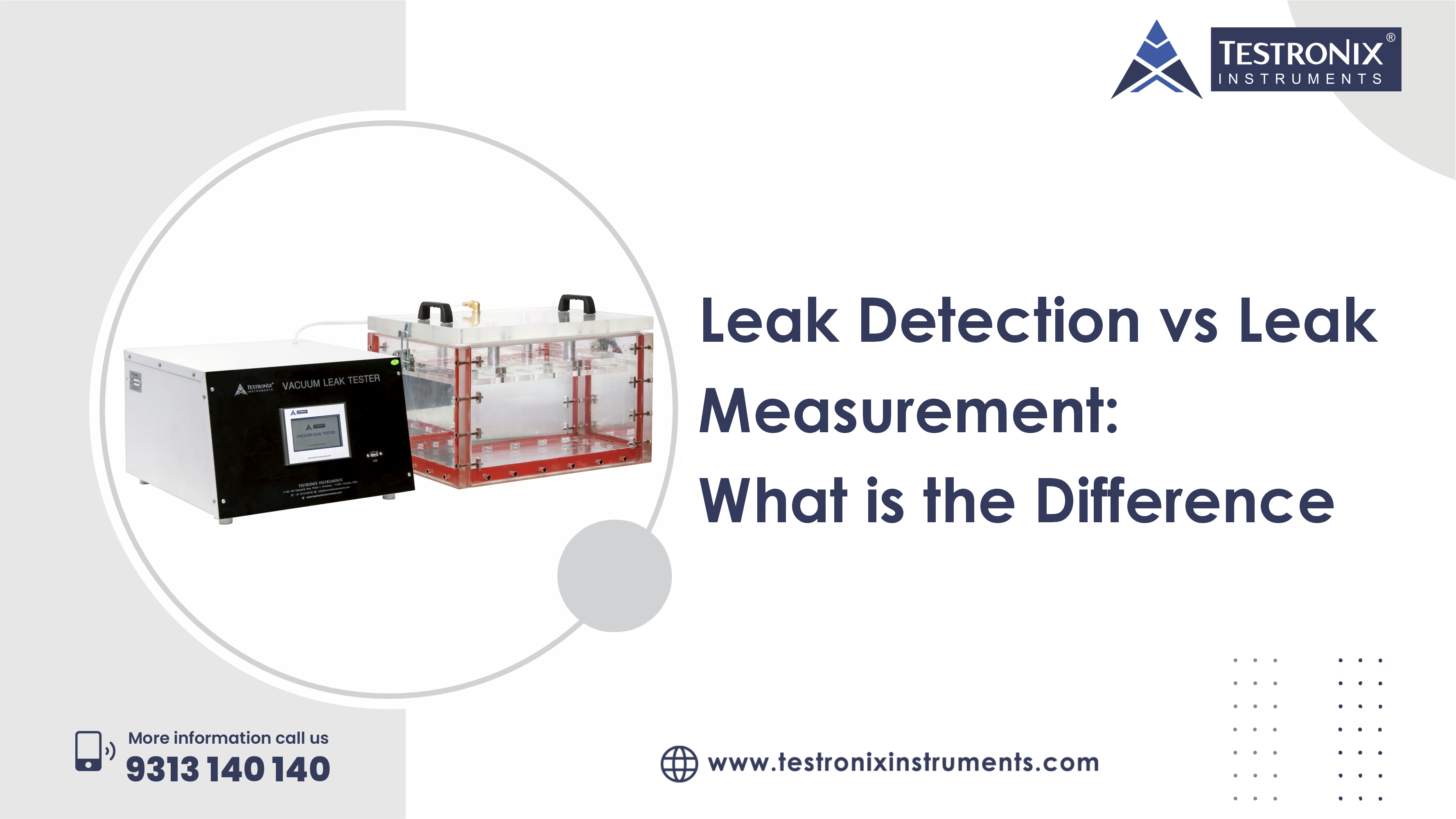
The quality control process for leak detection is very important in many industries, such as packaging, pharmaceutical, automotive, and manufacturing. A product can face a variety of issues due to an unintended leakage which could lead to product failure, safety risks, contamination and financial loss. Leak detection and Leak Measurement are usually thought of as the same thing; however, they are actually two different components of the leak testing process.
Leak detection is to determine if your product leaks whereas Leak Measurement is to determine the amount (rate or size) of the leak. Understanding the distinction between the two components of leak testing allows industry professionals to select the proper leak detection method and piece of equipment for use in their quality assurance programs.
What is Leak Detection
Leak detection is the process of locating, assessing, and measuring leaks caused by liquid or gas losses from any pressurized system such as pipes or containers. This technique can help in reducing the potential for unsafe environments, physical damage to property, and lost resource costs.
Examples
Ultrasonic Leak Detectors: These utilize ultrasound technology for finding high-frequency sounds caused by leakage in compressed air systems that cannot be heard by humans.
Hydrostatic Testing: This involves pressurizing pipes with water and then measuring any decrease in the pressure to determine if there are any leaks in the pipe.
Tracer Gas Testing: The introduction of a gas such as helium into a system will allow for the detection of very small leaks.
Soil Moisture/Acoustic Sensor: These sensors are used to detect leaks in underground water pipelines.
What is Leak Measurement
Leak Measurement is an imperative way to determine how much gas or liquid escapes or enters a pressurized vacuum system. This includes the modified atmosphere produced by a vacuum. The actual testing process is designed to assess and identify any openings or cracks in a product so that its level of safety and quality meets standards or specifications. Common measurement units for leak tests include millibar or SCCM (standard cubic centimeter/minute) and pascal meter cubed/second.
Examples
Bubble & Dunk Testing: The item is then submerged in water after being pressurized, in addition to measuring if any areas will leak gas.
Helium Mass Spectrometry: This is a very sensitive test where a tracer tube is used to determine if there are any leaks; it is often used for high-priority items that must be hermetically sealed (e.g., medical devices).
Ultrasonic Testing: This method involves listening for the high-frequency sound that is characteristic of gases escaping from a large leak.
Leak Detection vs Leak Measurement
Detecting a leak determines whether it exists while measuring a leak determines how much it exists (volume). Both processes are valid in quality control but they have different applications. Detection is useful for fast screening of leaks and measurement is needed for validation, research and high-precision purposes.
|
Parameter |
Leak Detection |
Leak Measurement |
|
Result Type |
Qualitative |
Quantitative |
|
Purpose |
Identify the presence of a leak |
Determine leak rate |
|
Accuracy |
Average |
High |
|
Usage |
Routine inspection |
Compliance & validation |
|
Output |
Pass/Fail |
Numeric value |
Key Differences Between Leak Detection and Leak Measurement
The main difference between Leak Detection and Leak Measurement is that leak detection identifies the existence and location of a leak while leak measurement quantifies the rate of leakage.
Leak Detection
-
Objective: To find out whether there is currently a leak present or not, and where it is located. It essentially provides an affirmative or negative answer about the existence of a break in the contamination of some substance.
-
Methodology: Uses methods like the bubble test, ultrasonic detectors, sniffer probes, and fluorescent dyes.
-
Applications of Leak Detection
-
Leak detection is used for locating leaks in refrigeration systems, which ultimately leads to better performance of these systems, lower energy usage, and less harm to the environment.
-
Leak detection provides a means of finding cracks or joints in pipelines to prevent waste of water and gas, loss of pressure, and costly downtime due to the lack of operation because of water and gas pipelines.
-
Leak testing is used to ensure the vacuum systems maintain pressure levels that will provide for proper operation and eliminate contamination and interruptions in the process.
-
Leak detection of bottles, pouches, and cans after they have been filled helps to ensure the integrity of the packaging and safety of products. This decreases the number of rejections during mass production.
Leak Measurement
-
Objective: To determine the accurate leakage rate (pa.m³/s or cm³/min). It guarantees whether a leak is under an acceptable threshold (pass/fail criteria).
-
Methodology: It uses advanced instruments like Pressure decay/drop, Mass flow, and Helium Mass Spectrometry.
-
Applications:
-
Leakage measurements guarantee that the parts have no defects and can operate properly and safely when subjected to real-world pressures and atmospheric conditions.
-
By doing tests to prove compliance with industry standards, this guarantees that the products will not leak. Therefore, preventing them from being polluted or causing any safety risk to the end consumer.
-
Leak testing allows for inspection of expensive components without damaging them; hence, the integrity of the component will be preserved while the component's performance can be verified before being placed in the market or installed in the field.
-
Following repairs to a system, verification of the presence/absence of leaks ensures the system is operating correctly and will be within specified tolerances and will prevent future failure of the system as well as ensure the operational safety of the system.
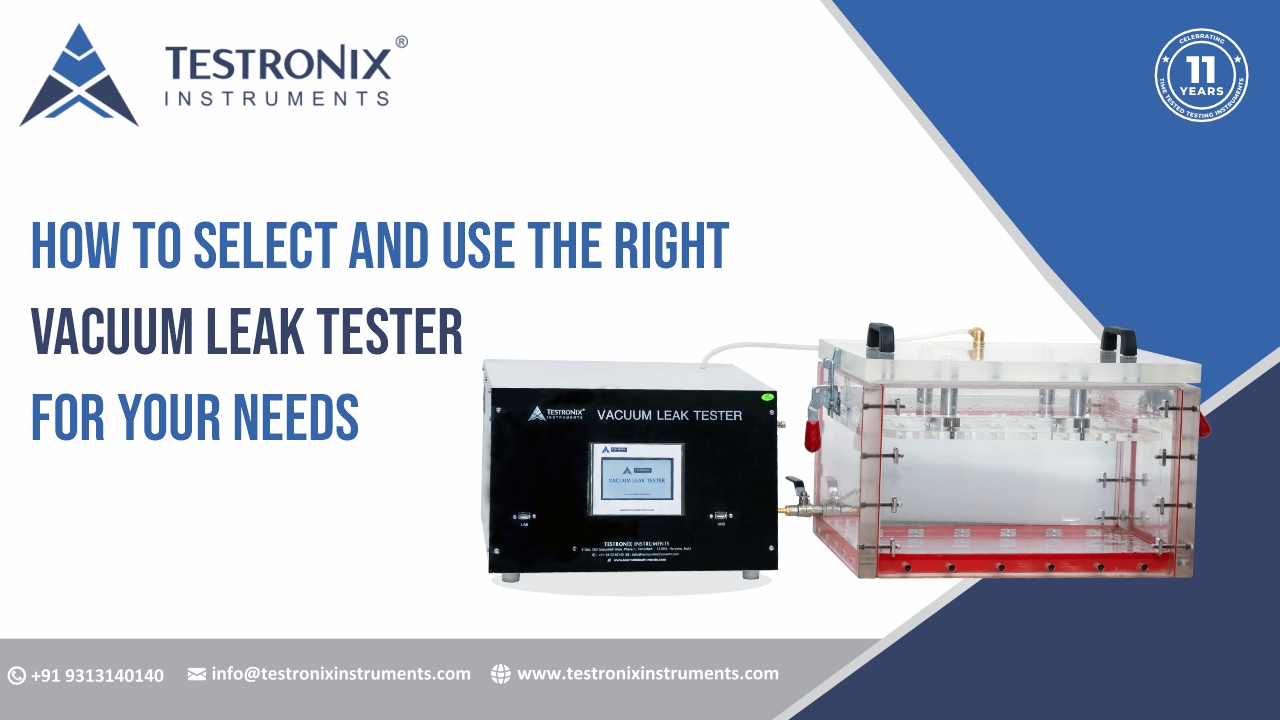
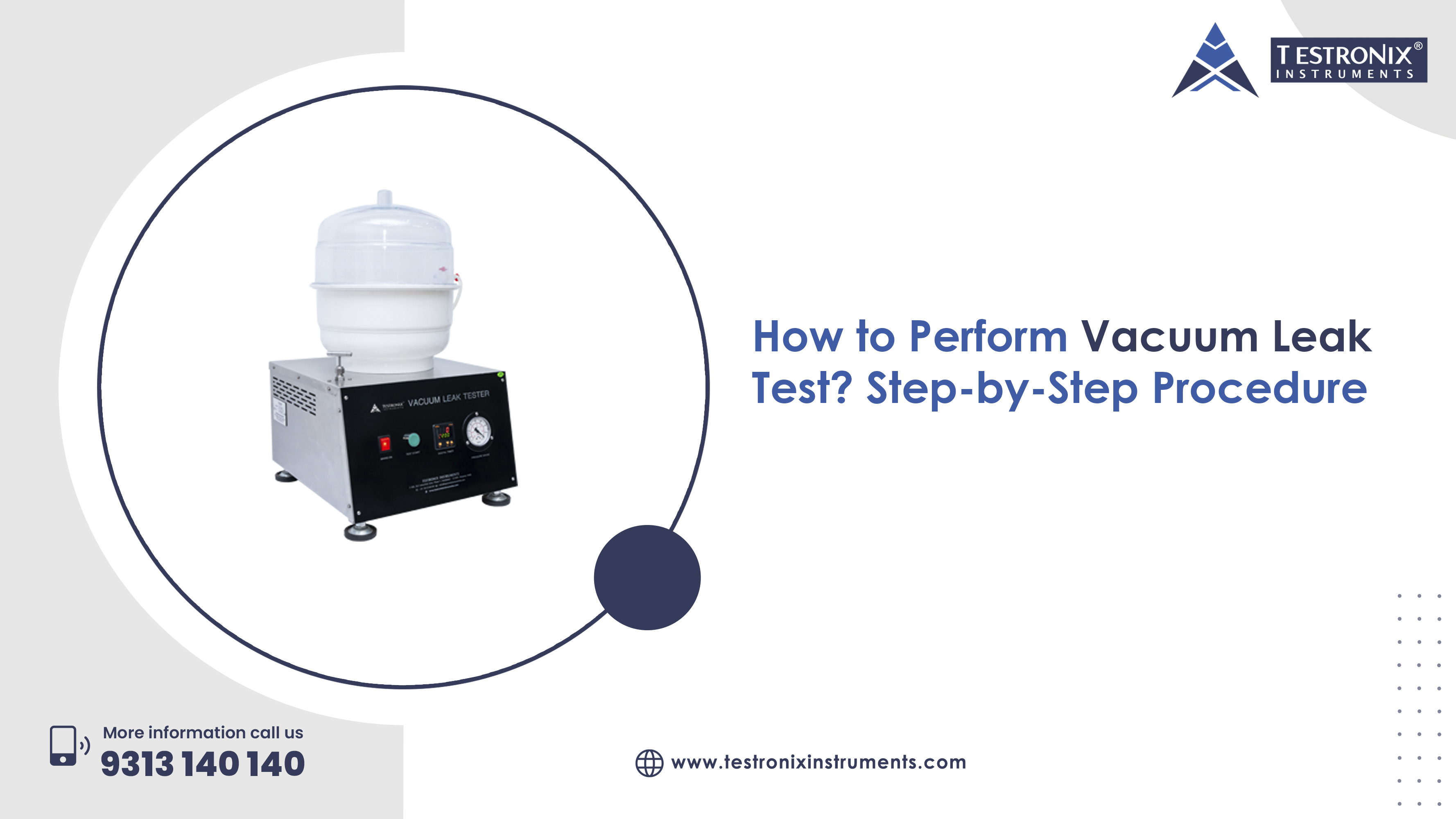
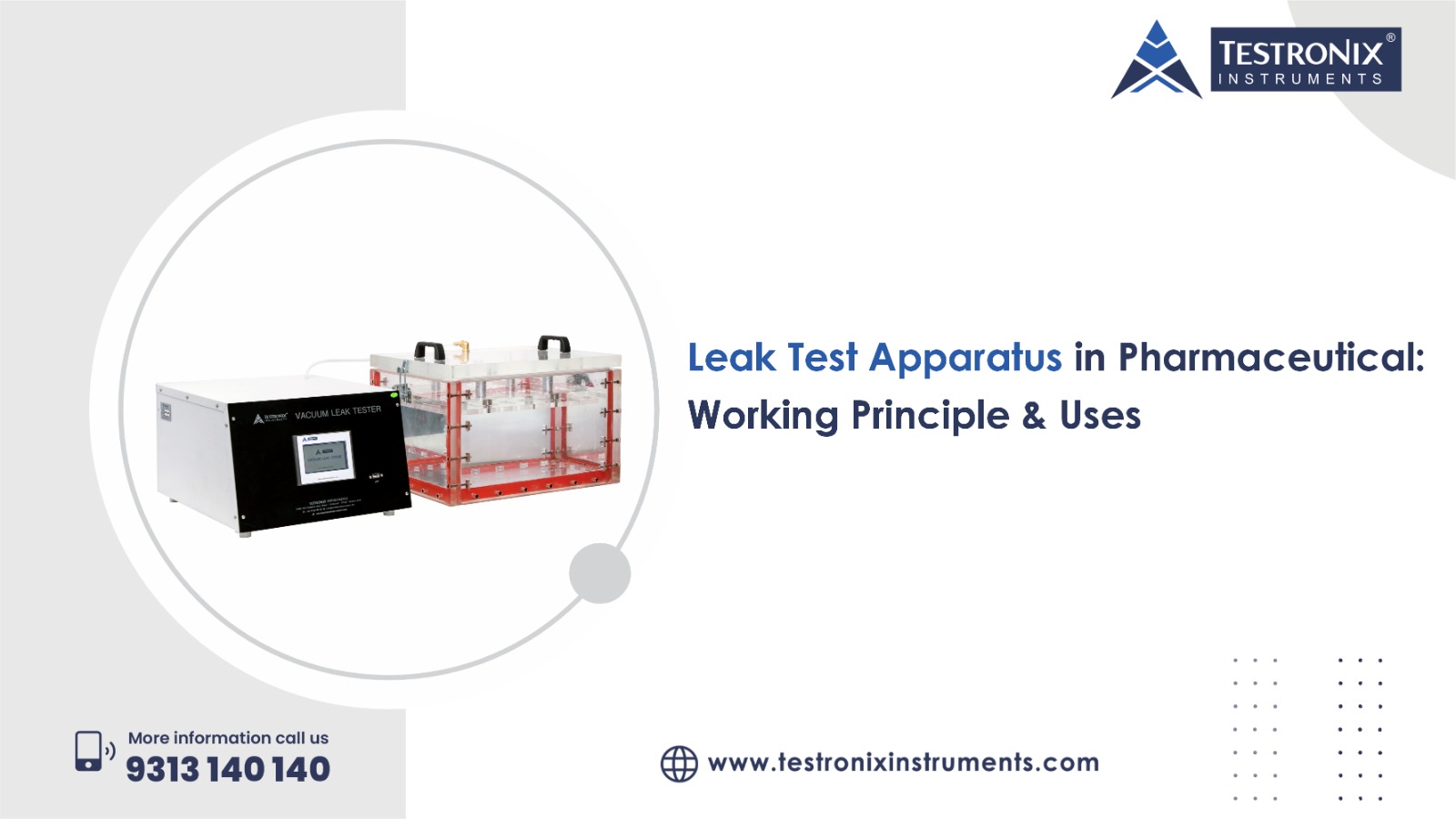
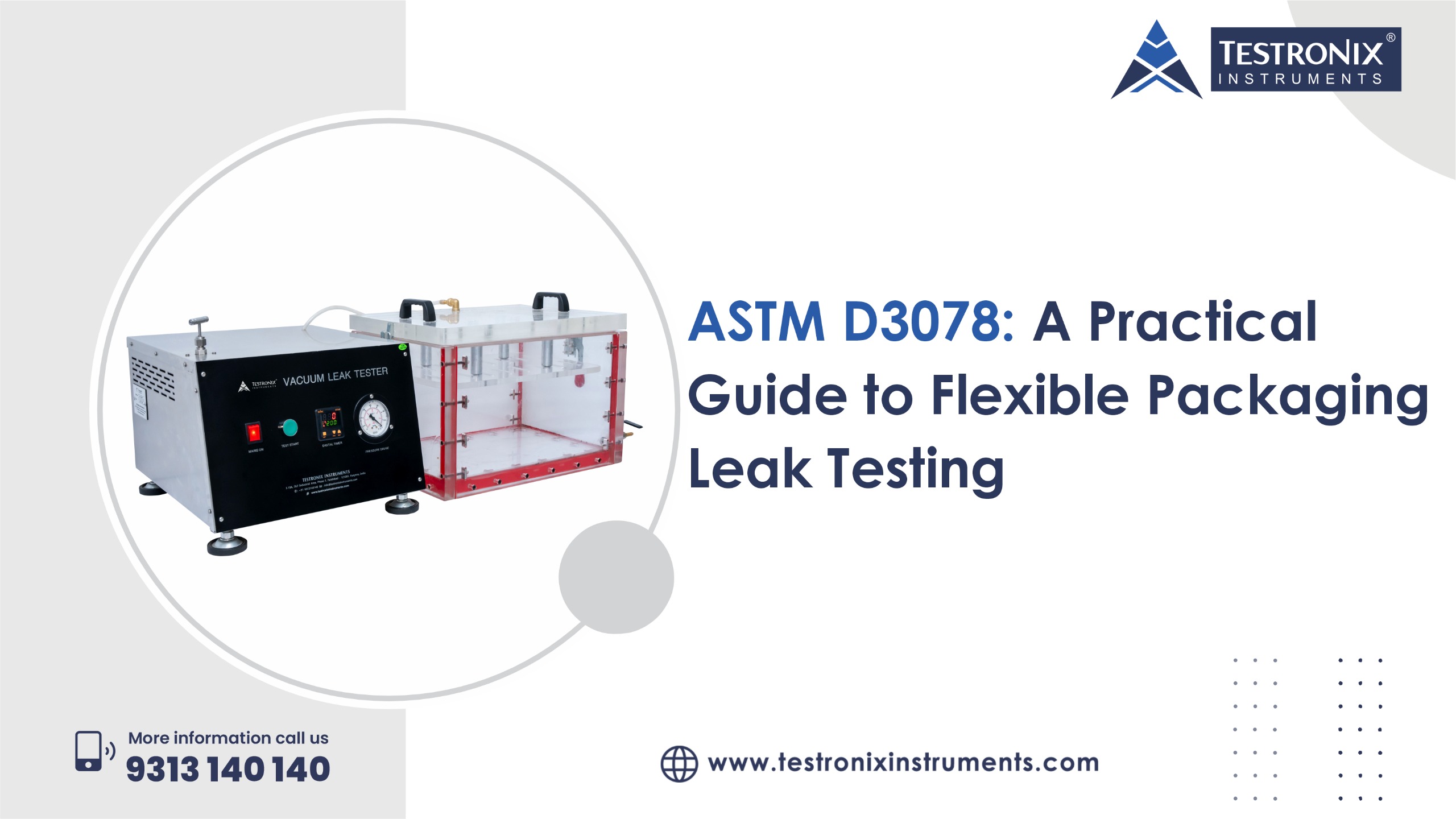
Testronix Leak Test Apparatus: An Integrated Tool for Leak Detection & Measurement
The Testronix Leak Test Apparatus is an advanced and adaptable testing device for measuring two different types of leakage (detectable and quantifiable). It supports a high degree of precision utilizing porous packaging, including flexible tubes and jars, as well as gas-tight medical bags.
Key features include a digital display/control panel, super-sensitive leak sensors, and compliance with ASTM and ISO standards. Using the Testronix leak testing machine, companies can show the quality of their products and increase the length of time those products will stay on the shelf. Therefore, it is important to follow the requirements set by regulatory agencies, as Testronix offers consistent testing methods to verify product quality.
Conclusion
The ability to identify leaks and measure leaks is an essential component of the assurance of product quality and safety. Leak detection enables the swift identification of defective products. On the other hand, the ability of leak measurement to provide more complete information in the form of quantitative numeric measures as to performance and compliance with allowable leak limits will provide you with a basis upon which you make your determination of which type of leak testing will meet or exceed your requirements, based on individual needs of the industry, product type, and regulatory requirements.