When working in industries like manufacturing, construction, oil and gas or aerospace, two technical documents and material certifications are very important: ASTM and ASME. Both are American standards organizations, and both carry enormous weight in global engineering and quality assurance.
Yet they serve very different purposes. Engineers, procurement specialists, and quality professionals must know what each does, when to use it and how they relate.
ASTM Full Form
ASTM stands for American Society for Testing and Materials. The organization now operates globally under the name ASTM International.
What is ASTM?
ASTM is one of the world's largest international organizations that develops regulations and testing standards. It publishes voluntary standards that define the properties, composition, and testing methods for a wide range of materials and products. ASTM standards are responsible for developing and enforcing standards for all types of old and innovative materials and their standards are the most widely used in the United States and other countries for steel products
ASME Full Form
ASME stands for American Society of Mechanical Engineers.
What is ASME?
ASME International is a non-profit educational and technical organization with more than 120,000 members worldwide. Its major work involves establishing standards that primarily address the design and safety considerations for mechanical devices. ASME material specifications define the appropriate materials for manufacture of equipment for pressurized service including tanks, pressure vessels, heat exchangers and facilities for oil and liquid storage.
ASTM vs ASME
ASTM tells what a material is made of and how it should perform, while ASME tells how that material should be used to build safe equipment. Whereas ASTM is related to material aspects, ASME is concerned with the design and construction aspects. Hence, there is the need for adherence to both standards when dealing with engineering issues. Both ASTM and ASME have collaborated in the development of material specifications with ASTM developing the material specifications.
ASTM vs ASME: Key Differences
|
Parameter |
ASTM |
ASME |
|
Full Form |
American Society for Testing and Materials |
American Society of Mechanical Engineers |
|
Founded |
1898 |
1880 |
|
Primary Focus |
Material properties, testing methods, and quality specifications |
Design, construction, and safety of mechanical systems |
|
Scope |
Broad, covering metals, plastics, textiles, petroleum, construction, and more |
Specific to pressure vessels, boilers, piping, and mechanical equipment |
|
Nature |
Material standard |
Design and engineering code |
|
Legal Enforceability |
Voluntary in most cases |
Legally required in many jurisdictions |
|
Prefix System |
A (ferrous), B (non-ferrous), D (plastics), etc. |
SA, SB (adopted ASTM specs with "S" prefix) |
|
Common Example |
ASTM A106, ASTM A36, ASTM D638 |
ASME BPVC Section VIII, ASME B31.3, ASME B16.5 |
When to Use ASTM Standard
ASTM standard is the right framework to reference whenever the primary concern is verifying the properties and quality of a material before it is used or fabricated. When you wish to determine source materials, evaluate steel grades, assess polymers or verify the compliance of the product. It is basically based on certain chemical and mechanical standards then ASTM standards are your solution.
The "A" designation in any ASTM standard implies that the material is ferrous whereas the "B" designation implies that the material is non-ferrous.
Some widely used ASTM standards include:
-
ASTM A36 is mainly used for structural steel which is common in construction and general fabrication. It defines tensile strength, yield strength and chemical composition requirements.
-
ASTM A106 standard general purpose standard and an essential part of seamless carbon steel pipe used in high temperature service. It is extensively used in refineries, power plants and oil and gas pipelines.
-
ASTM A516 is most commonly used throughout refineries, power generation plants and pipelines transporting liquid hydrocarbons. The steel plates used for pressure vessel construction for moderate and lower temperature applications are manufactured from carbon steel per ASTM specifications.
-
The ASTM A312 standard provides requirements for the construction of stainless steel pipes and their dimensions and mechanical properties of this piping system against corrosion.
-
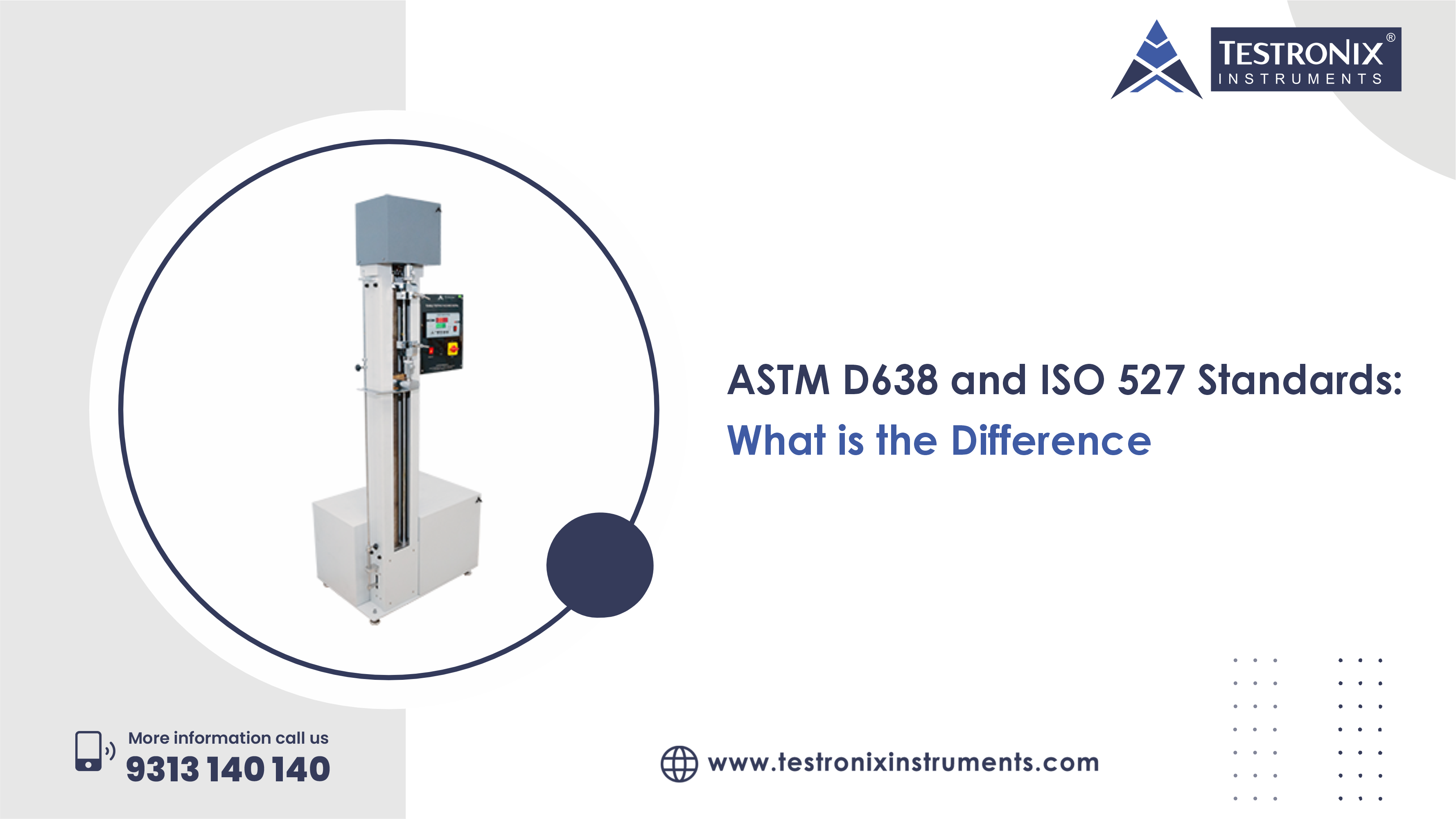
The ASTM D638 standard describes a method for determining mechanical properties through tensile testing of plastic materials so design engineers can identify how to use the material in products made of polymers and handled with packaging, among others.
-
The ASTM A105 specification outlines carbon steel forging used to produce components used in piping systems such as flanges, fittings, and valves.
When to Use ASME
ASME becomes the applicable standard the moment you move from material selection to equipment design, fabrication, inspection, and installation. If the project involves any kind of pressurized system, mechanical assembly, or safety-critical equipment, ASME codes govern how that equipment must be built and maintained.
The ASME standard is utilized for the design of pressure vessels, heat exchangers, boilers and piping systems, along with its mandatory use during equipment inspections, code compliance evaluations, and when obtaining an official ASME stamp of certification for export or regulated equipment.
Key ASME standards used in industries:
-
ASME BPVC Section VIII governs the design and construction of pressure vessels. Any fabricator building a code-stamped pressure vessel must comply with this section.
-
ASME B31.1 is a standard for pipes that can be used in power plants industry for steam systems and boiler external pipes.
-
ASME B31.3 is essentially the code or "rule book" for pipelines transporting hazardous, flammable, or Caustic products in processing facilities. This standard provides the guidelines for the engineers to safely create designs and construct pipe systems and provides guidelines for testing the components.
-
The Circular Connector (Flange) Standard ASME-B16.5 defines the flanges that connect two pipes together with bolts. It provides dimensions, material specifications and most importantly, it establishes maximum allowable operating pressures and operating temperatures for a given flange.
-
ASME B36.10M makes sure that a steel pipe made by one manufacturer fits perfectly with a pipe made by a completely different manufacturer. Think of it like a universal sizing chart — so a 4-inch pipe always means the same thing, no matter who made it.
-
ASME Section I is the safety code for the big boilers that generate steam in power plants. It lays down the rules for how these boilers must be built, welded together, and inspected, since a boiler failure can be catastrophic.
Applications of ASTM and ASME Standards
Both ASTM and ASME standards have a significant impact on nearly every aspect of modern industry. They are not mutually exclusive: most complex engineering projects rely on ASTM to qualify materials and ASME to ensure those materials are correctly engineered into safe, functional systems.
The properties of ASTM A106 seamless carbon steel pipe may be the basis for selecting it, while its design and installation for safe operation under pressure will be set out in ASME B31.3-20. It makes both ASTM standards necessary for practical application - and this is how they complement one another.
Applications of ASTM Standards
ASTM standards are applied across a remarkably wide range of industries. They can be used in construction and regulate the quality of structural steel, rebar, concrete and wood products. Within the automotive industry, ASTM standards are used to guarantee that the metals, coating and polymers used in the manufacturing of vehicles meet the performance standards.
Likewise Aeros companies depend on ASTM specs for titanium alloys, composite materials, and fasteners. For the oil and gas industry, the selection of pipelines is done by referencing ASTM standards so that a seamless or welded steel pipe of the required grade can be obtained. To gauge tensile strength as well as the impact resistance and thermal properties of products, plastics manufacturers resort to ASTM test methods.
-
Construction materials testing (cement, steel, aggregates)
-
Automotive and aerospace material validation
-
Plastic, polymer, and textile testing
-
Oil & gas material specifications
-
Environmental and chemical testing
Applications of ASME Standards
ASME Guidelines are necessary for any pressurized equipment or mechanical system project. As an illustration, ASME BPVC is a directive in the generation of power requiring all boilers and steam turbines. Therefore, Process Piping design and inspection in Petrochemical Refineries and Chemical Plants may also be located in the ASME B31.3 requirements.
Transmission pipelines (oil and gas) are designed and built in accordance with ASME B31.4 and B31.8. The nuclear facilities are run in accordance with ASME Section III which provides a stringent construction code for nuclear parts.
Both HVAC systems and the different types of industrial heating systems utilize ASME Standards for their related pressure vessels and heat exchangers; while bioprocessing equipment (BPE) design governs the cleaning domain of sterile piping/vessels within pharma and food processing.
-
Boiler and pressure vessel manufacturing
-
Power plant equipment design
-
Pipeline and piping systems
-
Nuclear and thermal plant components
-
Industrial machinery and mechanical systems
Testronix Instruments and Material Testing
When industries must verify material compliance against ASTM specifications, having the right testing equipment is just as important as knowing the standard itself. Testronix Instruments is a globally recognized manufacturer of precise laboratory testing tools, offering solutions across material testing, packaging, coatings, and corrosion evaluation. Our instruments are engineered to support ASTM test methods such as tensile testing, impact resistance, coating thickness, and barrier property evaluation.
The ASME guidelines require materials to adhere to specific ASTM standards before their use in packaging, pharmaceuticals, and other industries. To support this, Testronix provides the accurate measurements needed at every stage of the compliance process.
Conclusion
ASTM is the check that happens before construction even begins. When a refinery or chemical plant orders steel pipes, plates or fittings, ASTM informs you as to whether the material supplied is really what the supplier represents it to be. Without this check, you could end up building critical equipment out of substandard material without even knowing it.
ASME comes into the picture once you start building. Even if your materials are perfect, a badly designed pressure vessel or an incorrectly fabricated pipeline can still fail and cause serious damage. ASME ensures that the engineering of the equipment is good, that it is properly assembled and that it will be able to withstand the pressures and temperatures it will experience in actual service.
In short, ASTM keeps bad materials out of your plant and ASME makes sure what you build with those materials does not become a hazard.
They do not require engineers and quality professionals to make a choice; in a typical real-life scenario, both are needed. This is because knowing which standard to use at what point of a project will make the difference between technically sound execution and expensive and possibly dangerous mistakes.